 Add to Chrome
 Add to Firefox
 Add to Edge
NPCNet: Navigator-Driven Pseudo Text for Deep Clustering of Early Sepsis Phenotyping
Feb 03, 2026
Sepsis is a heterogeneous syndrome. Identifying clinically distinct phenotypes may enable more precise treatment strategies. In recent years, many researchers have applied clustering algorithms to sepsis patients. However, the clustering process rarely incorporates clinical relevance, potentially limiting to reflect clinically distinct phenotypes. We propose NPCNet, a novel deep clustering network with a target navigator that integrates temporal Electronic Health Records (EHRs) to better align sepsis phenotypes with clinical significance. We identify four sepsis phenotypes ($α$, $β$, $γ$, and $δ$) with divergence in SOFA trajectories. Notably, while $α$ and $δ$ phenotypes both show severe conditions in the early stage, NPCNet effectively differentiates patients who are likely to improve ($α$) from those at risk of deterioration ($δ$). Furthermore, through the treatment effect analysis, we discover that $α$, $β$, and $δ$ phenotypes may benefit from early vasopressor administration. The results show that NPCNet enhances precision treatment strategies by uncovering clinically distinct phenotypes.

MedM2T: A MultiModal Framework for Time-Aware Modeling with Electronic Health Record and Electrocardiogram Data
Oct 31, 2025The inherent multimodality and heterogeneous temporal structures of medical data pose significant challenges for modeling. We propose MedM2T, a time-aware multimodal framework designed to address these complexities. MedM2T integrates: (i) Sparse Time Series Encoder to flexibly handle irregular and sparse time series, (ii) Hierarchical Time-Aware Fusion to capture both micro- and macro-temporal patterns from multiple dense time series, such as ECGs, and (iii) Bi-Modal Attention to extract cross-modal interactions, which can be extended to any number of modalities. To mitigate granularity gaps between modalities, MedM2T uses modality-specific pre-trained encoders and aligns resulting features within a shared encoder. We evaluated MedM2T on MIMIC-IV and MIMIC-IV-ECG datasets for three tasks that encompass chronic and acute disease dynamics: 90-day cardiovascular disease (CVD) prediction, in-hospital mortality prediction, and ICU length-of-stay (LOS) regression. MedM2T outperformed state-of-the-art multimodal learning frameworks and existing time series models, achieving an AUROC of 0.947 and an AUPRC of 0.706 for CVD prediction; an AUROC of 0.901 and an AUPRC of 0.558 for mortality prediction; and Mean Absolute Error (MAE) of 2.31 for LOS regression. These results highlight the robustness and broad applicability of MedM2T, positioning it as a promising tool in clinical prediction. We provide the implementation of MedM2T at https://github.com/DHLab-TSENG/MedM2T.
SG-XDEAT: Sparsity-Guided Cross-Dimensional and Cross-Encoding Attention with Target-Aware Conditioning in Tabular Learning
Oct 14, 2025We propose SG-XDEAT (Sparsity-Guided Cross Dimensional and Cross-Encoding Attention with Target Aware Conditioning), a novel framework designed for supervised learning on tabular data. At its core, SG-XDEAT employs a dual-stream encoder that decomposes each input feature into two parallel representations: a raw value stream and a target-conditioned (label-aware) stream. These dual representations are then propagated through a hierarchical stack of attention-based modules. SG-XDEAT integrates three key components: (i) Cross-Dimensional self-attention, which captures intra-view dependencies among features within each stream; (ii) Cross-Encoding self-attention, which enables bidirectional interaction between raw and target-aware representations; and (iii) an Adaptive Sparse Self-Attention (ASSA) mechanism, which dynamically suppresses low-utility tokens by driving their attention weights toward zero--thereby mitigating the impact of noise. Empirical results on multiple public benchmarks show consistent gains over strong baselines, confirming that jointly modeling raw and target-aware views--while adaptively filtering noise--yields a more robust deep tabular learner.
Self-supervised based general laboratory progress pretrained model for cardiovascular event detection
Mar 15, 2023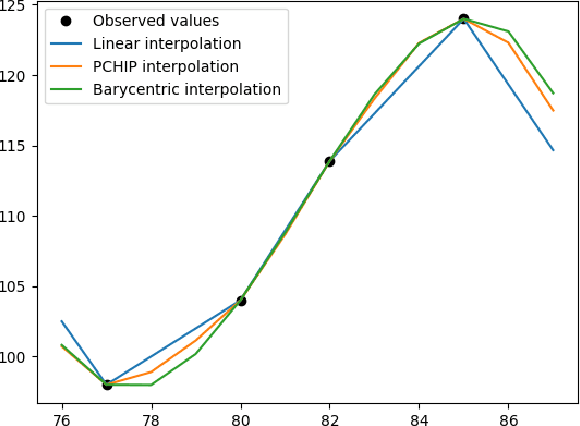
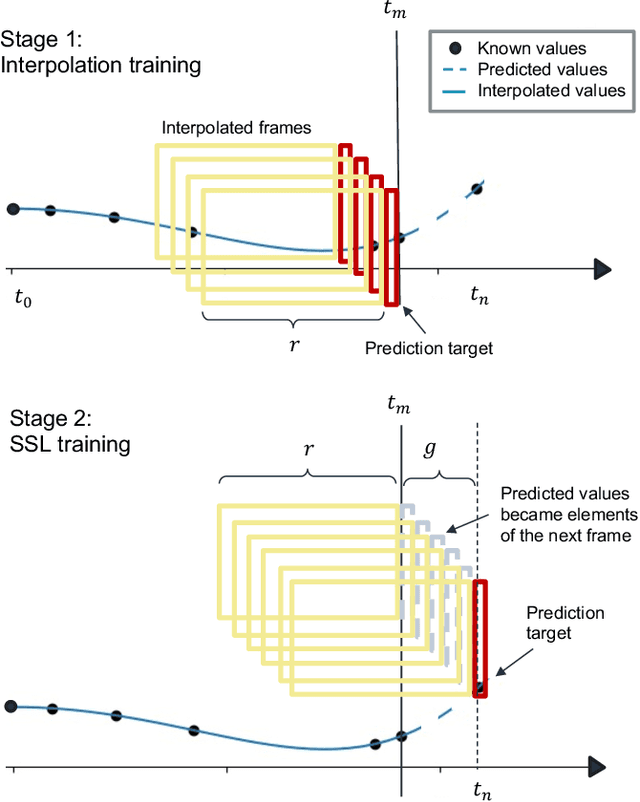
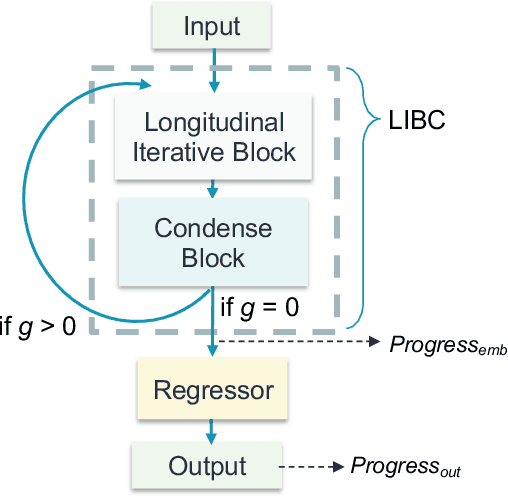
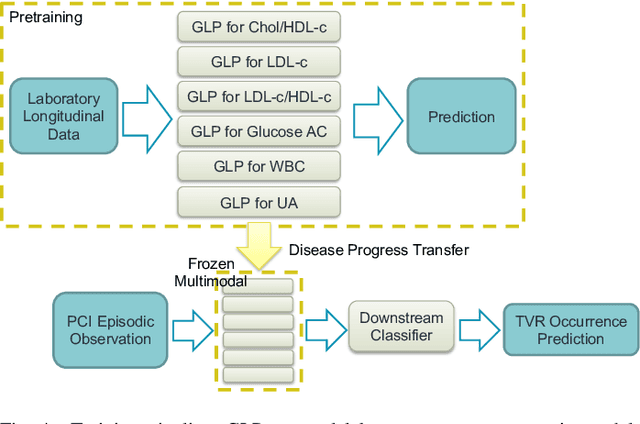
Regular surveillance is an indispensable aspect of managing cardiovascular disorders. Patient recruitment for rare or specific diseases is often limited due to their small patient size and episodic observations, whereas prevalent cases accumulate longitudinal data easily due to regular follow-ups. These data, however, are notorious for their irregularity, temporality, absenteeism, and sparsity. In this study, we leveraged self-supervised learning (SSL) and transfer learning to overcome the above-mentioned barriers, transferring patient progress trends in cardiovascular laboratory parameters from prevalent cases to rare or specific cardiovascular events detection. We pretrained a general laboratory progress (GLP) pretrain model using hypertension patients (who were yet to be diabetic), and transferred their laboratory progress trend to assist in detecting target vessel revascularization (TVR) in percutaneous coronary intervention patients. GLP adopted a two-stage training process that utilized interpolated data, enhancing the performance of SSL. After pretraining GLP, we fine-tuned it for TVR prediction. The proposed two-stage training process outperformed SSL. Upon processing by GLP, the classification demonstrated a marked improvement, increasing from 0.63 to 0.90 in averaged accuracy. All metrics were significantly superior (p < 0.01) to the performance of prior GLP processing. The representation displayed distinct separability independent of algorithmic mechanisms, and diverse data distribution trend. Our approach effectively transferred the progression trends of cardiovascular laboratory parameters from prevalent cases to small-numbered cases, thereby demonstrating its efficacy in aiding the risk assessment of cardiovascular events without limiting to episodic observation. The potential for extending this approach to other laboratory tests and diseases is promising.