 Add to Chrome
 Add to Firefox
 Add to Edge
VitaminP: cross-modal learning enables whole-cell segmentation from routine histology
Apr 26, 2026
Accurate whole-cell and nuclear segmentation is essential for precision pathology and spatial omics, yet routine hematoxylin and eosin (H&E) staining provides limited cytoplasmic contrast, restricting analyses to nuclei. Multiplex immunofluorescence (mIF) facilitates precise whole-cell delineation but remains constrained by cost and accessibility. We introduce VitaminP, a cross-modal learning framework enabling whole cell segmentation from H&E images. By learning from paired H&E-mIF data, VitaminP transfers molecular boundary information from mIF to overcome cytoplasmic contrast in H&E, establishing cross-modal supervision as a general strategy for recovering missing biological structure. We train VitaminP on 14 public datasets covering 34 cancer types and over 7 million instances, integrating publicly available labels with extensive annotations generated in this study, forming one of the largest resources for segmentation. VitaminP outperforms four state-of-the-art methods and generalizes to unseen datasets, including an in-house dataset spanning 24 rare cancer types. We further developed VitaminPScope, an open-source platform providing an interface for scalable inference and enabling broad adoption.

A Comprehensive Review of Generative AI in Healthcare
Oct 01, 2023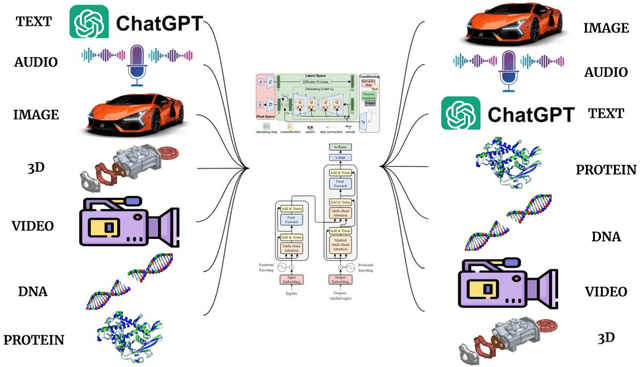
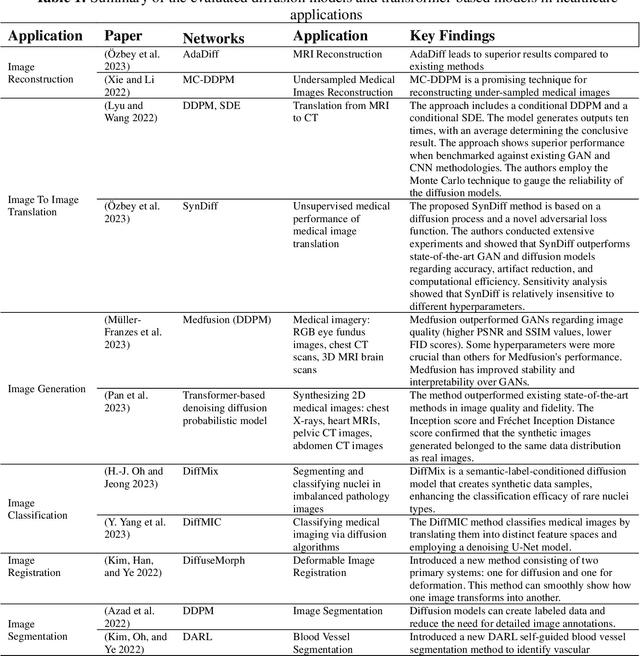
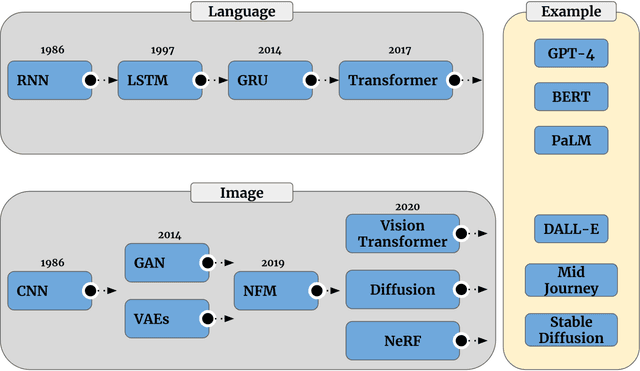
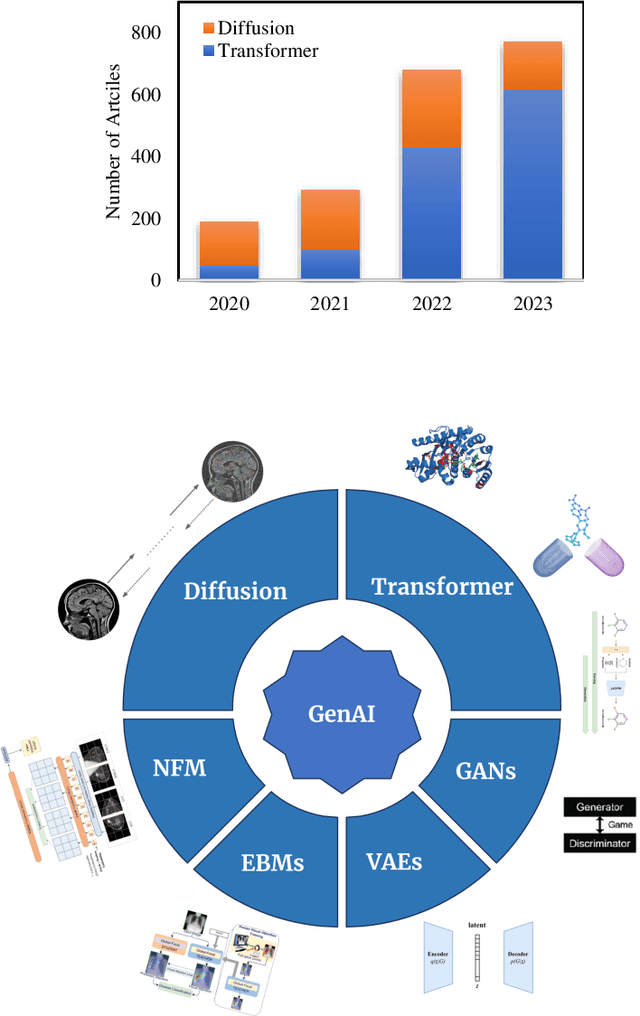
The advancement of Artificial Intelligence (AI) has catalyzed revolutionary changes across various sectors, notably in healthcare. Among the significant developments in this field are the applications of generative AI models, specifically transformers and diffusion models. These models have played a crucial role in analyzing diverse forms of data, including medical imaging (encompassing image reconstruction, image-to-image translation, image generation, and image classification), protein structure prediction, clinical documentation, diagnostic assistance, radiology interpretation, clinical decision support, medical coding, and billing, as well as drug design and molecular representation. Such applications have enhanced clinical diagnosis, data reconstruction, and drug synthesis. This review paper aims to offer a thorough overview of the generative AI applications in healthcare, focusing on transformers and diffusion models. Additionally, we propose potential directions for future research to tackle the existing limitations and meet the evolving demands of the healthcare sector. Intended to serve as a comprehensive guide for researchers and practitioners interested in the healthcare applications of generative AI, this review provides valuable insights into the current state of the art, challenges faced, and prospective future directions.