 Add to Chrome
 Add to Firefox
 Add to Edge
Evaluating Synthetic Images as Effective Substitutes for Experimental Data in Surface Roughness Classification
Mar 26, 2026
Hard coatings play a critical role in industry, with ceramic materials offering outstanding hardness and thermal stability for applications that demand superior mechanical performance. However, deploying artificial intelligence (AI) for surface roughness classification is often constrained by the need for large labeled datasets and costly high-resolution imaging equipment. In this study, we explore the use of synthetic images, generated with Stable Diffusion XL, as an efficient alternative or supplement to experimentally acquired data for classifying ceramic surface roughness. We show that augmenting authentic datasets with generative images yields test accuracies comparable to those obtained using exclusively experimental images, demonstrating that synthetic images effectively reproduce the structural features necessary for classification. We further assess method robustness by systematically varying key training hyperparameters (epoch count, batch size, and learning rate), and identify configurations that preserve performance while reducing data requirements. Our results indicate that generative AI can substantially improve data efficiency and reliability in materials-image classification workflows, offering a practical route to lower experimental cost, accelerate model development, and expand AI applicability in materials engineering.

Non-Spike Timing-Dependent Plasticity based Unsupervised Memristive Neural Networks with High Hardware Compatibility
Jul 23, 2019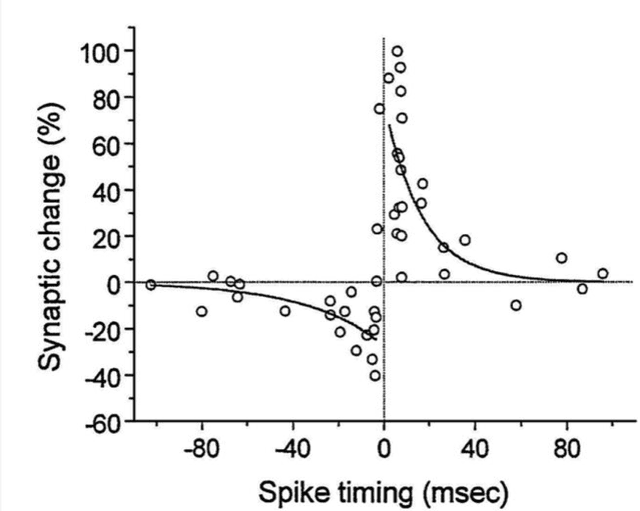
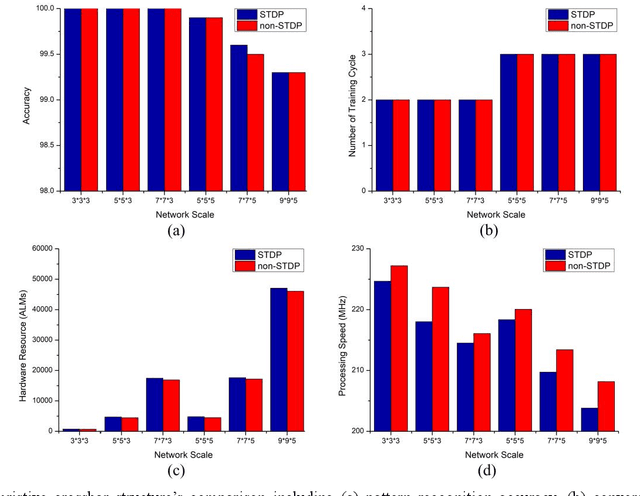
With the development of research on memristor, memristive neural networks (MNNs) have become a hot research topic recently. Because memristor can mimic the spike timing-dependent plasticity (STDP), the research on STDP based MNNs is rapidly increasing. However, although state-of-the-art works on STDP based MNNs have many applications such as pattern recognition, STDP mechanism brings relatively complex hardware framework and low processing speed, which block MNNs' hardware realization. A non-STDP based unsupervised MNN is constructed in this paper. Through the comparison with STDP method on the basis of two common structures including feedforward and crossbar, non-STDP based MNNs not only remain the same advantages as STDP based MNNs including high accuracy and convergence speed in pattern recognition, but also better hardware performance as few hardware resources and higher processing speed. By virtue of the combination of memristive character and simple mechanism, non-STDP based MNNs have better hardware compatibility, which may give a new viewpoint for memristive neural networks' engineering applications.