 Add to Chrome
 Add to Firefox
 Add to Edge
Empowering Chemical Structures with Biological Insights for Scalable Phenotypic Virtual Screening
Mar 16, 2026
Motivation: The scalable identification of bioactive compounds is essential for contemporary drug discovery. This process faces a key trade-off: structural screening offers scalability but lacks biological context, whereas high-content phenotypic profiling provides deep biological insights but is resource-intensive. The primary challenge is to extract robust biological signals from noisy data and encode them into representations that do not require biological data at inference. Results: This study presents DECODE (DEcomposing Cellular Observations of Drug Effects), a framework that bridges this gap by empowering chemical representations with intrinsic biological semantics to enable structure-based in silico biological profiling. DECODE leverages limited paired transcriptomic and morphological data as supervisory signals during training, enabling the extraction of a measurement-invariant biological fingerprint from chemical structures and explicit filtering of experimental noise. Our evaluations demonstrate that DECODE retrieves functionally similar drugs in zero-shot settings with over 20% relative improvement over chemical baselines in mechanism-of-action (MOA) prediction. Furthermore, the framework achieves a 6-fold increase in hit rates for novel anti-cancer agents during external validation. Availability and implementation: The codes and datasets of DECODE are available at https://github.com/lian-xiao/DECODE.

TransMA: an explainable multi-modal deep learning model for predicting properties of ionizable lipid nanoparticles in mRNA delivery
Jul 08, 2024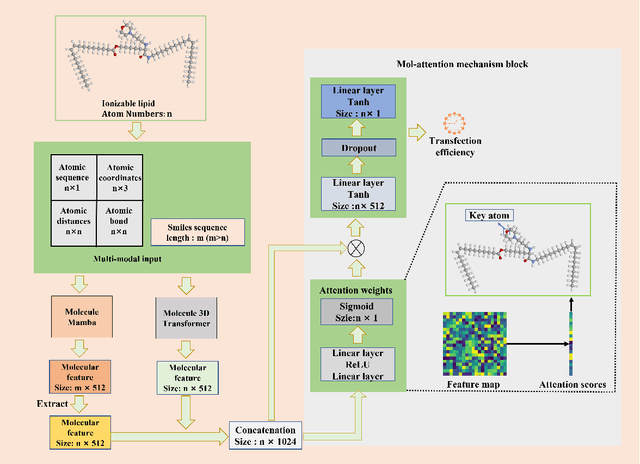
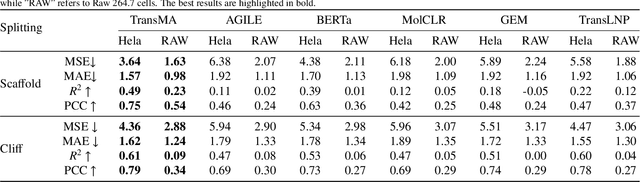
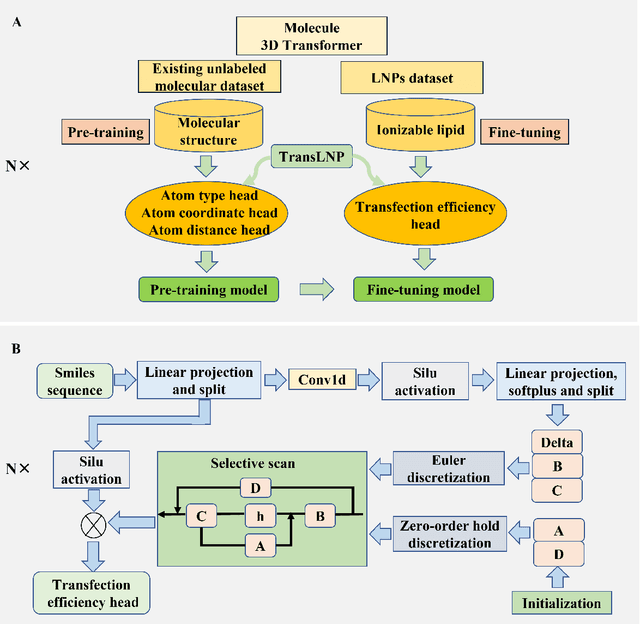
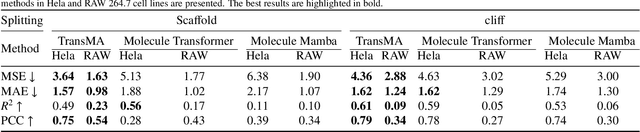
As the primary mRNA delivery vehicles, ionizable lipid nanoparticles (LNPs) exhibit excellent safety, high transfection efficiency, and strong immune response induction. However, the screening process for LNPs is time-consuming and costly. To expedite the identification of high-transfection-efficiency mRNA drug delivery systems, we propose an explainable LNPs transfection efficiency prediction model, called TransMA. TransMA employs a multi-modal molecular structure fusion architecture, wherein the fine-grained atomic spatial relationship extractor named molecule 3D Transformer captures three-dimensional spatial features of the molecule, and the coarse-grained atomic sequence extractor named molecule Mamba captures one-dimensional molecular features. We design the mol-attention mechanism block, enabling it to align coarse and fine-grained atomic features and captures relationships between atomic spatial and sequential structures. TransMA achieves state-of-the-art performance in predicting transfection efficiency using the scaffold and cliff data splitting methods on the current largest LNPs dataset, including Hela and RAW cell lines. Moreover, we find that TransMA captures the relationship between subtle structural changes and significant transfection efficiency variations, providing valuable insights for LNPs design. Additionally, TransMA's predictions on external transfection efficiency data maintain a consistent order with actual transfection efficiencies, demonstrating its robust generalization capability. The code, model and data are made publicly available at https://github.com/wklix/TransMA/tree/master. We hope that high-accuracy transfection prediction models in the future can aid in LNPs design and initial screening, thereby assisting in accelerating the mRNA design process.