 Add to Chrome
 Add to Firefox
 Add to Edge
Seeing Before Agreeing: Aligning Multi-Agent Consensus with Visual Evidence
May 29, 2026
Vision-language models (VLMs) have achieved strong performance on visual question answering (VQA). To mitigate individual hallucinations and blind spots, aggregating diverse perspectives via multi-agent collaboration has emerged as a promising paradigm. While this approach has shown great success in textual QA, its potential in the multimodal domain remains under-explored. Existing multi-agent VQA methods predominantly adapt text-centric protocols, focusing on textual discussions while ignoring the alignment of visual information. In this work, we reveal a key insight: answer-level agreement is insufficient for reliable multi-agent VQA; \textit{aligned visual evidence} -- shared support from the image regions agents rely on -- is essential for trustworthy consensus. To leverage this insight, we propose EAGLE (\textbf{E}vidence-\textbf{A}ligned \textbf{G}rounded mu\textbf{L}ti-agent r\textbf{E}asoning), a training-free evidence-centered framework for coordinating multiple VLM agents. EAGLE explicitly exposes each agent's grounding regions as visual evidence, enables mutual verification over the evidence, and uses evidence consistency to guide final decision-making. Experiments on six VQA benchmarks show that EAGLE achieves best average performance across domains while remaining lightweight, interpretable, and practical for deployment.

DataFlow: An LLM-Driven Framework for Unified Data Preparation and Workflow Automation in the Era of Data-Centric AI
Dec 18, 2025The rapidly growing demand for high-quality data in Large Language Models (LLMs) has intensified the need for scalable, reliable, and semantically rich data preparation pipelines. However, current practices remain dominated by ad-hoc scripts and loosely specified workflows, which lack principled abstractions, hinder reproducibility, and offer limited support for model-in-the-loop data generation. To address these challenges, we present DataFlow, a unified and extensible LLM-driven data preparation framework. DataFlow is designed with system-level abstractions that enable modular, reusable, and composable data transformations, and provides a PyTorch-style pipeline construction API for building debuggable and optimizable dataflows. The framework consists of nearly 200 reusable operators and six domain-general pipelines spanning text, mathematical reasoning, code, Text-to-SQL, agentic RAG, and large-scale knowledge extraction. To further improve usability, we introduce DataFlow-Agent, which automatically translates natural-language specifications into executable pipelines via operator synthesis, pipeline planning, and iterative verification. Across six representative use cases, DataFlow consistently improves downstream LLM performance. Our math, code, and text pipelines outperform curated human datasets and specialized synthetic baselines, achieving up to +3\% execution accuracy in Text-to-SQL over SynSQL, +7\% average improvements on code benchmarks, and 1--3 point gains on MATH, GSM8K, and AIME. Moreover, a unified 10K-sample dataset produced by DataFlow enables base models to surpass counterparts trained on 1M Infinity-Instruct data. These results demonstrate that DataFlow provides a practical and high-performance substrate for reliable, reproducible, and scalable LLM data preparation, and establishes a system-level foundation for future data-centric AI development.
Bridging the Gap between Text, Audio, Image, and Any Sequence: A Novel Approach using Gloss-based Annotation
Oct 04, 2024

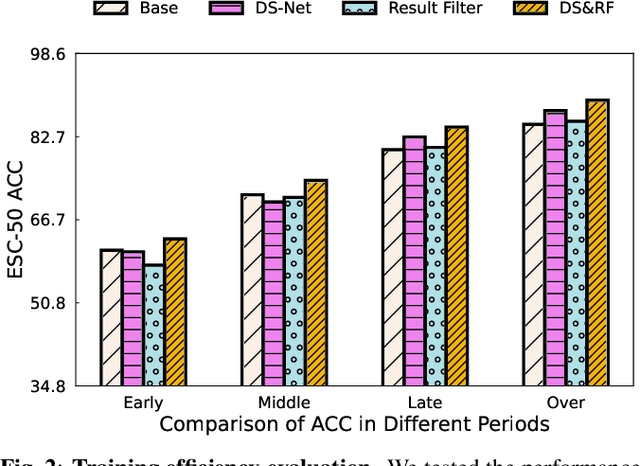
This paper presents an innovative approach called BGTAI to simplify multimodal understanding by utilizing gloss-based annotation as an intermediate step in aligning Text and Audio with Images. While the dynamic temporal factors in textual and audio inputs contain various predicate adjectives that influence the meaning of the entire sentence, images, on the other hand, present static scenes. By representing text and audio as gloss notations that omit complex semantic nuances, a better alignment with images can potentially be achieved. This study explores the feasibility of this idea, specifically, we first propose the first Langue2Gloss model and then integrate it into the multimodal model UniBriVL for joint training. To strengthen the adaptability of gloss with text/audio and overcome the efficiency and instability issues in multimodal training, we propose a DS-Net (Data-Pair Selection Network), an Result Filter module, and a novel SP-Loss function. Our approach outperforms previous multimodal models in the main experiments, demonstrating its efficacy in enhancing multimodal representations and improving compatibility among text, audio, visual, and any sequence modalities.