 Add to Chrome
 Add to Firefox
 Add to Edge
A Hybrid Framework for Natural Language Querying of IFC Models with Relational and Graph Representations
May 13, 2026
Building Information Modeling (BIM) is widely used in the Architecture, Engineering, and Construction (AEC) industry, but the complexity of Industry Foundation Classes (IFC) limits accessibility for non-expert users. To address this, we introduce IfcLLM, a hybrid framework for natural language interaction with IFC-based BIM models. It transforms IFC models into complementary representations: a relational representation for structured element properties and geometry, and a graph representation for topological relationships. These representations are integrated through iterative retry-and-refine LLM reasoning. We implement the framework using an open-weight LLM (GPT OSS 120B), supporting reproducible and deployment-oriented workflows. Evaluation on three IFC models with queries derived from 30 scenarios shows first-attempt accuracy of 93.3%-100%, with all failures recovered using a fallback LLM. The results show that combining complementary representations with iterative reasoning enables more accessible natural language querying of IFC data while supporting routine BIM analysis tasks.

Neural Networks for Emotion Classification
May 30, 2011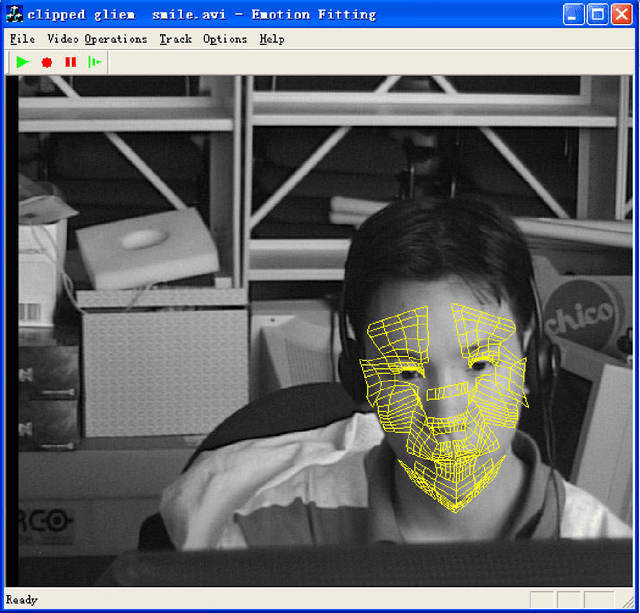

It is argued that for the computer to be able to interact with humans, it needs to have the communication skills of humans. One of these skills is the ability to understand the emotional state of the person. This thesis describes a neural network-based approach for emotion classification. We learn a classifier that can recognize six basic emotions with an average accuracy of 77% over the Cohn-Kanade database. The novelty of this work is that instead of empirically selecting the parameters of the neural network, i.e. the learning rate, activation function parameter, momentum number, the number of nodes in one layer, etc. we developed a strategy that can automatically select comparatively better combination of these parameters. We also introduce another way to perform back propagation. Instead of using the partial differential of the error function, we use optimal algorithm; namely Powell's direction set to minimize the error function. We were also interested in construction an authentic emotion databases. This is a very important task because nowadays there is no such database available. Finally, we perform several experiments and show that our neural network approach can be successfully used for emotion recognition.