 Add to Chrome
 Add to Firefox
 Add to Edge
Optimizing Clinical Trial Protocols Using EHR-Derived Heterogeneous Treatment Effects
Jul 18, 2026
Traditional randomized trials often obscure clinically meaningful heterogeneity in treatment response by focusing on average effects. Leveraging real-world data to emulate clinical trials and estimate heterogeneous treatment effects (HTEs) offers a promising path toward more precise and efficient trial design. In this study, we emulate the DAPA-HF trial using electronic health records from the Mayo Clinic Cloud (MCC) to investigate whether HTE-guided stratification can identify patient subgroups with distinct treatment responses to dapagliflozin versus placebo in patients with heart failure with reduced ejection fraction. All-cause mortality was evaluated using Cox proportional hazards models, with HTEs estimated using a Meta-S learner and subgroups defined using a decision tree-based thresholding approach. In the overall cohort of the emulation, no significant treatment difference was observed (HR, 1.681; 95% CI, 0.828-3.413; p = 0.1507). However, compared with the overall emulated cohort, in which dapagliflozin showed no statistically significant survival benefit, HTE-driven stratification identified subgroups with significant and directionally distinct treatment effects. The beneficial (low-HTE) subgroup showed a significant survival benefit from dapagliflozin (HR = 0.203, 95% CI, 0.087-0.476, p = 0.0002), whereas the harmful (high-HTE) subgroup showed a significant harmful association with markedly increased mortality risk (HR = 6.680, 95% CI, 2.759-16.171, p < 0.0001). These findings indicate that HTE-guided stratification can uncover clinically meaningful beneficial and harmful treatment-effect patterns that are masked in the full-cohort emulation.

A scale invariant ranking function for learning-to-rank: a real-world use case
Oct 21, 2021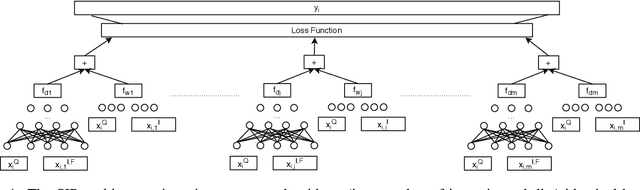
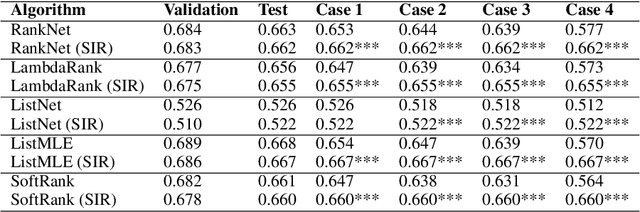
Nowadays, Online Travel Agencies provide the main service for booking holidays, business trips, accommodations, etc. As in many e-commerce services where users, items, and preferences are involved, the use of a Recommender System facilitates the navigation of the marketplaces. One of the main challenges when productizing machine learning models (and in this case, Learning-to-Rank models) is the need of, not only consistent pre-processing transformations, but also input features maintaining a similar scale both at training and prediction time. However, the features' scale does not necessarily stay the same in the real-world production environment, which could lead to unexpected ranking order. Normalization techniques such as feature standardization, batch normalization and layer normalization are commonly used to tackle the scaling issue. However, these techniques. To address this issue, in this paper we propose a novel scale-invariant ranking function (dubbed as SIR) which is accomplished by combining a deep and a wide neural network. We incorporate SIR with five state-of-the-art Learning-to-Rank models and compare the performance of the combined models with the classic algorithms on a large data set containing 56 million booked searches from the Hotels.com website. Besides, we simulate four real-world scenarios where the features' scale at the test set is inconsistent with that at the training set. The results reveal that when the features' scale is inconsistent at prediction time, Learning-To-Rank methods incorporating SIR outperform their original counterpart in all scenarios (with performance difference up to 14.7%), while when the features' scale at the training and test set are consistent our proposal achieves comparable accuracy to the classic algorithms.