 Add to Chrome
 Add to Firefox
 Add to Edge
Optimizing Clinical Trial Protocols Using EHR-Derived Heterogeneous Treatment Effects
Jul 18, 2026
Traditional randomized trials often obscure clinically meaningful heterogeneity in treatment response by focusing on average effects. Leveraging real-world data to emulate clinical trials and estimate heterogeneous treatment effects (HTEs) offers a promising path toward more precise and efficient trial design. In this study, we emulate the DAPA-HF trial using electronic health records from the Mayo Clinic Cloud (MCC) to investigate whether HTE-guided stratification can identify patient subgroups with distinct treatment responses to dapagliflozin versus placebo in patients with heart failure with reduced ejection fraction. All-cause mortality was evaluated using Cox proportional hazards models, with HTEs estimated using a Meta-S learner and subgroups defined using a decision tree-based thresholding approach. In the overall cohort of the emulation, no significant treatment difference was observed (HR, 1.681; 95% CI, 0.828-3.413; p = 0.1507). However, compared with the overall emulated cohort, in which dapagliflozin showed no statistically significant survival benefit, HTE-driven stratification identified subgroups with significant and directionally distinct treatment effects. The beneficial (low-HTE) subgroup showed a significant survival benefit from dapagliflozin (HR = 0.203, 95% CI, 0.087-0.476, p = 0.0002), whereas the harmful (high-HTE) subgroup showed a significant harmful association with markedly increased mortality risk (HR = 6.680, 95% CI, 2.759-16.171, p < 0.0001). These findings indicate that HTE-guided stratification can uncover clinically meaningful beneficial and harmful treatment-effect patterns that are masked in the full-cohort emulation.

Class-Incremental Few-Shot Object Detection
May 17, 2021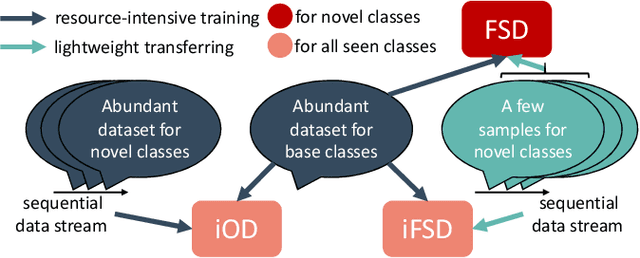
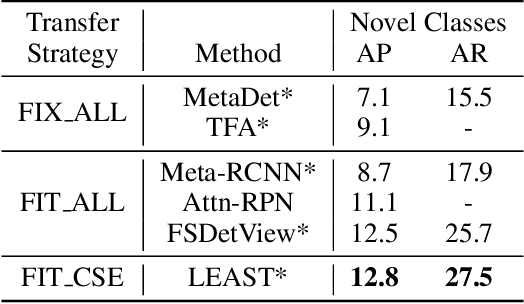
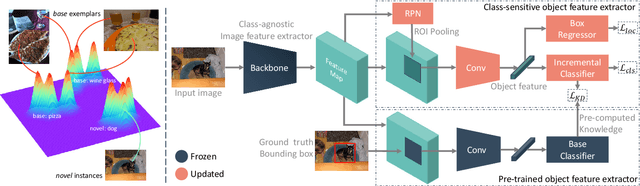
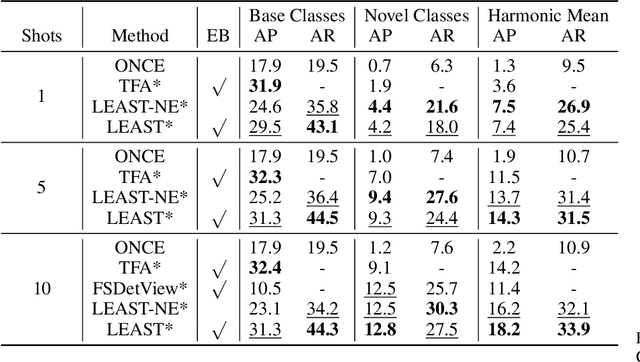
Conventional detection networks usually need abundant labeled training samples, while humans can learn new concepts incrementally with just a few examples. This paper focuses on a more challenging but realistic class-incremental few-shot object detection problem (iFSD). It aims to incrementally transfer the model for novel objects from only a few annotated samples without catastrophically forgetting the previously learned ones. To tackle this problem, we propose a novel method LEAST, which can transfer with Less forgetting, fEwer training resources, And Stronger Transfer capability. Specifically, we first present the transfer strategy to reduce unnecessary weight adaptation and improve the transfer capability for iFSD. On this basis, we then integrate the knowledge distillation technique using a less resource-consuming approach to alleviate forgetting and propose a novel clustering-based exemplar selection process to preserve more discriminative features previously learned. Being a generic and effective method, LEAST can largely improve the iFSD performance on various benchmarks.
Fine-grained Semantic Constraint in Image Synthesis
Jan 12, 2021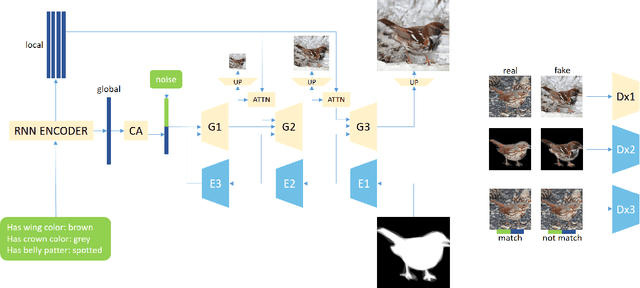
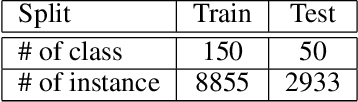

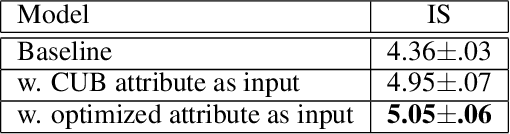
In this paper, we propose a multi-stage and high-resolution model for image synthesis that uses fine-grained attributes and masks as input. With a fine-grained attribute, the proposed model can detailedly constrain the features of the generated image through rich and fine-grained semantic information in the attribute. With mask as prior, the model in this paper is constrained so that the generated images conform to visual senses, which will reduce the unexpected diversity of samples generated from the generative adversarial network. This paper also proposes a scheme to improve the discriminator of the generative adversarial network by simultaneously discriminating the total image and sub-regions of the image. In addition, we propose a method for optimizing the labeled attribute in datasets, which reduces the manual labeling noise. Extensive quantitative results show that our image synthesis model generates more realistic images.