 Add to Chrome
 Add to Firefox
 Add to Edge
CODE-GEN: A Human-in-the-Loop RAG-Based Agentic AI System for Multiple-Choice Question Generation
Apr 05, 2026
We present CODE-GEN, a human-in-the-Loop, retrieval-augmented generation (RAG)-based agentic AI system for generating context-aligned multiple-choice questions to develop student code reasoning and comprehension abilities. CODE-GEN employs an agentic AI architecture in which a Generator agent produces multiple-choice coding comprehension questions aligned with course-specific learning objectives, while a Validator agent independently assesses content quality across seven pedagogical dimensions. Both agents are augmented with specialized tools that enhance computational accuracy and verify code outputs. To evaluate the effectiveness of CODE-GEN, we conducted an evaluation study involving six human subject-matter experts (SMEs) who judged 288 AI-generated questions. The SMEs produced a total of 2,016 human-AI rating pairs, indicating agreement or disagreement with the assessments of Validator, along with 131 instances of qualitative feedback. Analyses of SME judgments show strong system performance, with human-validated success rates ranging from 79.9% to 98.6% across the seven pedagogical dimensions. The analysis of qualitative feedback reveals that CODE-GEN achieves high reliability on dimensions well suited to computational verification and explicit criteria matching, including question clarity, code validity, concept alignment, and correct answer validity. In contrast, human expertise remains essential for dimensions requiring deeper instructional judgment, such as designing pedagogically meaningful distractors and providing high-quality feedback that reinforces understanding. These findings inform the strategic allocation of human and AI effort in AI-assisted educational content generation.

H-COAL: Human Correction of AI-Generated Labels for Biomedical Named Entity Recognition
Nov 20, 2023
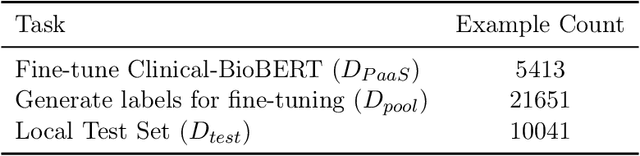


With the rapid advancement of machine learning models for NLP tasks, collecting high-fidelity labels from AI models is a realistic possibility. Firms now make AI available to customers via predictions as a service (PaaS). This includes PaaS products for healthcare. It is unclear whether these labels can be used for training a local model without expensive annotation checking by in-house experts. In this work, we propose a new framework for Human Correction of AI-Generated Labels (H-COAL). By ranking AI-generated outputs, one can selectively correct labels and approach gold standard performance (100% human labeling) with significantly less human effort. We show that correcting 5% of labels can close the AI-human performance gap by up to 64% relative improvement, and correcting 20% of labels can close the performance gap by up to 86% relative improvement.