 Add to Chrome
 Add to Firefox
 Add to Edge
Multi-stage neural operator learning with application for convolutions
Aug 19, 2026
Convolution integrals widely exist in applications, and to enable fast and accurate computations, this paper introduces two general multi-stage neural operator learning frameworks. The first, Deep Collocation Neural Operator (DCNO), is a supervised approach that iteratively refines the operator approximation by learning residuals from input-output data pairs. The second, Deep Galerkin Neural Operator (DGNO), is an unsupervised framework applicable when the target operator can be represented by a PDE, leveraging the weak form of the PDE residual for training. Both methods progressively construct basis operators through multiple training stages to enrich the approximation space, leading to significantly improved accuracy over standard one-shot operator learning. We provide theoretical analysis for their approximation capabilities and implement them for learning convolutions. Extensive numerical experiments demonstrate that both DCNO and DGNO achieve high accuracy, approaching machine precision under single float for convolution problems, and offer substantial efficiency gains for numerous queries or parametric variations compared to traditional solvers. We also extend these frameworks to handle multi-input operator learning scenarios involving variations in both the density and kernel of a convolution.

Unsupervised operator learning approach for dissipative equations via Onsager principle
Aug 10, 2025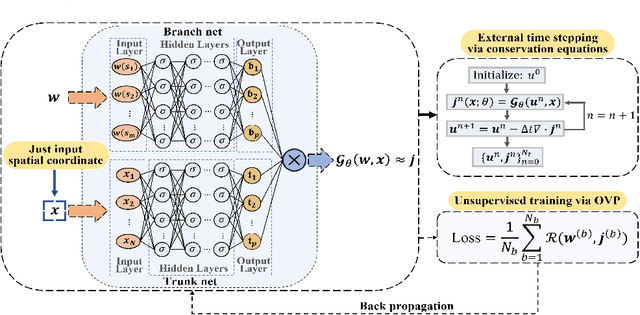
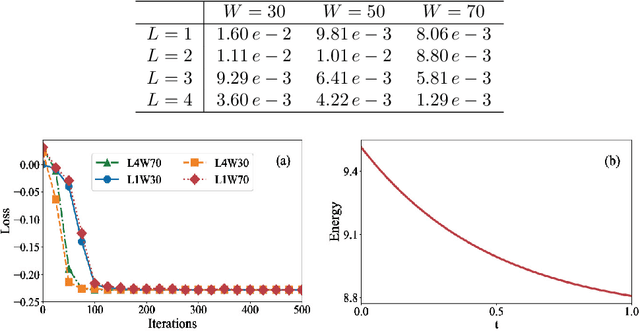
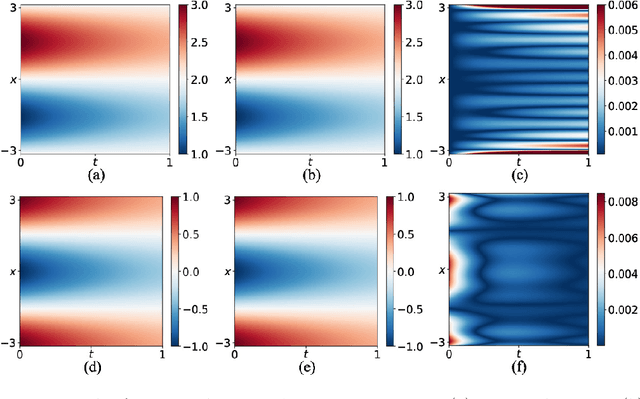

Existing operator learning methods rely on supervised training with high-fidelity simulation data, introducing significant computational cost. In this work, we propose the deep Onsager operator learning (DOOL) method, a novel unsupervised framework for solving dissipative equations. Rooted in the Onsager variational principle (OVP), DOOL trains a deep operator network by directly minimizing the OVP-defined Rayleighian functional, requiring no labeled data, and then proceeds in time explicitly through conservation/change laws for the solution. Another key innovation here lies in the spatiotemporal decoupling strategy: the operator's trunk network processes spatial coordinates exclusively, thereby enhancing training efficiency, while integrated external time stepping enables temporal extrapolation. Numerical experiments on typical dissipative equations validate the effectiveness of the DOOL method, and systematic comparisons with supervised DeepONet and MIONet demonstrate its enhanced performance. Extensions are made to cover the second-order wave models with dissipation that do not directly follow OVP.