 Add to Chrome
 Add to Firefox
 Add to Edge
Qwen-BIM: developing large language model for BIM-based design with domain-specific benchmark and dataset
Feb 24, 2026
As the construction industry advances toward digital transformation, BIM (Building Information Modeling)-based design has become a key driver supporting intelligent construction. Despite Large Language Models (LLMs) have shown potential in promoting BIM-based design, the lack of specific datasets and LLM evaluation benchmarks has significantly hindered the performance of LLMs. Therefore, this paper addresses this gap by proposing: 1) an evaluation benchmark for BIM-based design together with corresponding quantitative indicators to evaluate the performance of LLMs, 2) a method for generating textual data from BIM and constructing corresponding BIM-derived datasets for LLM evaluation and fine-tuning, and 3) a fine-tuning strategy to adapt LLMs for BIM-based design. Results demonstrate that the proposed domain-specific benchmark effectively and comprehensively assesses LLM capabilities, highlighting that general LLMs are still incompetent for domain-specific tasks. Meanwhile, with the proposed benchmark and datasets, Qwen-BIM is developed and achieves a 21.0% average increase in G-Eval score compared to the base LLM model. Notably, with only 14B parameters, performance of Qwen-BIM is comparable to that of general LLMs with 671B parameters for BIM-based design tasks. Overall, this study develops the first domain-specific LLM for BIM-based design by introducing a comprehensive benchmark and high-quality dataset, which provide a solid foundation for developing BIM-related LLMs in various fields.

What makes a good BIM design: quantitative linking between design behavior and quality
Nov 14, 2024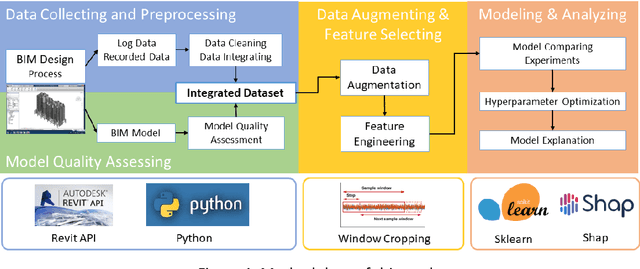
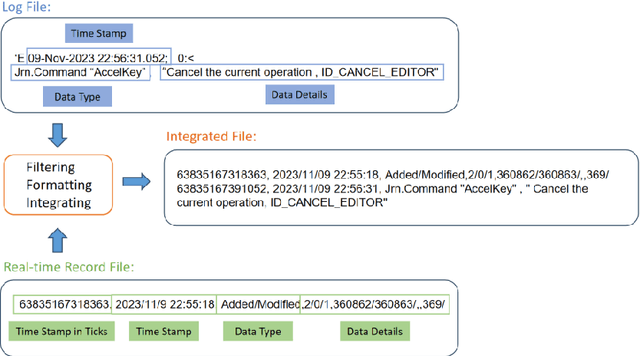
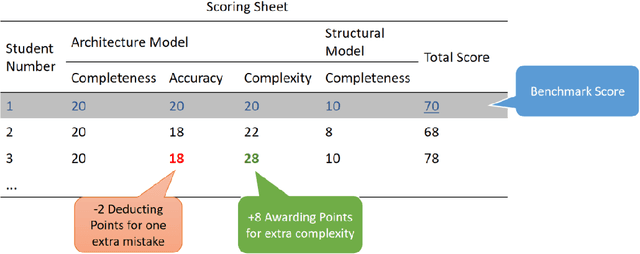

In the Architecture Engineering & Construction (AEC) industry, how design behaviors impact design quality remains unclear. This study proposes a novel approach, which, for the first time, identifies and quantitatively describes the relationship between design behaviors and quality of design based on Building Information Modeling (BIM). Real-time collection and log mining are integrated to collect raw data of design behaviors. Feature engineering and various machine learning models are then utilized for quantitative modeling and interpretation. Results confirm an existing quantifiable relationship which can be learned by various models. The best-performing model using Extremely Random Trees achieved an R2 value of 0.88 on the test set. Behavioral features related to designer's skill level and changes of design intentions are identified to have significant impacts on design quality. These findings deepen our understanding of the design process and help forming BIM designs with better quality.