 Add to Chrome
 Add to Firefox
 Add to Edge
InfScene-SR: Spatially Continuous Inference for Arbitrary-Size Image Super-Resolution
Feb 23, 2026
Image Super-Resolution (SR) aims to recover high-resolution (HR) details from low-resolution (LR) inputs, a task where Denoising Diffusion Probabilistic Models (DDPMs) have recently shown superior performance compared to Generative Adversarial Networks (GANs) based approaches. However, standard diffusion-based SR models, such as SR3, are typically trained on fixed-size patches and struggle to scale to arbitrary-sized images due to memory constraints. Applying these models via independent patch processing leads to visible seams and inconsistent textures across boundaries. In this paper, we propose InfScene-SR, a framework enabling spatially continuous super-resolution for large, arbitrary scenes. We adapt the iterative refinement process of diffusion models with a novel guided and variance-corrected fusion mechanism, allowing for the seamless generation of large-scale high-resolution imagery without retraining. We validate our approach on remote sensing datasets, demonstrating that InfScene-SR not only reconstructs fine details with high perceptual quality but also eliminates boundary artifacts, benefiting downstream tasks such as semantic segmentation.

Interactive segmentation in aerial images: a new benchmark and an open access web-based tool
Aug 25, 2023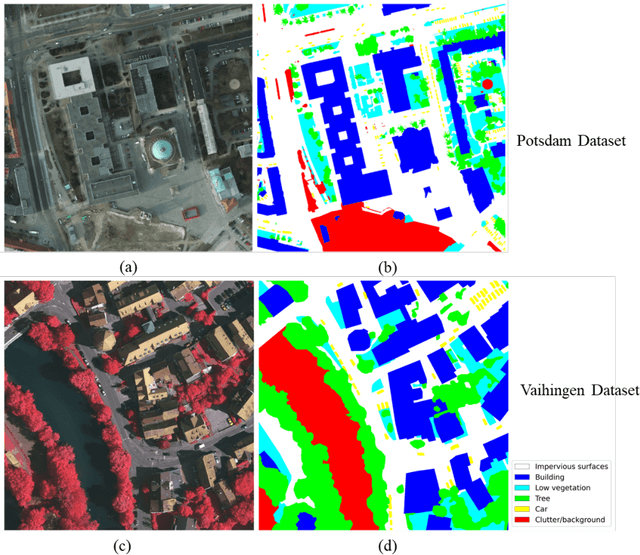
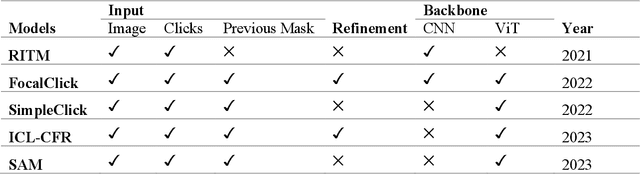

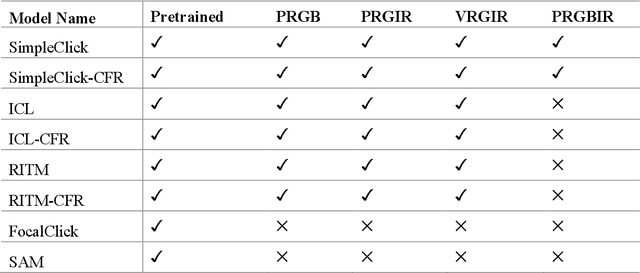
In recent years, deep learning has emerged as a powerful approach in remote sensing applications, particularly in segmentation and classification techniques that play a crucial role in extracting significant land features from satellite and aerial imagery. However, only a limited number of papers have discussed the use of deep learning for interactive segmentation in land cover classification tasks. In this study, we aim to bridge the gap between interactive segmentation and remote sensing image analysis by conducting a benchmark study on various deep learning-based interactive segmentation models. We assessed the performance of five state-of-the-art interactive segmentation methods (SimpleClick, FocalClick, Iterative Click Loss (ICL), Reviving Iterative Training with Mask Guidance for Interactive Segmentation (RITM), and Segment Anything (SAM)) on two high-resolution aerial imagery datasets. To enhance the segmentation results without requiring multiple models, we introduced the Cascade-Forward Refinement (CFR) approach, an innovative inference strategy for interactive segmentation. We evaluated these interactive segmentation methods on various land cover types, object sizes, and band combinations in remote sensing. Surprisingly, the popularly discussed method, SAM, proved to be ineffective for remote sensing images. Conversely, the point-based approach used in the SimpleClick models consistently outperformed the other methods in all experiments. Building upon these findings, we developed a dedicated online tool called RSISeg for interactive segmentation of remote sensing data. RSISeg incorporates a well-performing interactive model, fine-tuned with remote sensing data. Additionally, we integrated the SAM model into this tool. Compared to existing interactive segmentation tools, RSISeg offers strong interactivity, modifiability, and adaptability to remote sensing data.