 Add to Chrome
 Add to Firefox
 Add to Edge
Combining Mechanical and Agentic Specification Inference for Move
May 11, 2026
In this paper, we describe early work on a specification inference tool for the Move Prover that combines a weakest-precondition (WP) analysis over Move bytecode with an agentic coding CLI such as Claude Code. Specification inference reduces the boilerplate of writing specifications in Move: in order to verify a high-level property such as a global state invariant, pre- and post-conditions for the supporting functions typically have to be written by hand, which is tedious. In our setting, a Model Context Protocol (MCP) service exposes the WP analysis and the prover itself to the coding agent. The WP analysis provides a sound, mechanical baseline for inference; the AI is used precisely where WP is weakest -- for loop invariants and high-level idiomatic specifications such as monotonicity, conservation, and structural invariants. The Move Prover serves as the oracle that decides whether the generated specs are valid, and the agent is equipped to generate proof hints and to refine the inferred specification until verification succeeds. The tool has been applied to a corpus of canonical Move code, including code that uses higher-order functions, dynamic dispatch, global state, references, and various forms of loops.

Towards Federated Learning at Scale: System Design
Mar 22, 2019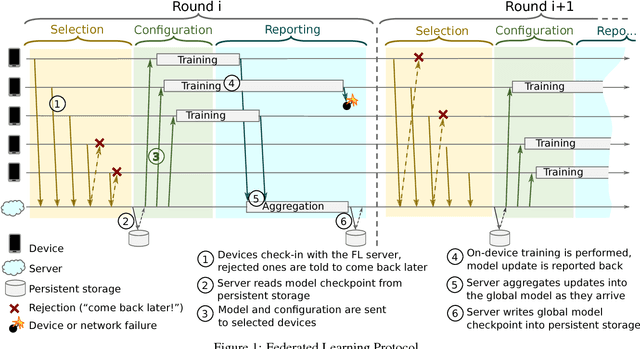
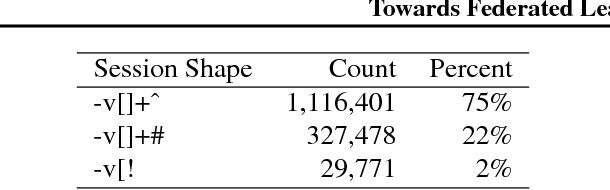
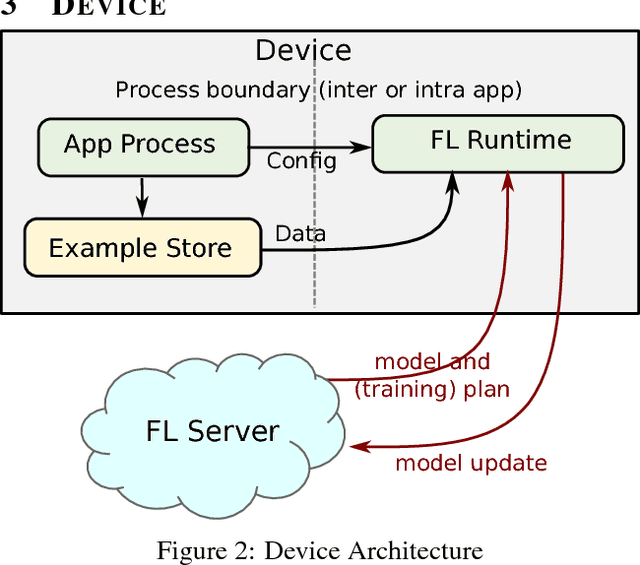
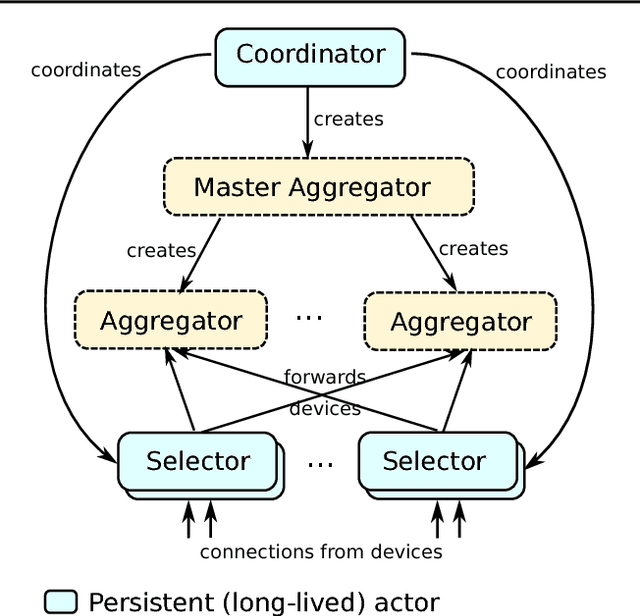
Federated Learning is a distributed machine learning approach which enables model training on a large corpus of decentralized data. We have built a scalable production system for Federated Learning in the domain of mobile devices, based on TensorFlow. In this paper, we describe the resulting high-level design, sketch some of the challenges and their solutions, and touch upon the open problems and future directions.