 Add to Chrome
 Add to Firefox
 Add to Edge
Variationally correct operator learning: Reduced basis neural operator with a posteriori error estimation
Dec 24, 2025
Minimizing PDE-residual losses is a common strategy to promote physical consistency in neural operators. However, standard formulations often lack variational correctness, meaning that small residuals do not guarantee small solution errors due to the use of non-compliant norms or ad hoc penalty terms for boundary conditions. This work develops a variationally correct operator learning framework by constructing first-order system least-squares (FOSLS) objectives whose values are provably equivalent to the solution error in PDE-induced norms. We demonstrate this framework on stationary diffusion and linear elasticity, incorporating mixed Dirichlet-Neumann boundary conditions via variational lifts to preserve norm equivalence without inconsistent penalties. To ensure the function space conformity required by the FOSLS loss, we propose a Reduced Basis Neural Operator (RBNO). The RBNO predicts coefficients for a pre-computed, conforming reduced basis, thereby ensuring variational stability by design while enabling efficient training. We provide a rigorous convergence analysis that bounds the total error by the sum of finite element discretization bias, reduced basis truncation error, neural network approximation error, and statistical estimation errors arising from finite sampling and optimization. Numerical benchmarks validate these theoretical bounds and demonstrate that the proposed approach achieves superior accuracy in PDE-compliant norms compared to standard baselines, while the residual loss serves as a reliable, computable a posteriori error estimator.

Optimized imaging using non-rigid registration
Mar 26, 2014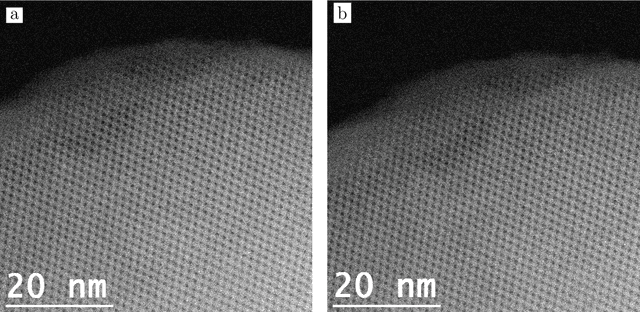
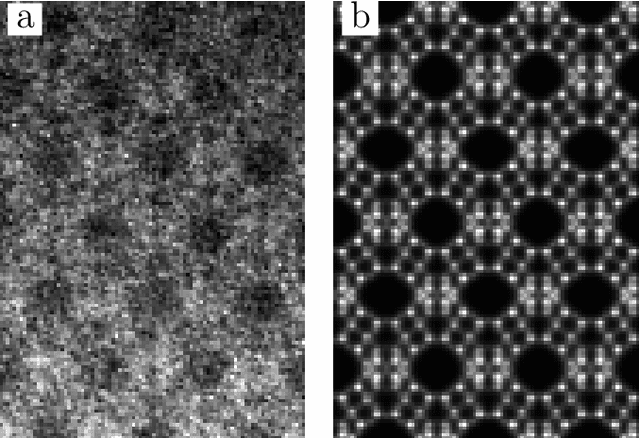
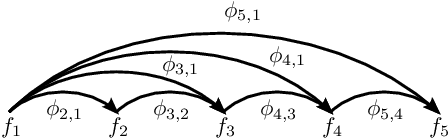
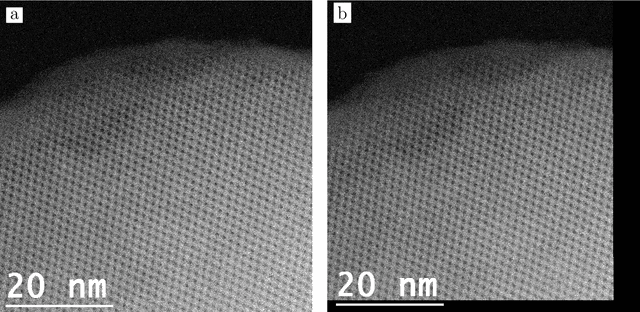
The extraordinary improvements of modern imaging devices offer access to data with unprecedented information content. However, widely used image processing methodologies fall far short of exploiting the full breadth of information offered by numerous types of scanning probe, optical, and electron microscopies. In many applications, it is necessary to keep measurement intensities below a desired threshold. We propose a methodology for extracting an increased level of information by processing a series of data sets suffering, in particular, from high degree of spatial uncertainty caused by complex multiscale motion during the acquisition process. An important role is played by a nonrigid pixel-wise registration method that can cope with low signal-to-noise ratios. This is accompanied by formulating objective quality measures which replace human intervention and visual inspection in the processing chain. Scanning transmission electron microscopy of siliceous zeolite material exhibits the above-mentioned obstructions and therefore serves as orientation and a test of our procedures.