 Add to Chrome
 Add to Firefox
 Add to Edge
AnyBand-Diff: A Unified Remote Sensing Image Generation and Band Repair Framework with Spectral Priors
May 14, 2026
Existing diffusion models have made significant progress in generating realistic images. However, their direct adaptation to remote sensing imagery often disregards intrinsic physical laws. This oversight frequently leads to spectral distortion and radiometric inconsistency, severely limiting the scientific utility of generated data. To address this issue, this paper introduces AnyBand-Diff, a novel spectral-prior-guided diffusion framework tailored for robust spectral reconstruction. Specifically, we design a Masked Conditional Diffusion backbone integrated with a dual stochastic masking strategy, empowering the model to recover complete spectral information from arbitrary band subsets. Subsequently, to ensure radiometric fidelity, a Physics-Guided Sampling mechanism is proposed, leveraging gradients from a differentiable physical model to explicitly steer the denoising trajectory toward the manifold of physically plausible solutions. Furthermore, a Multi-Scale Physical Loss is formulated to enforce rigorous constraints across pixel, region, and global levels in a joint manner. Extensive experiments confirm the effectiveness of AnyBand-Diff in generating reliable imagery and achieving accurate spectral reconstruction, contributing to the advancement of physics-aware generative methods for Earth observation.

CNN-based Prediction of Network Robustness With Missing Edges
Aug 25, 2022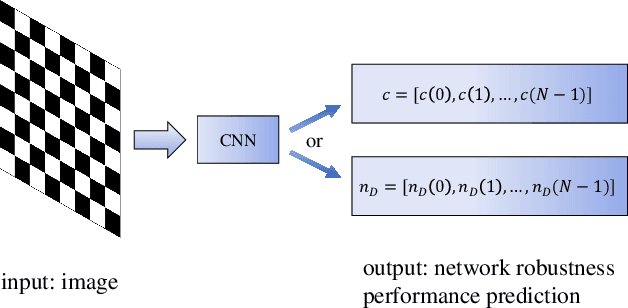
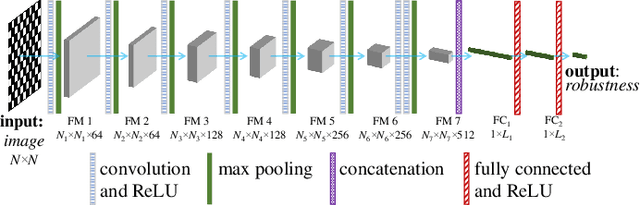
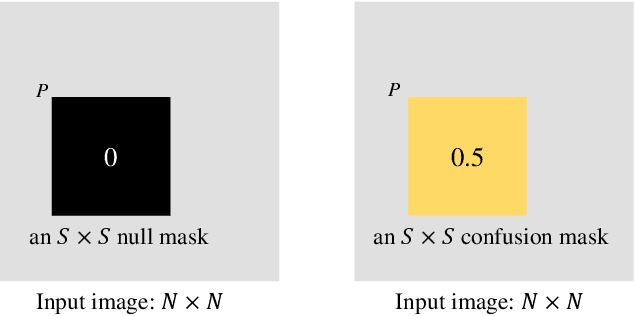
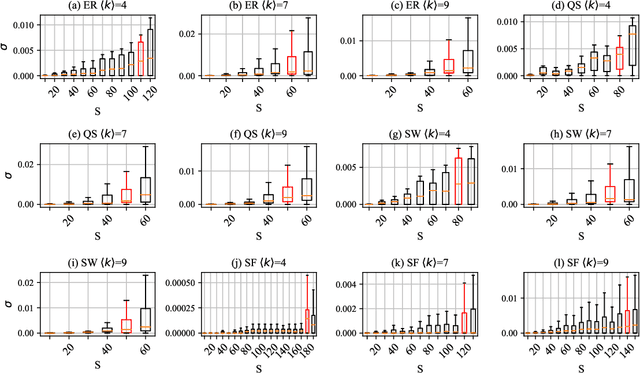
Connectivity and controllability of a complex network are two important issues that guarantee a networked system to function. Robustness of connectivity and controllability guarantees the system to function properly and stably under various malicious attacks. Evaluating network robustness using attack simulations is time consuming, while the convolutional neural network (CNN)-based prediction approach provides a cost-efficient method to approximate the network robustness. In this paper, we investigate the performance of CNN-based approaches for connectivity and controllability robustness prediction, when partial network information is missing, namely the adjacency matrix is incomplete. Extensive experimental studies are carried out. A threshold is explored that if a total amount of more than 7.29\% information is lost, the performance of CNN-based prediction will be significantly degenerated for all cases in the experiments. Two scenarios of missing edge representations are compared, 1) a missing edge is marked `no edge' in the input for prediction, and 2) a missing edge is denoted using a special marker of `unknown'. Experimental results reveal that the first representation is misleading to the CNN-based predictors.