 Add to Chrome
 Add to Firefox
 Add to Edge
Beyond Reward: A Bounded Measure of Agent Environment Coupling
Mar 01, 2026
Real-world reinforcement learning (RL) agents operate in closed-loop systems where actions shape future observations, making reliable deployment under distribution shifts a persistent challenge. Existing monitoring relies on reward or task metrics, capturing outcomes but missing early coupling failures. We introduce bipredictability (P) as the ratio of shared information in the observation, action, outcome loop to the total available information, a principled, real time measure of interaction effectiveness with provable bounds, comparable across tasks. An auxiliary monitor, the Information Digital Twin (IDT), computes P and its diagnostic components from the interaction stream. We evaluate SAC and PPO agents on MuJoCo HalfCheetah under eight agent, and environment-side perturbations across 168 trials. Under nominal operation, agents exhibit P = 0.33 plus minus 0.02, below the classical bound of 0.5, revealing an informational cost of action selection. The IDT detects 89.3% of perturbations versus 44.0% for reward based monitoring, with 4.4x lower median latency. Bipredictability enables early detection of interaction degradation before performance drops and provides a prerequisite signal for closed loop self regulation in deployed RL systems.

Information-Theoretic Framework for Self-Adapting Model Predictive Controllers
Mar 01, 2026Model Predictive Control (MPC) is a vital technique for autonomous systems, like Unmanned Aerial Vehicles (UAVs), enabling optimized motion planning. However, traditional MPC struggles to adapt to real-time changes such as dynamic obstacles and shifting system dynamics, lacking inherent mechanisms for self-monitoring and adaptive optimization. Here, we introduce Entanglement Learning (EL), an information-theoretic framework that enhances MPC adaptability through an Information Digital Twin (IDT). The IDT monitors and quantifies, in bits, the information flow between MPC inputs, control actions, and UAV behavior. By introducing new information-theoretic metrics we call entanglement metrics, it tracks variations in these dependencies. These metrics measure the mutual information between the optimizer's input, its control actions, and the resulting UAV dynamics, enabling a deeper understanding of their interrelationships. This allows the IDT to detect performance deviations and generate real-time adaptive signals to recalibrate MPC parameters, preserving stability. Unlike traditional MPC, which relies on error-based feedback, this dual-feedback approach leverages information flow for proactive adaptation to evolving conditions. Scalable and leveraging existing infrastructure, this framework improves MPC reliability and robustness across diverse scenarios, extending beyond UAV control to any MPC implementation requiring adaptive performance.
A Mathematical Theory of Agency and Intelligence
Feb 26, 2026To operate reliably under changing conditions, complex systems require feedback on how effectively they use resources, not just whether objectives are met. Current AI systems process vast information to produce sophisticated predictions, yet predictions can appear successful while the underlying interaction with the environment degrades. What is missing is a principled measure of how much of the total information a system deploys is actually shared between its observations, actions, and outcomes. We prove this shared fraction, which we term bipredictability, P, is intrinsic to any interaction, derivable from first principles, and strictly bounded: P can reach unity in quantum systems, P equal to, or smaller than 0.5 in classical systems, and lower once agency (action selection) is introduced. We confirm these bounds in a physical system (double pendulum), reinforcement learning agents, and multi turn LLM conversations. These results distinguish agency from intelligence: agency is the capacity to act on predictions, whereas intelligence additionally requires learning from interaction, self-monitoring of its learning effectiveness, and adapting the scope of observations, actions, and outcomes to restore effective learning. By this definition, current AI systems achieve agency but not intelligence. Inspired by thalamocortical regulation in biological systems, we demonstrate a feedback architecture that monitors P in real time, establishing a prerequisite for adaptive, resilient AI.
Entropy-Based Non-Invasive Reliability Monitoring of Convolutional Neural Networks
Aug 29, 2025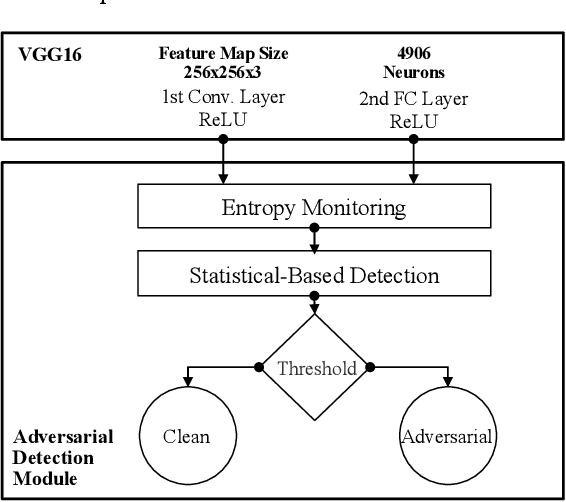
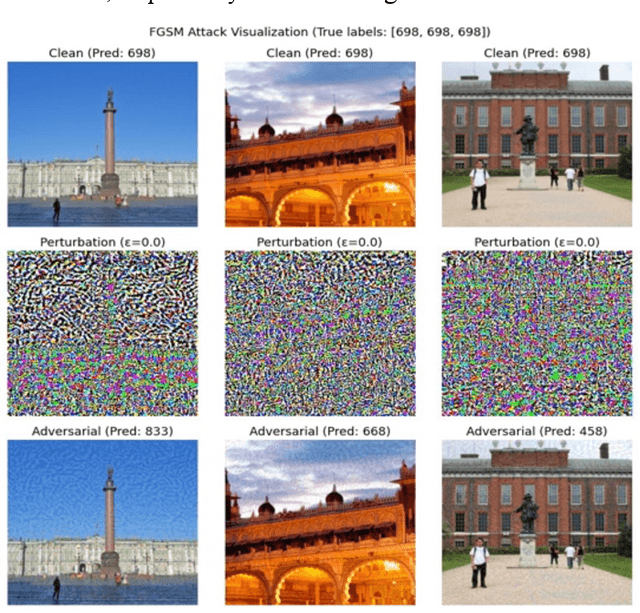
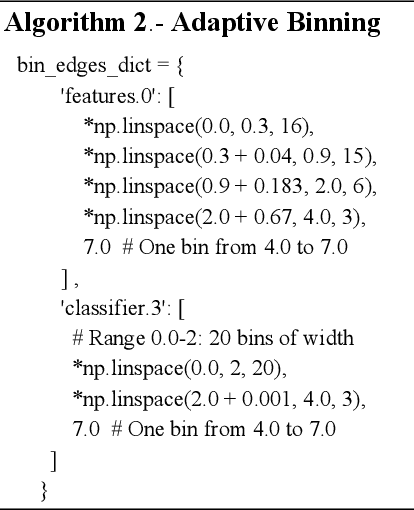
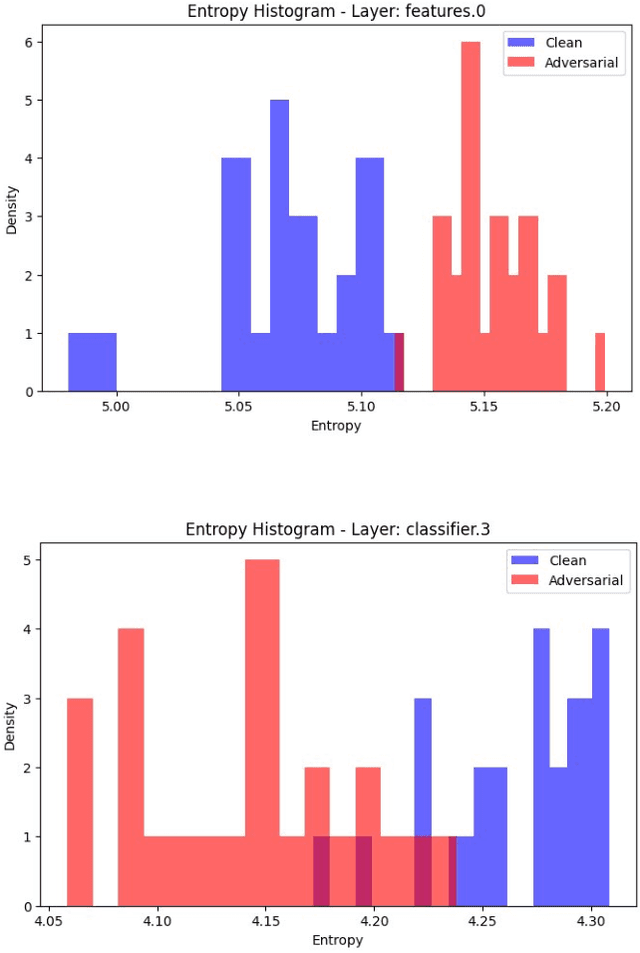
Convolutional Neural Networks (CNNs) have become the foundation of modern computer vision, achieving unprecedented accuracy across diverse image recognition tasks. While these networks excel on in-distribution data, they remain vulnerable to adversarial perturbations imperceptible input modifications that cause misclassification with high confidence. However, existing detection methods either require expensive retraining, modify network architecture, or degrade performance on clean inputs. Here we show that adversarial perturbations create immediate, detectable entropy signatures in CNN activations that can be monitored without any model modification. Using parallel entropy monitoring on VGG-16, we demonstrate that adversarial inputs consistently shift activation entropy by 7% in early convolutional layers, enabling 90% detection accuracy with false positives and false negative rates below 20%. The complete separation between clean and adversarial entropy distributions reveals that CNNs inherently encode distribution shifts in their activation patterns. This work establishes that CNN reliability can be assessed through activation entropy alone, enabling practical deployment of self-diagnostic vision systems that detect adversarial inputs in real-time without compromising original model performance.