 Add to Chrome
 Add to Firefox
 Add to Edge
RAVEN: Agentic RAG for Automated Vulnerability Repair
Jun 21, 2026
Automated vulnerability repair has emerged as a promising direction to mitigate the growing number of software vulnerabilities. Recent advances in Large Language Models (LLMs) have further accelerated research in automated repair. However, existing frameworks remain largely restricted to memory-related vulnerabilities and locally repairable vulnerability settings, leaving generalization to unseen vulnerability types underexplored. Their evaluations are often limited to a single programming language, and largely rely on proprietary models. In this paper, we propose RAVEN, a scalable, efficient and autonomous framework that integrates an agentic retrieval-augmented generation (RAG) pipeline with controlled iterative repair in a unified framework. The framework utilizes open-source LLMs in a fully locally deployable setting with limited GPU requirements, while building a multi-faceted retrieval pipeline to retrieve historically relevant vulnerability fixes and guide the patch generation. In addition, RAVEN introduces a dedicated Curator Agent that retrieves cross-file dependencies from the target repository, to fix complex vulnerabilities that cannot be addressed using local vulnerable code alone. We evaluate RAVEN on 160 real-world CVE vulnerabilities across diverse vulnerability types, two programming languages, unseen CWE categories, and out-of-distribution settings. RAVEN achieves an overall repair success rate of 83.13%, outperforming all existing state-of-the-art repair frameworks, while also demonstrating strong generalization capabilities and maintaining the repair cost negligible.

GNN-Based Code Annotation Logic for Establishing Security Boundaries in C Code
Nov 19, 2024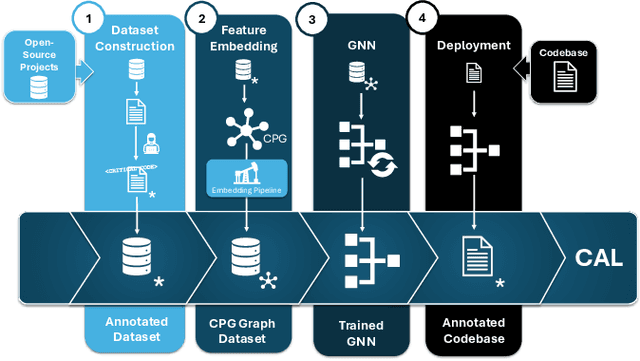
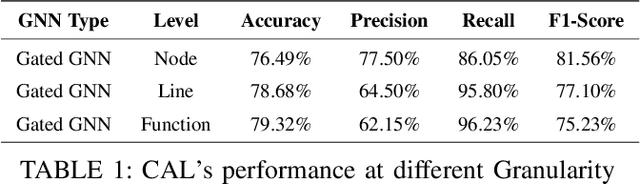
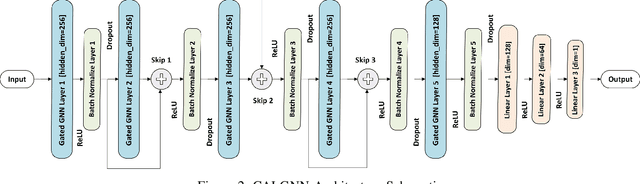

Securing sensitive operations in today's interconnected software landscape is crucial yet challenging. Modern platforms rely on Trusted Execution Environments (TEEs), such as Intel SGX and ARM TrustZone, to isolate security sensitive code from the main system, reducing the Trusted Computing Base (TCB) and providing stronger assurances. However, identifying which code should reside in TEEs is complex and requires specialized expertise, which is not supported by current automated tools. Existing solutions often migrate entire applications to TEEs, leading to suboptimal use and an increased TCB. To address this gap, we propose Code Annotation Logic (CAL), a pioneering tool that automatically identifies security sensitive components for TEE isolation. CAL analyzes codebases, leveraging a graph-based approach with novel feature construction and employing a custom graph neural network model to accurately determine which parts of the code should be isolated. CAL effectively optimizes TCB, reducing the burden of manual analysis and enhancing overall security. Our contributions include the definition of security sensitive code, the construction and labeling of a comprehensive dataset of source files, a feature rich graph based data preparation pipeline, and the CAL model for TEE integration. Evaluation results demonstrate CAL's efficacy in identifying sensitive code with a recall of 86.05%, an F1 score of 81.56%, and an identification rate of 91.59% for security sensitive functions. By enabling efficient code isolation, CAL advances the secure development of applications using TEEs, offering a practical solution for developers to reduce attack vectors.