 Add to Chrome
 Add to Firefox
 Add to Edge
Hardware Keystores for AI Agent Signing Workflows: A Zero-Trust MCP Enforcement Architecture
Aug 06, 2026
AI agents performing cryptographic operations (signing Git commits, authenticating API calls, issuing certificates) currently store private keys in software-accessible locations: plaintext files, environment variables, or container memory. Any process with sufficient read privileges can extract the raw key material. A recent production incident demonstrated the practical severity: private keys were exfiltrated from a widely deployed framework via email injection in under five minutes. We aim to enforce both key confidentiality and content-aware authorisation for key use. To that end, we replace software-resident keys with hardware-confined keys accessible through a vendor-neutral PKCS#11 interface. A hardware keystore (HSM, TPM, smart card) executes cryptographic operations on-device; the host receives only the result via opaque handles. Hardware confinement is the primary contribution; it is enabled by a surrounding five-layer Zero-Trust enforcement stack comprising session identity (SAGA), scope bounds (Smax), semantic validation (RAV), taint tracking, and the hardware execution boundary. We evaluate against 12 injection scenarios derived from AgentDojo's ImportantInstructionsAttack template (Debenedetti et al., arXiv:2406.13352). We run four LLM models; three follow injections in baseline mode (gpt-oss-120b, Qwen2.5-72B, DeepSeek-V4-Flash, n=192 combined). Baseline Attack Success Rate (ASR): 19.3% [14.3%, 25.4%]; protected ASR: 0% (Wilson 95% CI upper bound 2.0%). Zero false positives across four benign task scenarios.

GNN-Based Code Annotation Logic for Establishing Security Boundaries in C Code
Nov 19, 2024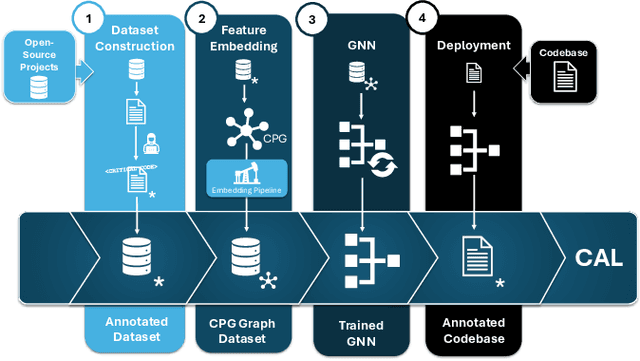
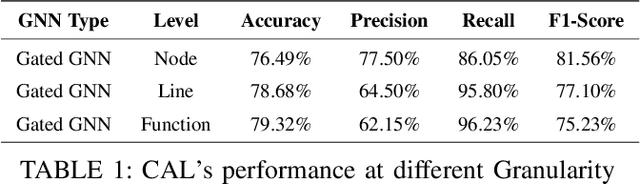
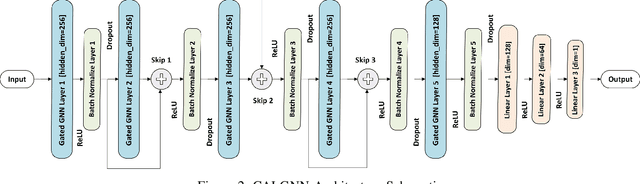

Securing sensitive operations in today's interconnected software landscape is crucial yet challenging. Modern platforms rely on Trusted Execution Environments (TEEs), such as Intel SGX and ARM TrustZone, to isolate security sensitive code from the main system, reducing the Trusted Computing Base (TCB) and providing stronger assurances. However, identifying which code should reside in TEEs is complex and requires specialized expertise, which is not supported by current automated tools. Existing solutions often migrate entire applications to TEEs, leading to suboptimal use and an increased TCB. To address this gap, we propose Code Annotation Logic (CAL), a pioneering tool that automatically identifies security sensitive components for TEE isolation. CAL analyzes codebases, leveraging a graph-based approach with novel feature construction and employing a custom graph neural network model to accurately determine which parts of the code should be isolated. CAL effectively optimizes TCB, reducing the burden of manual analysis and enhancing overall security. Our contributions include the definition of security sensitive code, the construction and labeling of a comprehensive dataset of source files, a feature rich graph based data preparation pipeline, and the CAL model for TEE integration. Evaluation results demonstrate CAL's efficacy in identifying sensitive code with a recall of 86.05%, an F1 score of 81.56%, and an identification rate of 91.59% for security sensitive functions. By enabling efficient code isolation, CAL advances the secure development of applications using TEEs, offering a practical solution for developers to reduce attack vectors.