 Add to Chrome
 Add to Firefox
 Add to Edge
GIIM: Graph-based Learning of Inter- and Intra-view Dependencies for Multi-view Medical Image Diagnosis
Mar 10, 2026
Computer-aided diagnosis (CADx) has become vital in medical imaging, but automated systems often struggle to replicate the nuanced process of clinical interpretation. Expert diagnosis requires a comprehensive analysis of how abnormalities relate to each other across various views and time points, but current multi-view CADx methods frequently overlook these complex dependencies. Specifically, they fail to model the crucial relationships within a single view and the dynamic changes lesions exhibit across different views. This limitation, combined with the common challenge of incomplete data, greatly reduces their predictive reliability. To address these gaps, we reframe the diagnostic task as one of relationship modeling and propose GIIM, a novel graph-based approach. Our framework is uniquely designed to simultaneously capture both critical intra-view dependencies between abnormalities and inter-view dynamics. Furthermore, it ensures diagnostic robustness by incorporating specific techniques to effectively handle missing data, a common clinical issue. We demonstrate the generality of this approach through extensive evaluations on diverse imaging modalities, including CT, MRI, and mammography. The results confirm that our GIIM model significantly enhances diagnostic accuracy and robustness over existing methods, establishing a more effective framework for future CADx systems.

Multi-target and multi-stage liver lesion segmentation and detection in multi-phase computed tomography scans
Apr 17, 2024
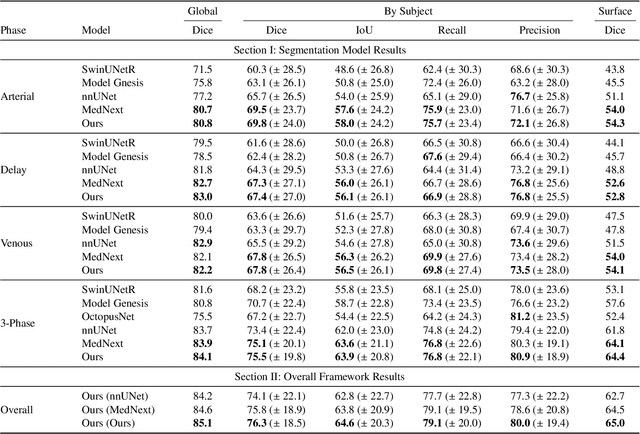

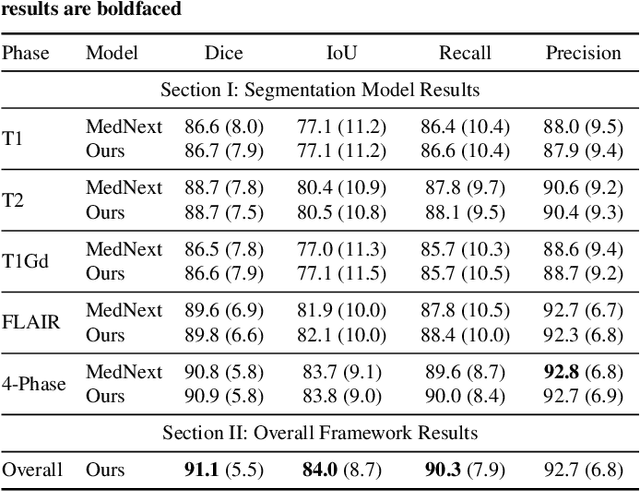
Multi-phase computed tomography (CT) scans use contrast agents to highlight different anatomical structures within the body to improve the probability of identifying and detecting anatomical structures of interest and abnormalities such as liver lesions. Yet, detecting these lesions remains a challenging task as these lesions vary significantly in their size, shape, texture, and contrast with respect to surrounding tissue. Therefore, radiologists need to have an extensive experience to be able to identify and detect these lesions. Segmentation-based neural networks can assist radiologists with this task. Current state-of-the-art lesion segmentation networks use the encoder-decoder design paradigm based on the UNet architecture where the multi-phase CT scan volume is fed to the network as a multi-channel input. Although this approach utilizes information from all the phases and outperform single-phase segmentation networks, we demonstrate that their performance is not optimal and can be further improved by incorporating the learning from models trained on each single-phase individually. Our approach comprises three stages. The first stage identifies the regions within the liver where there might be lesions at three different scales (4, 8, and 16 mm). The second stage includes the main segmentation model trained using all the phases as well as a segmentation model trained on each of the phases individually. The third stage uses the multi-phase CT volumes together with the predictions from each of the segmentation models to generate the final segmentation map. Overall, our approach improves relative liver lesion segmentation performance by 1.6% while reducing performance variability across subjects by 8% when compared to the current state-of-the-art models.