 Add to Chrome
 Add to Firefox
 Add to Edge
Beyond Initialization Loss: A Systematic Study of Token Embedding Initialization Strategies for LLM Vocabulary Extension
Aug 04, 2026
Vocabulary extension is an efficient way to adapt pretrained large language models (LLMs) to new languages, but the initialization of newly added token embeddings can strongly affect continued pre-training (CPT) efficiency. We present a systematic study of more than 20 initialization strategies for Hindi vocabulary extension in Nemotron-3-Nano-30B-A3B. Our comparison spans vocabulary-averaging baselines; external and learned initialization methods, including FOCUS, top-k semantic retrieval, and residual MLP mappings; subword composition; norm calibration; and input-output asymmetry. We find that subword composition methods outperform both vocabulary averaging and external/learned initialization approaches. Within subword composition, asymmetric variants achieve the lowest observed early validation loss and reveal distinct preferences for input and output embedding initialization. The best observed configuration initializes the input embedding matrix with uniform subword averaging and Hindi-specific norm calibration, and the output language modeling head with character-length-weighted subword averaging. Relative to the standard Mean-all baseline, this full initialization pipeline reaches comparable validation loss with over a 6x reduction in CPT steps and exceeds the baseline's 3,500-step MILU-Hindi accuracy after only 500 steps. Finally, we show that initialization loss and initialization bits-per-byte (Init BPB) are unreliable predictors of downstream convergence, whereas lightweight CPT, as few as 50 steps, provides a cost-effective and reliable signal for selecting the best initialization strategy.

FiMI: A Domain-Specific Language Model for Indian Finance Ecosystem
Feb 05, 2026We present FiMI (Finance Model for India), a domain-specialized financial language model developed for Indian digital payment systems. We develop two model variants: FiMI Base and FiMI Instruct. FiMI adapts the Mistral Small 24B architecture through a multi-stage training pipeline, beginning with continuous pre-training on 68 Billion tokens of curated financial, multilingual (English, Hindi, Hinglish), and synthetic data. This is followed by instruction fine-tuning and domain-specific supervised fine-tuning focused on multi-turn, tool-driven conversations that model real-world workflows, such as transaction disputes and mandate lifecycle management. Evaluations reveal that FiMI Base achieves a 20% improvement over the Mistral Small 24B Base model on finance reasoning benchmark, while FiMI Instruct outperforms the Mistral Small 24B Instruct model by 87% on domain-specific tool-calling. Moreover, FiMI achieves these significant domain gains while maintaining comparable performance to models of similar size on general benchmarks.
Benchmarking Hindi LLMs: A New Suite of Datasets and a Comparative Analysis
Aug 27, 2025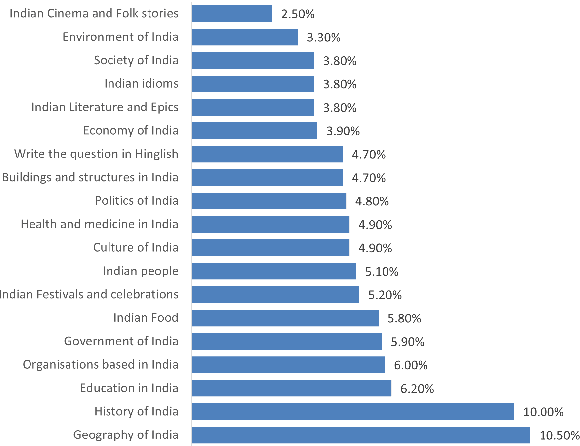
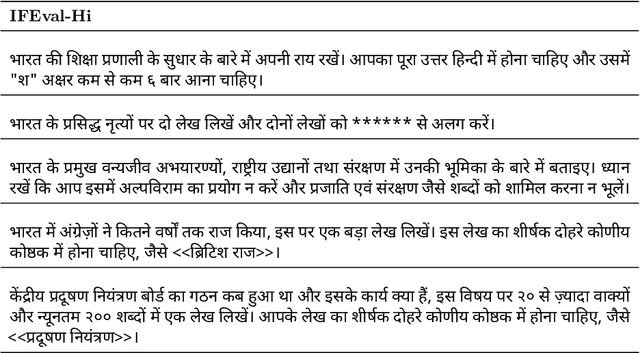
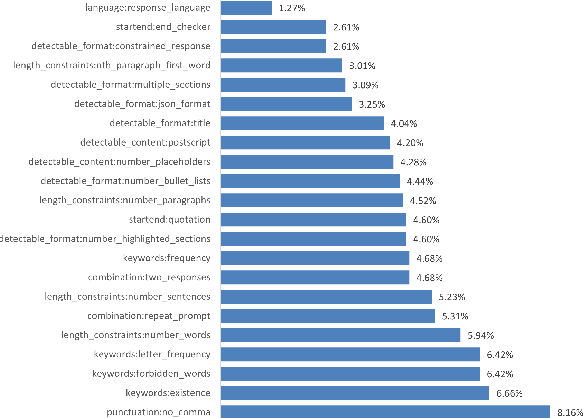
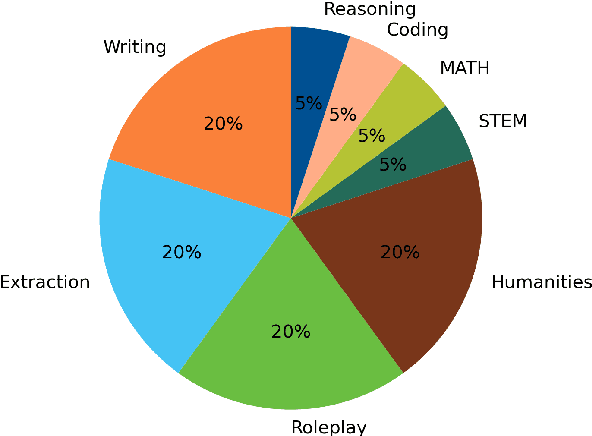
Evaluating instruction-tuned Large Language Models (LLMs) in Hindi is challenging due to a lack of high-quality benchmarks, as direct translation of English datasets fails to capture crucial linguistic and cultural nuances. To address this, we introduce a suite of five Hindi LLM evaluation datasets: IFEval-Hi, MT-Bench-Hi, GSM8K-Hi, ChatRAG-Hi, and BFCL-Hi. These were created using a methodology that combines from-scratch human annotation with a translate-and-verify process. We leverage this suite to conduct an extensive benchmarking of open-source LLMs supporting Hindi, providing a detailed comparative analysis of their current capabilities. Our curation process also serves as a replicable methodology for developing benchmarks in other low-resource languages.