 Add to Chrome
 Add to Firefox
 Add to Edge
SyMTRS: Benchmark Multi-Task Synthetic Dataset for Depth, Domain Adaptation and Super-Resolution in Aerial Imagery
Apr 23, 2026
Recent advances in deep learning for remote sensing rely heavily on large annotated datasets, yet acquiring high-quality ground truth for geometric, radiometric, and multi-domain tasks remains costly and often infeasible. In particular, the lack of accurate depth annotations, controlled illumination variations, and multi-scale paired imagery limits progress in monocular depth estimation, domain adaptation, and super-resolution for aerial scenes. We present SyMTRS, a large-scale synthetic dataset generated using a high-fidelity urban simulation pipeline. The dataset provides high-resolution RGB aerial imagery (2048 x 2048), pixel-perfect depth maps, night-time counterparts for domain adaptation, and aligned low-resolution variants for super-resolution at x2, x4, and x8 scales. Unlike existing remote sensing datasets that focus on a single task or modality, SyMTRS is designed as a unified multi-task benchmark enabling joint research in geometric understanding, cross-domain robustness, and resolution enhancement. We describe the dataset generation process, its statistical properties, and its positioning relative to existing benchmarks. SyMTRS aims to bridge critical gaps in remote sensing research by enabling controlled experiments with perfect geometric ground truth and consistent multi-domain supervision. The results obtained in this work can be reproduced from this Github repository: https://github.com/safouaneelg/SyMTRS.

The Infinite-Dimensional Nature of Spectroscopy and Why Models Succeed, Fail, and Mislead
Apr 06, 2026Machine learning (ML) models have achieved strikingly high accuracies in spectroscopic classification tasks, often without a clear proof that those models used chemically meaningful features. Existing studies have linked these results to data preprocessing choices, noise sensitivity, and model complexity, but no unifying explanation is available so far. In this work, we show that these phenomena arise naturally from the intrinsic high dimensionality of spectral data. Using a theoretical analysis grounded in the Feldman-Hajek theorem and the concentration of measure, we show that even infinitesimal distributional differences, caused by noise, normalisation, or instrumental artefacts, may become perfectly separable in high-dimensional spaces. Through a series of specific experiments on synthetic and real fluorescence spectra, we illustrate how models can achieve near-perfect accuracy even when chemical distinctions are absent, and why feature-importance maps may highlight spectrally irrelevant regions. We provide a rigorous theoretical framework, confirm the effect experimentally, and conclude with practical recommendations for building and interpreting ML models in spectroscopy.
CLiMB: A Domain-Informed Novelty Detection Clustering Framework for Scientific Discovery
Jan 14, 2026In data-driven scientific discovery, a challenge lies in classifying well-characterized phenomena while identifying novel anomalies. Current semi-supervised clustering algorithms do not always fully address this duality, often assuming that supervisory signals are globally representative. Consequently, methods often enforce rigid constraints that suppress unanticipated patterns or require a pre-specified number of clusters, rendering them ineffective for genuine novelty detection. To bridge this gap, we introduce CLiMB (CLustering in Multiphase Boundaries), a domain-informed framework decoupling the exploitation of prior knowledge from the exploration of unknown structures. Using a sequential two-phase approach, CLiMB first anchors known clusters using constrained partitioning, and subsequently applies density-based clustering to residual data to reveal arbitrary topologies. We demonstrate this framework on RR Lyrae stars data from the Gaia Data Release 3. CLiMB attains an Adjusted Rand Index of 0.829 with 90% seed coverage in recovering known Milky Way substructures, drastically outperforming heuristic and constraint-based baselines, which stagnate below 0.20. Furthermore, sensitivity analysis confirms CLiMB's superior data efficiency, showing monotonic improvement as knowledge increases. Finally, the framework successfully isolates three dynamical features (Shiva, Shakti, and the Galactic Disk) in the unlabelled field, validating its potential for scientific discovery.
Comparison of different segmentation algorithms on brain volume and fractal dimension in infant brain MRIs
Dec 13, 2025Accurate segmentation of infant brain MRI is essential for quantifying developmental changes in structure and complexity. However, ongoing myelination and reduced tissue contrast make automated segmentation particularly challenging. This study systematically compared segmentation accuracy and its impact on volumetric and fractal dimension (FD) estimates in infant brain MRI using the Baby Open Brains (BOB) dataset (71 scans, 1-9 months). Two methods, SynthSeg and SamSeg, were evaluated against expert annotations using Dice, Intersection over Union, 95th-percentile Hausdorff distance, and Normalised Mutual Information. SynthSeg outperformed SamSeg across all quality metrics (mean Dice > 0.8 for major regions) and provided volumetric estimates closely matching the manual reference (mean +4% [-28% - 71%]). SamSeg systematically overestimated ventricular and whole-brain volumes (mean +76% [-12% - 190%]). Segmentation accuracy improved with age, consistent with increasing tissue contrast during myelination. Fractal dimension a(FD) nalyses revealed significant regional differences between SynthSeg and expert segmentations, and Bland-Altman limits of agreement indicated that segmentation-related FD variability exceeded most group differences reported in developmental cohorts. Volume and FD deviations were positively correlated across structures, indicating that segmentation bias directly affects FD estimation. Overall, SynthSeg provided the most reliable volumetric and FD results for paediatric MRI, yet small morphological differences in volume and FD should be interpreted with caution due to segmentation-related uncertainty.
Barlow-Swin: Toward a novel siamese-based segmentation architecture using Swin-Transformers
Sep 08, 2025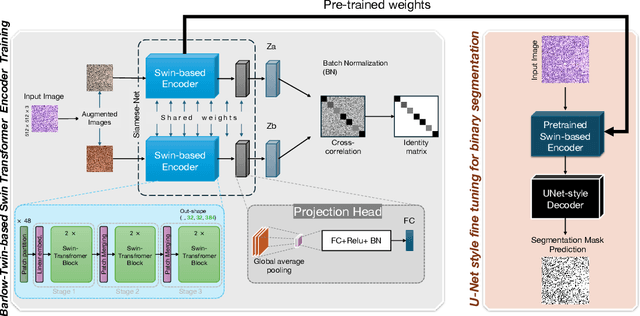
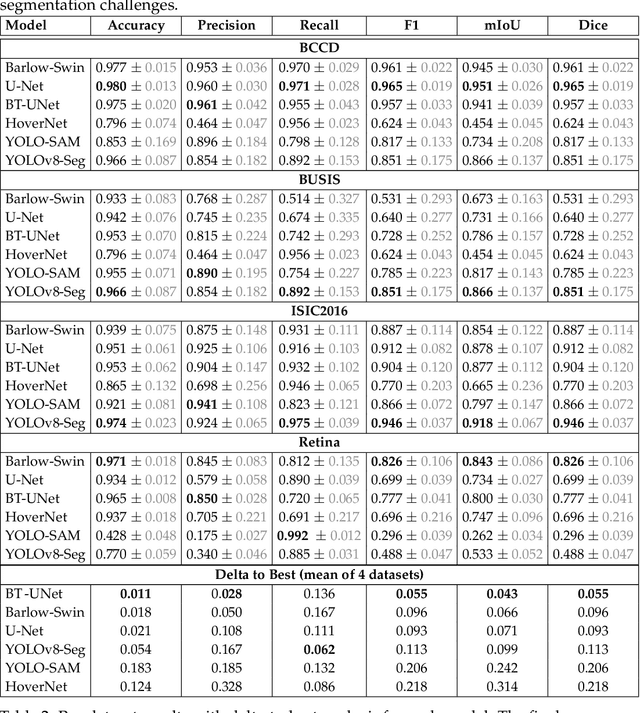
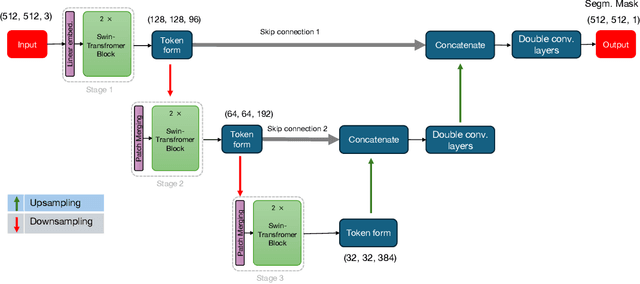
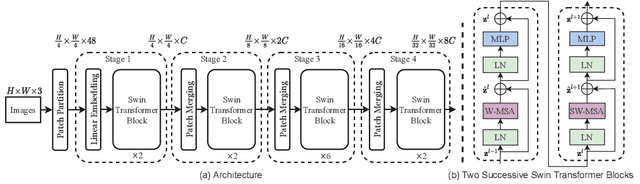
Medical image segmentation is a critical task in clinical workflows, particularly for the detection and delineation of pathological regions. While convolutional architectures like U-Net have become standard for such tasks, their limited receptive field restricts global context modeling. Recent efforts integrating transformers have addressed this, but often result in deep, computationally expensive models unsuitable for real-time use. In this work, we present a novel end-to-end lightweight architecture designed specifically for real-time binary medical image segmentation. Our model combines a Swin Transformer-like encoder with a U-Net-like decoder, connected via skip pathways to preserve spatial detail while capturing contextual information. Unlike existing designs such as Swin Transformer or U-Net, our architecture is significantly shallower and competitively efficient. To improve the encoder's ability to learn meaningful features without relying on large amounts of labeled data, we first train it using Barlow Twins, a self-supervised learning method that helps the model focus on important patterns by reducing unnecessary repetition in the learned features. After this pretraining, we fine-tune the entire model for our specific task. Experiments on benchmark binary segmentation tasks demonstrate that our model achieves competitive accuracy with substantially reduced parameter count and faster inference, positioning it as a practical alternative for deployment in real-time and resource-limited clinical environments. The code for our method is available at Github repository: https://github.com/mkianih/Barlow-Swin.
VisioFirm: Cross-Platform AI-assisted Annotation Tool for Computer Vision
Sep 04, 2025AI models rely on annotated data to learn pattern and perform prediction. Annotation is usually a labor-intensive step that require associating labels ranging from a simple classification label to more complex tasks such as object detection, oriented bounding box estimation, and instance segmentation. Traditional tools often require extensive manual input, limiting scalability for large datasets. To address this, we introduce VisioFirm, an open-source web application designed to streamline image labeling through AI-assisted automation. VisioFirm integrates state-of-the-art foundation models into an interface with a filtering pipeline to reduce human-in-the-loop efforts. This hybrid approach employs CLIP combined with pre-trained detectors like Ultralytics models for common classes and zero-shot models such as Grounding DINO for custom labels, generating initial annotations with low-confidence thresholding to maximize recall. Through this framework, when tested on COCO-type of classes, initial prediction have been proven to be mostly correct though the users can refine these via interactive tools supporting bounding boxes, oriented bounding boxes, and polygons. Additionally, VisioFirm has on-the-fly segmentation powered by Segment Anything accelerated through WebGPU for browser-side efficiency. The tool supports multiple export formats (YOLO, COCO, Pascal VOC, CSV) and operates offline after model caching, enhancing accessibility. VisioFirm demonstrates up to 90\% reduction in manual effort through benchmarks on diverse datasets, while maintaining high annotation accuracy via clustering of connected CLIP-based disambiguate components and IoU-graph for redundant detection suppression. VisioFirm can be accessed from \href{https://github.com/OschAI/VisioFirm}{https://github.com/OschAI/VisioFirm}.
New Statistical Framework for Extreme Error Probability in High-Stakes Domains for Reliable Machine Learning
Mar 31, 2025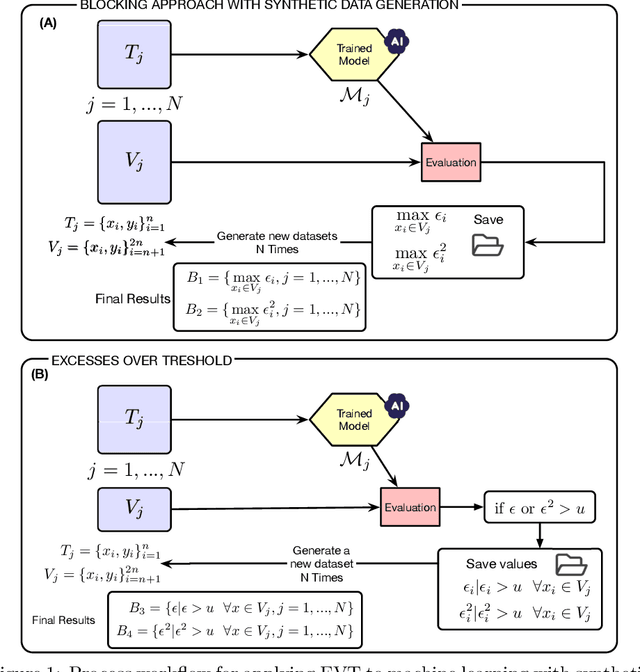
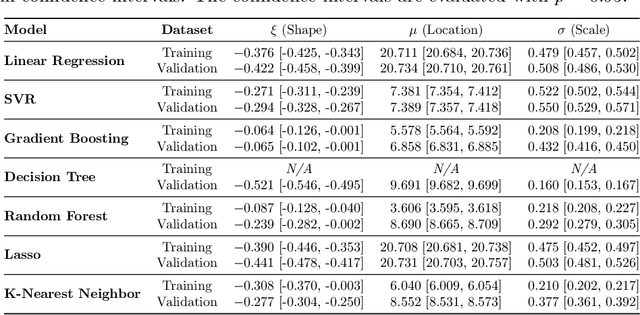
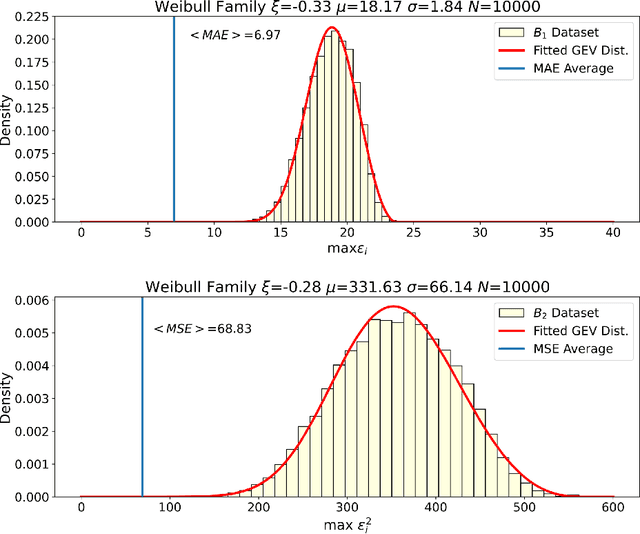
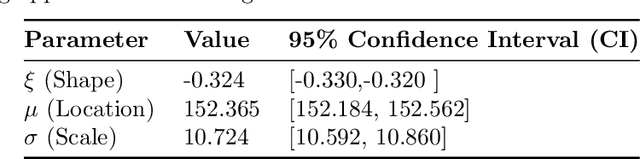
Machine learning is vital in high-stakes domains, yet conventional validation methods rely on averaging metrics like mean squared error (MSE) or mean absolute error (MAE), which fail to quantify extreme errors. Worst-case prediction failures can have substantial consequences, but current frameworks lack statistical foundations for assessing their probability. In this work a new statistical framework, based on Extreme Value Theory (EVT), is presented that provides a rigorous approach to estimating worst-case failures. Applying EVT to synthetic and real-world datasets, this method is shown to enable robust estimation of catastrophic failure probabilities, overcoming the fundamental limitations of standard cross-validation. This work establishes EVT as a fundamental tool for assessing model reliability, ensuring safer AI deployment in new technologies where uncertainty quantification is central to decision-making or scientific analysis.
CSIM: A Copula-based similarity index sensitive to local changes for Image quality assessment
Oct 02, 2024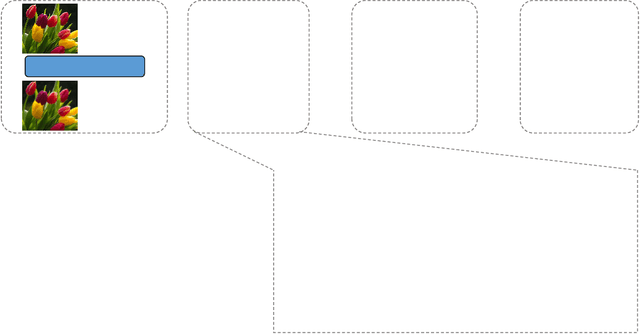
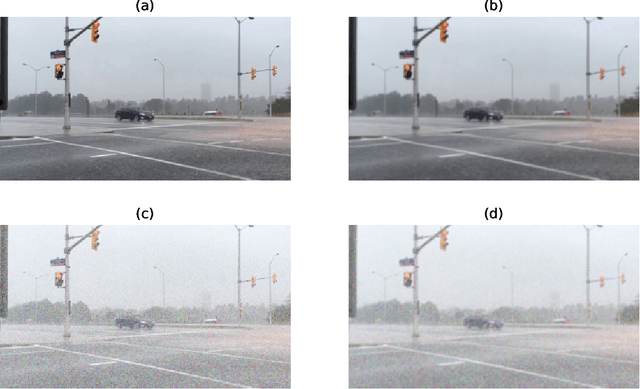
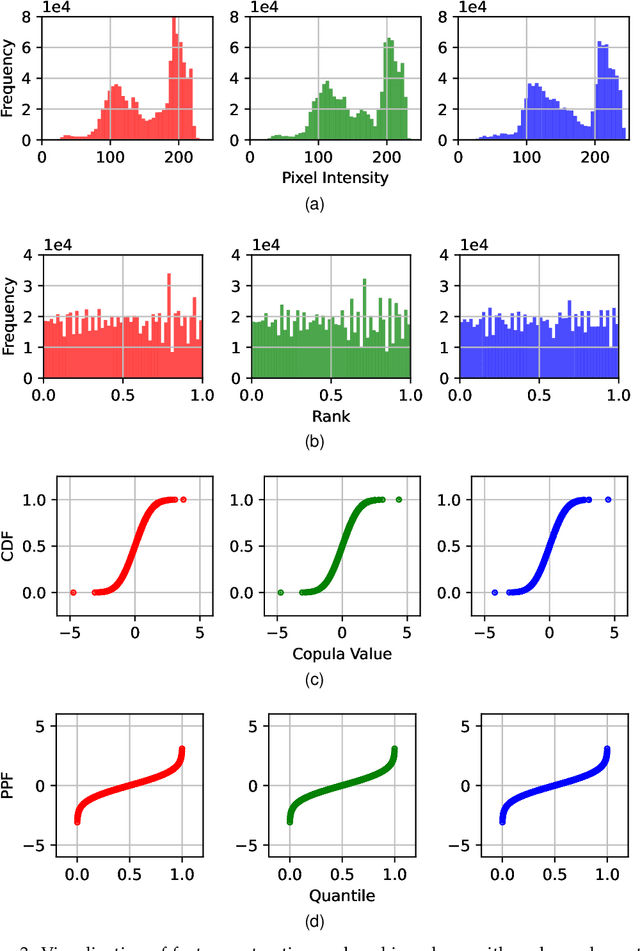
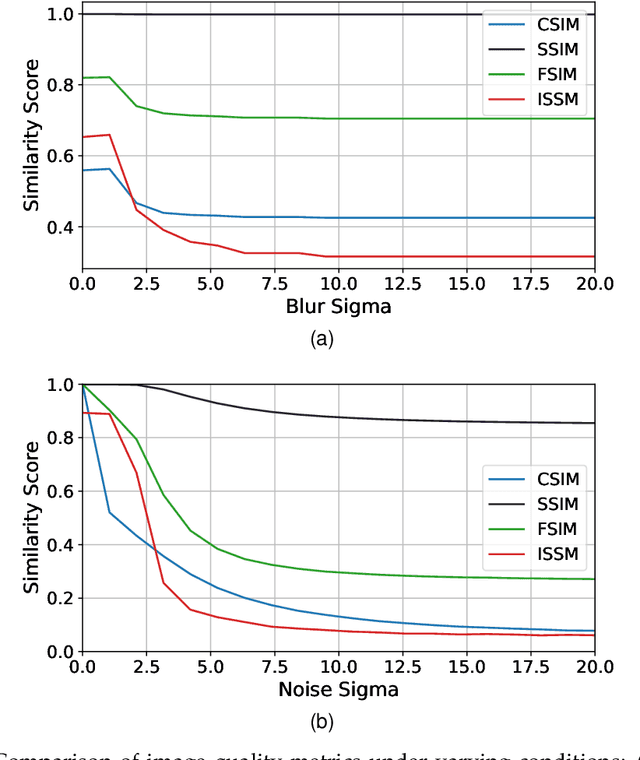
Image similarity metrics play an important role in computer vision applications, as they are used in image processing, computer vision and machine learning. Furthermore, those metrics enable tasks such as image retrieval, object recognition and quality assessment, essential in fields like healthcare, astronomy and surveillance. Existing metrics, such as PSNR, MSE, SSIM, ISSM and FSIM, often face limitations in terms of either speed, complexity or sensitivity to small changes in images. To address these challenges, a novel image similarity metric, namely CSIM, that combines real-time while being sensitive to subtle image variations is investigated in this paper. The novel metric uses Gaussian Copula from probability theory to transform an image into vectors of pixel distribution associated to local image patches. These vectors contain, in addition to intensities and pixel positions, information on the dependencies between pixel values, capturing the structural relationships within the image. By leveraging the properties of Copulas, CSIM effectively models the joint distribution of pixel intensities, enabling a more nuanced comparison of image patches making it more sensitive to local changes compared to other metrics. Experimental results demonstrate that CSIM outperforms existing similarity metrics in various image distortion scenarios, including noise, compression artifacts and blur. The metric's ability to detect subtle differences makes it suitable for applications requiring high precision, such as medical imaging, where the detection of minor anomalies can be of a high importance. The results obtained in this work can be reproduced from this Github repository: https://github.com/safouaneelg/copulasimilarity.
Deep Learning Domain Adaptation to Understand Physico-Chemical Processes from Fluorescence Spectroscopy Small Datasets: Application to Ageing of Olive Oil
Jun 22, 2024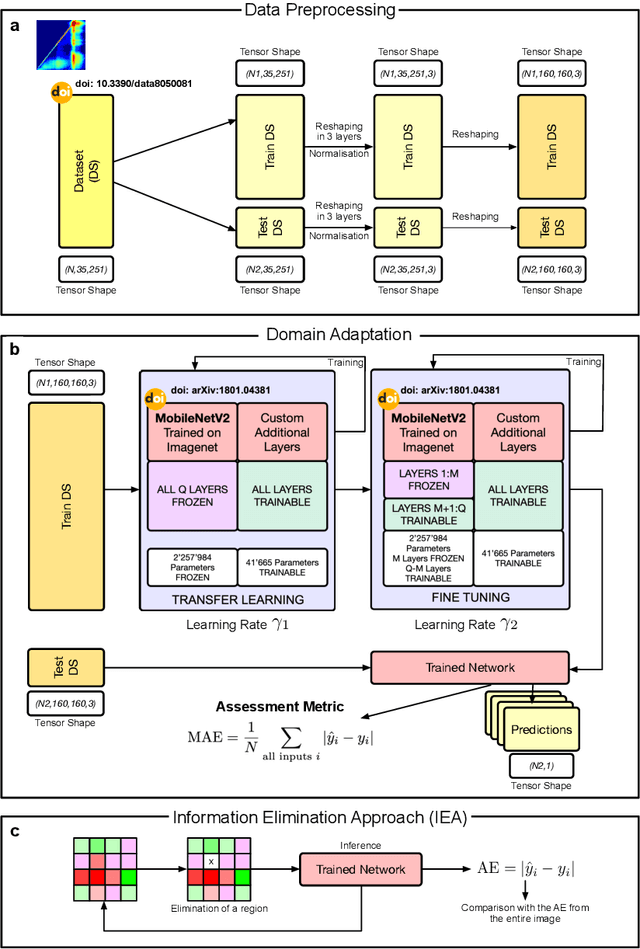
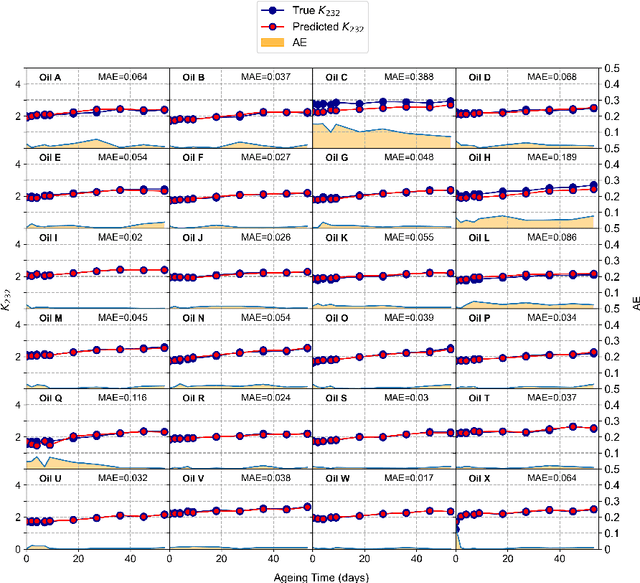
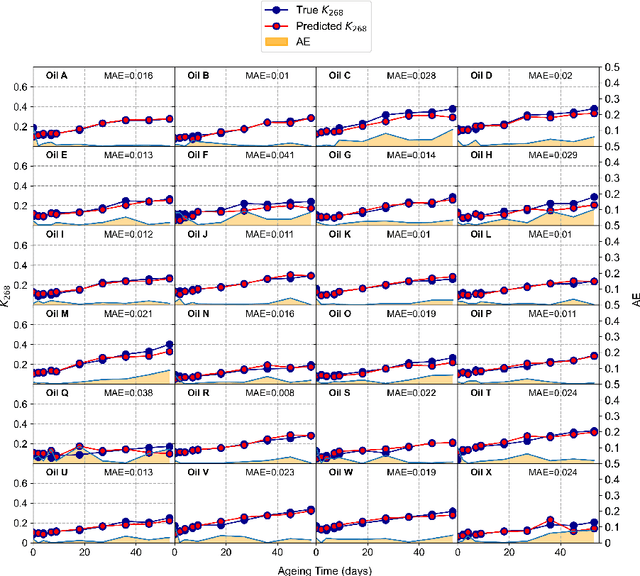
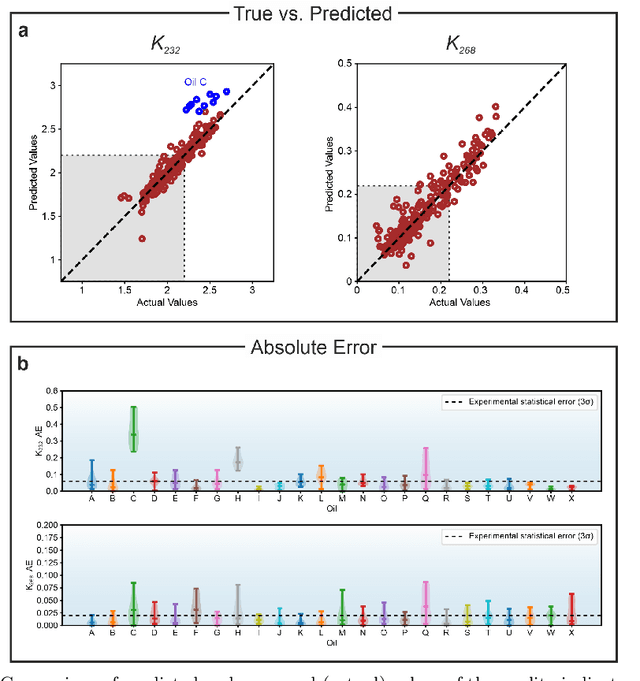
Fluorescence spectroscopy is a fundamental tool in life sciences and chemistry, widely used for applications such as environmental monitoring, food quality control, and biomedical diagnostics. However, analysis of spectroscopic data with deep learning, in particular of fluorescence excitation-emission matrices (EEMs), presents significant challenges due to the typically small and sparse datasets available. Furthermore, the analysis of EEMs is difficult due to their high dimensionality and overlapping spectral features. This study proposes a new approach that exploits domain adaptation with pretrained vision models, alongside a novel interpretability algorithm to address these challenges. Thanks to specialised feature engineering of the neural networks described in this work, we are now able to provide deeper insights into the physico-chemical processes underlying the data. The proposed approach is demonstrated through the analysis of the oxidation process in extra virgin olive oil (EVOO) during ageing, showing its effectiveness in predicting quality indicators and identifying the spectral bands, and thus the molecules involved in the process. This work describes a significantly innovative approach in the use of deep learning for spectroscopy, transforming it from a black box into a tool for understanding complex biological and chemical processes.
Intepretative Deep Learning using Domain Adaptation for Fluorescence Spectroscopy
Jun 14, 2024Fluorescence spectroscopy is a fundamental tool in life sciences and chemistry, widely used for applications such as environmental monitoring, food quality control, and biomedical diagnostics. However, analysis of spectroscopic data with deep learning, in particular of fluorescence excitation-emission matrices (EEMs), presents significant challenges due mainly to the typically small and sparse datasets available. Furthermore, the analysis of EEMs is difficult due to their high dimensionality and overlapping spectral features. This study proposes a new approach that exploits domain adaptation with pretrained vision models, alongside a novel interpretability algorithm to address these challenges. Thanks to specialised feature engineering of the neural networks described in this work, we are now able to provide deeper and meaningful insights into the physico-chemical processes underlying the data. The proposed approach is demonstrated through the analysis of the oxidation process in extra virgin olive oil (EVOO), showing its effectiveness in predicting quality indicators and identifying relevant spectral bands. This work describes significantly innovative results in the use of deep learning for spectroscopy, transforming it from a black box into a tool for understanding complex biological and chemical processes.