 Add to Chrome
 Add to Firefox
 Add to Edge
MIDAS: Multi-LLM Iterative Data-Adaptive Summarization
Aug 05, 2026
Text summarization is deceptively difficult. While condensing information seems straightforward, real-world enterprise summarization of support tickets, legal documents, incident reports, and more, demands strict adherence to domain-specific guidelines, output formats, and organizational conventions. Crafting prompts that reliably satisfy these constraints is labor-intensive, requiring significant human expertise and continuous maintenance as requirements evolve. Existing automated prompt optimization methods reduce this burden through Large Language Model (LLM) critique-driven refinement, yet remain limited by static prompts that cannot adapt to the diversity of summary applications. We propose Multi-LLM Iterative Data-Adaptive Summarization (MIDAS), a multi-LLM framework that extends this paradigm with data-driven pattern learning and use-case-specific personalization, enabling automatic adaptation to different summarization requirements without manual prompt engineering. Applied to enterprise customer ticket summarization across five output formats, MIDAS achieves the strongest overall performance against state-of-the-art critique-driven optimization frameworks such as CriSPO and ZERA, improving ROUGE-1 by up to 11.0%, ROUGE-2 by up to 18.2%, and ROUGE-L by up to 8.0%, while consistently improving BERTScore F1 across all formats and output types. We additionally demonstrate cross-model and cross-domain generalization through multi-LLM configurations and finance-domain summarization benchmarks.

The Attack Generator: A Systematic Approach Towards Constructing Adversarial Attacks
Jun 17, 2019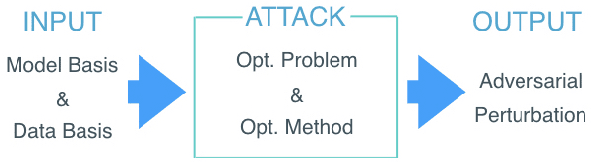
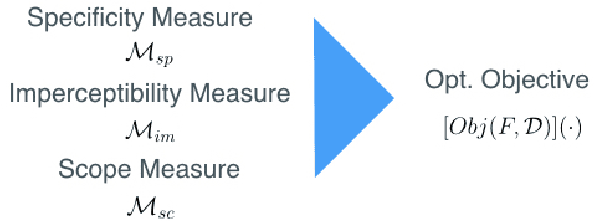
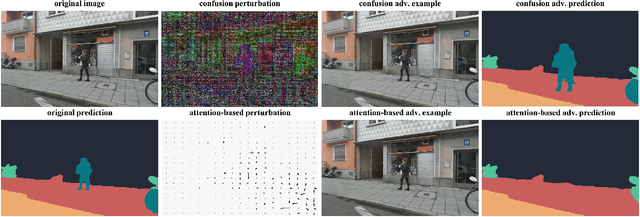
Most state-of-the-art machine learning (ML) classification systems are vulnerable to adversarial perturbations. As a consequence, adversarial robustness poses a significant challenge for the deployment of ML-based systems in safety- and security-critical environments like autonomous driving, disease detection or unmanned aerial vehicles. In the past years we have seen an impressive amount of publications presenting more and more new adversarial attacks. However, the attack research seems to be rather unstructured and new attacks often appear to be random selections from the unlimited set of possible adversarial attacks. With this publication, we present a structured analysis of the adversarial attack creation process. By detecting different building blocks of adversarial attacks, we outline the road to new sets of adversarial attacks. We call this the "attack generator". In the pursuit of this objective, we summarize and extend existing adversarial perturbation taxonomies. The resulting taxonomy is then linked to the application context of computer vision systems for autonomous vehicles, i.e. semantic segmentation and object detection. Finally, in order to prove the usefulness of the attack generator, we investigate existing semantic segmentation attacks with respect to the detected defining components of adversarial attacks.