 Add to Chrome
 Add to Firefox
 Add to Edge
Dual Perspectives in Emotion Attribution: A Generator-Interpreter Framework for Cross-Cultural Analysis of Emotion in LLMs
Mar 30, 2026
Large language models (LLMs) are increasingly used in cross-cultural systems to understand and adapt to human emotions, which are shaped by cultural norms of expression and interpretation. However, prior work on emotion attribution has focused mainly on interpretation, overlooking the cultural background of emotion generators. This assumption of universality neglects variation in how emotions are expressed and perceived across nations. To address this gap, we propose a Generator-Interpreter framework that captures dual perspectives of emotion attribution by considering both expression and interpretation. We systematically evaluate six LLMs on an emotion attribution task using data from 15 countries. Our analysis reveals that performance variations depend on the emotion type and cultural context. Generator-interpreter alignment effects are present; the generator's country of origin has a stronger impact on performance. We call for culturally sensitive emotion modeling in LLM-based systems to improve robustness and fairness in emotion understanding across diverse cultural contexts.

K-EmoCon, a multimodal sensor dataset for continuous emotion recognition in naturalistic conversations
May 19, 2020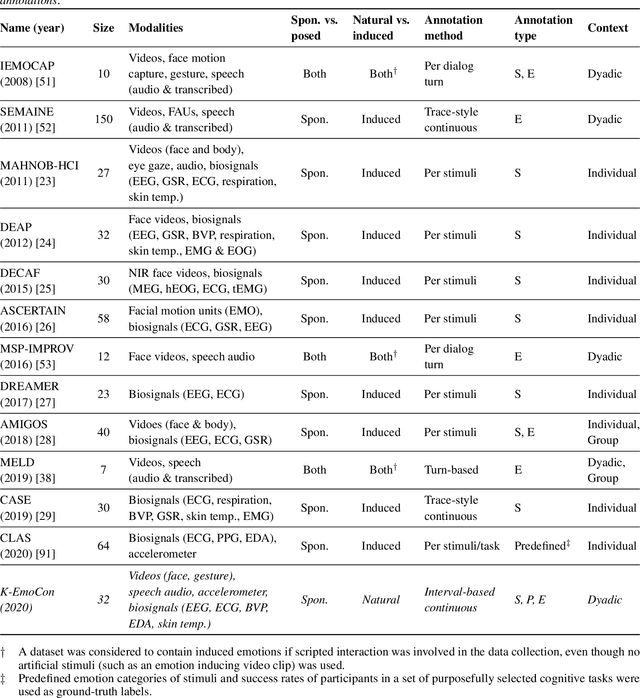
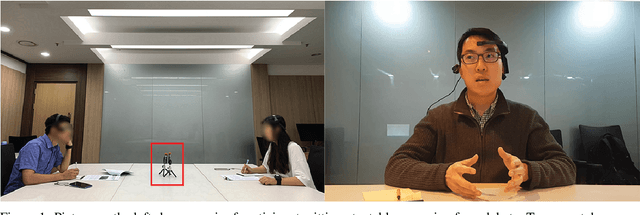
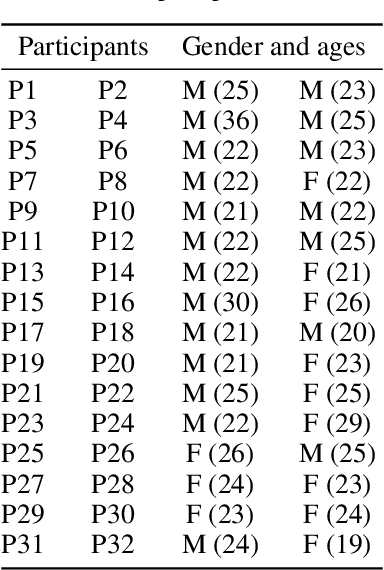
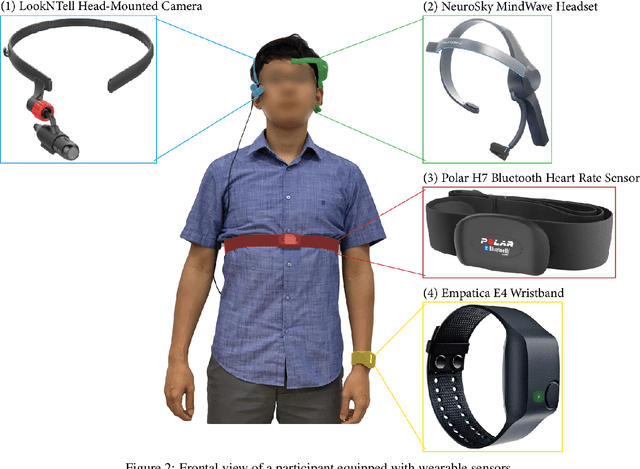
Recognizing emotions during social interactions has many potential applications with the popularization of low-cost mobile sensors, but a challenge remains with the lack of naturalistic affective interaction data. Most existing emotion datasets do not support studying idiosyncratic emotions arising in the wild as they were collected in constrained environments. Therefore, studying emotions in the context of social interactions requires a novel dataset, and K-EmoCon is such a multimodal dataset with comprehensive annotations of continuous emotions during naturalistic conversations. The dataset contains multimodal measurements, including audiovisual recordings, EEG, and peripheral physiological signals, acquired with off-the-shelf devices from 16 sessions of approximately 10-minute long paired debates on a social issue. Distinct from previous datasets, it includes emotion annotations from all three available perspectives: self, debate partner, and external observers. Raters annotated emotional displays at intervals of every 5 seconds while viewing the debate footage, in terms of arousal-valence and 18 additional categorical emotions. The resulting K-EmoCon is the first publicly available emotion dataset accommodating the multiperspective assessment of emotions during social interactions.