 Add to Chrome
 Add to Firefox
 Add to Edge
Testing of Detection Tools for AI-Generated Text
Jul 10, 2023
Recent advances in generative pre-trained transformer large language models have emphasised the potential risks of unfair use of artificial intelligence (AI) generated content in an academic environment and intensified efforts in searching for solutions to detect such content. The paper examines the general functionality of detection tools for artificial intelligence generated text and evaluates them based on accuracy and error type analysis. Specifically, the study seeks to answer research questions about whether existing detection tools can reliably differentiate between human-written text and ChatGPT-generated text, and whether machine translation and content obfuscation techniques affect the detection of AI-generated text. The research covers 12 publicly available tools and two commercial systems (Turnitin and PlagiarismCheck) that are widely used in the academic setting. The researchers conclude that the available detection tools are neither accurate nor reliable and have a main bias towards classifying the output as human-written rather than detecting AI-generated text. Furthermore, content obfuscation techniques significantly worsen the performance of tools. The study makes several significant contributions. First, it summarises up-to-date similar scientific and non-scientific efforts in the field. Second, it presents the result of one of the most comprehensive tests conducted so far, based on a rigorous research methodology, an original document set, and a broad coverage of tools. Third, it discusses the implications and drawbacks of using detection tools for AI-generated text in academic settings.

Identifying Machine-Paraphrased Plagiarism
Mar 22, 2021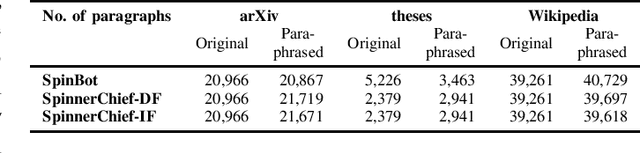
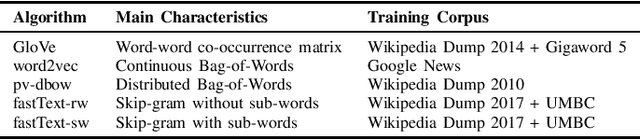
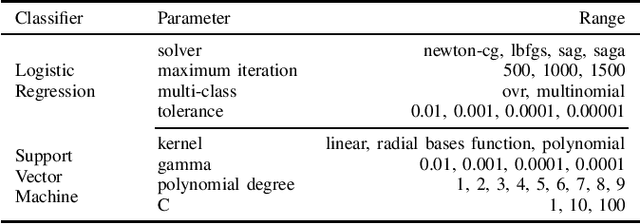
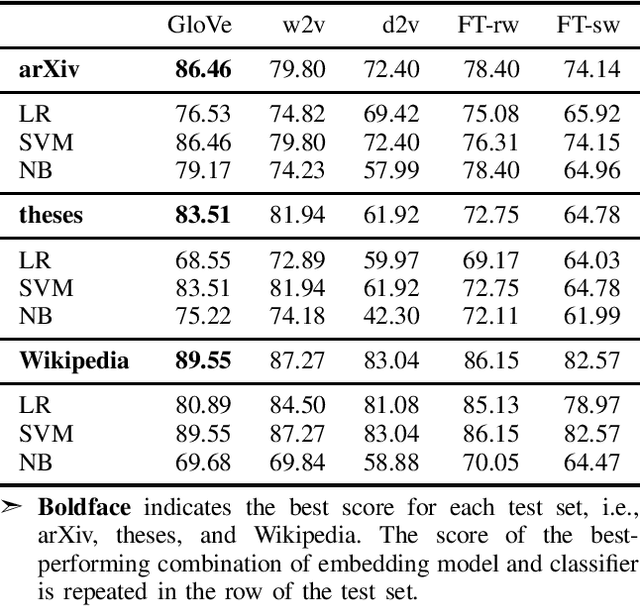
Employing paraphrasing tools to conceal plagiarized text is a severe threat to academic integrity. To enable the detection of machine-paraphrased text, we evaluate the effectiveness of five pre-trained word embedding models combined with machine learning classifiers and state-of-the-art neural language models. We analyze preprints of research papers, graduation theses, and Wikipedia articles, which we paraphrased using different configurations of the tools SpinBot and SpinnerChief. The best performing technique, Longformer, achieved an average F1 score of 80.99% (F1=99.68% for SpinBot and F1=71.64% for SpinnerChief cases), while human evaluators achieved F1=78.4% for SpinBot and F1=65.6% for SpinnerChief cases. We show that the automated classification alleviates shortcomings of widely-used text-matching systems, such as Turnitin and PlagScan. To facilitate future research, all data, code, and two web applications showcasing our contributions are openly available.