 Add to Chrome
 Add to Firefox
 Add to Edge
WHAR Arena: Benchmarking the State of the Art in Efficient Wearable Human Activity Recognition
Jun 11, 2026
Deep learning has become the dominant paradigm in Wearable Human Activity Recognition (WHAR), yet progress is obscured by a comparability crisis. Results are often reported using inconsistent datasets, custom data processing, and varying evaluation protocols, making state-of-the-art claims fragile. We address this with a large-scale, open-source benchmark that integrates 30 diverse datasets under standardized processing, unified model interfaces, and a shared cross-subject evaluation protocol. Evaluating 17 representative architectures across 4760 training runs, we jointly measure predictive performance alongside on-device latency, peak memory, and model size on an Android reference device. Our results reveal that the WHAR state of the art is distributed rather than dominated by a single architecture. While CNN-HAR achieves the highest mean macro-F1, top-performing models cluster tightly, indicating contemporary architectures have converged near a predictive performance ceiling. When accounting for deployment efficiency, compact neural models, such as TinierHAR, and classical Random Forests define the practically relevant Pareto frontier, whereas larger recurrent and hybrid models incur high hardware costs without corresponding performance gains. Consequently, while predictive performance has plateaued, substantial potential for future progress remains in optimizing deployment efficiency and improving adaptation to domain shifts. We release our full framework to support transparent reuse and extension.

pcbGPT: Automatic PCB Schematic Synthesis from Natural Language Requirements
May 31, 2026Translating natural-language hardware requirements into correct printed circuit board (PCB) schematics remains difficult in embedded, IoT, and wearable development. Designers must choose compatible components, interpret datasheets, add support circuitry, and expose correct interfaces before layout and prototyping can begin, while many such circuits cannot be validated through straightforward simulation. We present pcbGPT, a grounded system for generating editable KiCad schematics from natural-language specifications. pcbGPT represents circuits in a Python DSL and combines tool-augmented synthesis with component-library search, datasheet-grounded design knowledge, execution-based checking, structural and semantic validation, and an interactive web workflow that supports iterative refinement and synchronization with KiCad projects. We evaluate the system on 20 embedded schematic-generation tasks with reference implementations, required components, and interface constraints that enable automatic comparison. The best model reaches overall pass@1 of 0.90 and pass@5 of 1.00; pass@1 is 1.00 on basic and easy tasks, 0.91 on medium tasks, and 0.72 on hard tasks. These results, together with failure analysis, show that pcbGPT can already generate useful, reviewable first-draft schematics for early prototyping, but is not yet reliable enough to replace expert review.
MicroNAS: Memory and Latency Constrained Hardware-Aware Neural Architecture Search for Time Series Classification on Microcontrollers
Oct 27, 2023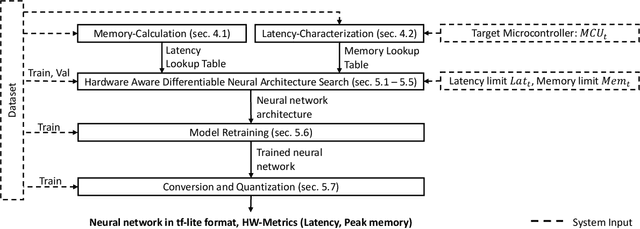
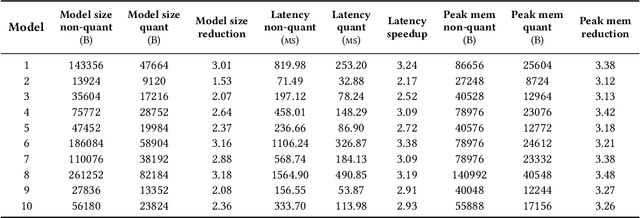
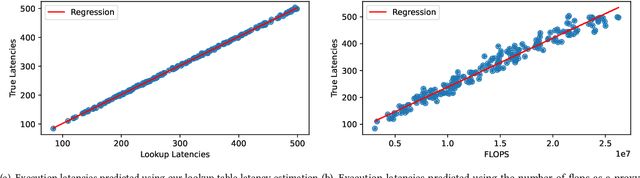
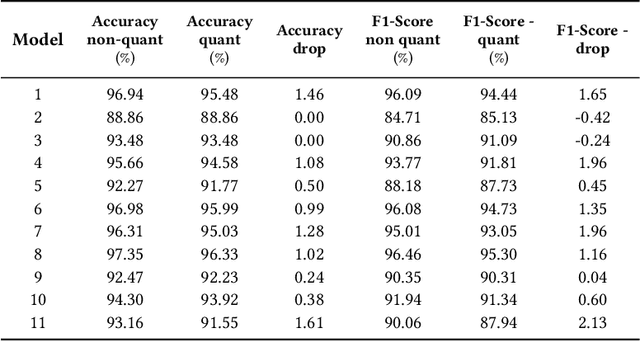
This paper presents MicroNAS, a system designed to automatically search and generate neural network architectures capable of classifying time series data on resource-constrained microcontrollers (MCUs) and generating standard tf-lite ML models. MicroNAS takes into account user-defined constraints on execution latency and peak memory consumption on a target MCU. This approach ensures that the resulting neural network architectures are optimised for the specific constraints and requirements of the MCU on which they are implemented. To achieve this, MicroNAS uses a look-up table estimation approach for accurate execution latency calculations, with a minimum error of only 1.02ms. This accurate latency estimation on MCUs sets it apart from other hardware-aware neural architecture search (HW-NAS) methods that use less accurate estimation techniques. Finally, MicroNAS delivers performance close to that of state-of-the-art models running on desktop computers, achieving high classification accuracies on recognised datasets (93.93% on UCI-HAR and 96.33% on SkodaR) while running on a Cortex-M4 MCU.