 Add to Chrome
 Add to Firefox
 Add to Edge
Large language models improve physician accuracy but lead to false reliance
Aug 01, 2026
Retrieval-augmented large language models (LLMs) promise source-linked clinical support, but their value depends on whether displayed evidence guides rather than distorts physician reliance. We developed CORA, an agentic retrieval-augmented LLM, to investigate how source-linked assistance affects physician decision-making. CORA maintained benchmark performance and achieved larger gains on cases published after the models' training-data cutoffs. In a study of 46 physicians, accuracy increased from 70.8% unaided to 82.6% with CORA. Supporting citations predicted correct answers (87.7% vs 65.5%), but citations created an important asymmetry: perceived support increased adoption of correct advice from 34% to 76.9% but when an incorrect LLM answer appeared citation-supported, physician resistance to it fell from 92% to 34.8%. These findings show that source-linked LLM assistance can improve physician accuracy while introducing a grounding-dependent safety risk.

Pathologist-like explainable AI for interpretable Gleason grading in prostate cancer
Oct 19, 2024
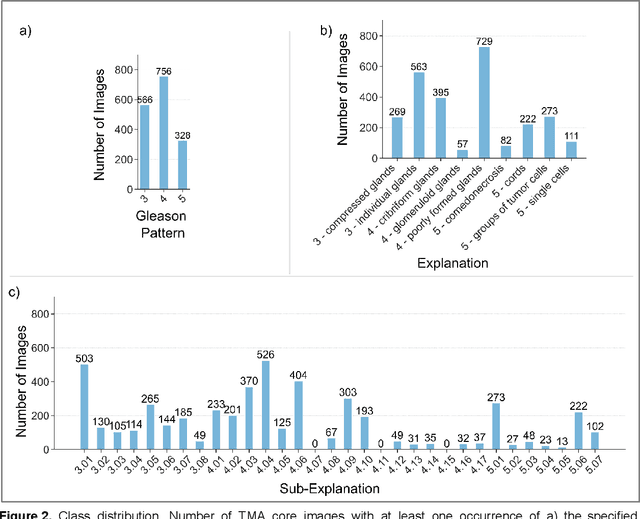
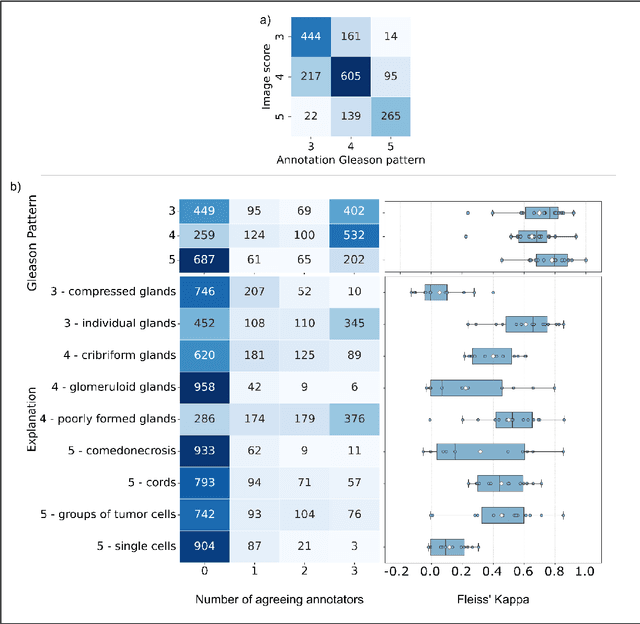

The aggressiveness of prostate cancer, the most common cancer in men worldwide, is primarily assessed based on histopathological data using the Gleason scoring system. While artificial intelligence (AI) has shown promise in accurately predicting Gleason scores, these predictions often lack inherent explainability, potentially leading to distrust in human-machine interactions. To address this issue, we introduce a novel dataset of 1,015 tissue microarray core images, annotated by an international group of 54 pathologists. The annotations provide detailed localized pattern descriptions for Gleason grading in line with international guidelines. Utilizing this dataset, we develop an inherently explainable AI system based on a U-Net architecture that provides predictions leveraging pathologists' terminology. This approach circumvents post-hoc explainability methods while maintaining or exceeding the performance of methods trained directly for Gleason pattern segmentation (Dice score: 0.713 $\pm$ 0.003 trained on explanations vs. 0.691 $\pm$ 0.010 trained on Gleason patterns). By employing soft labels during training, we capture the intrinsic uncertainty in the data, yielding strong results in Gleason pattern segmentation even in the context of high interobserver variability. With the release of this dataset, we aim to encourage further research into segmentation in medical tasks with high levels of subjectivity and to advance the understanding of pathologists' reasoning processes.
Dermatologist-like explainable AI enhances trust and confidence in diagnosing melanoma
Mar 17, 2023Although artificial intelligence (AI) systems have been shown to improve the accuracy of initial melanoma diagnosis, the lack of transparency in how these systems identify melanoma poses severe obstacles to user acceptance. Explainable artificial intelligence (XAI) methods can help to increase transparency, but most XAI methods are unable to produce precisely located domain-specific explanations, making the explanations difficult to interpret. Moreover, the impact of XAI methods on dermatologists has not yet been evaluated. Extending on two existing classifiers, we developed an XAI system that produces text and region based explanations that are easily interpretable by dermatologists alongside its differential diagnoses of melanomas and nevi. To evaluate this system, we conducted a three-part reader study to assess its impact on clinicians' diagnostic accuracy, confidence, and trust in the XAI-support. We showed that our XAI's explanations were highly aligned with clinicians' explanations and that both the clinicians' trust in the support system and their confidence in their diagnoses were significantly increased when using our XAI compared to using a conventional AI system. The clinicians' diagnostic accuracy was numerically, albeit not significantly, increased. This work demonstrates that clinicians are willing to adopt such an XAI system, motivating their future use in the clinic.