 Add to Chrome
 Add to Firefox
 Add to Edge
Geometric Analysis of Token Selection in Multi-Head Attention
Feb 02, 2026
We present a geometric framework for analysing multi-head attention in large language models (LLMs). Without altering the mechanism, we view standard attention through a top-N selection lens and study its behaviour directly in value-state space. We define geometric metrics - Precision, Recall, and F-score - to quantify separability between selected and non-selected tokens, and derive non-asymptotic bounds with explicit dependence on dimension and margin under empirically motivated assumptions (stable value norms with a compressed sink token, exponential similarity decay, and piecewise attention weight profiles). The theory predicts a small-N operating regime of strongest non-trivial separability and clarifies how sequence length and sink similarity shape the metrics. Empirically, across LLaMA-2-7B, Gemma-7B, and Mistral-7B, measurements closely track the theoretical envelopes: top-N selection sharpens separability, sink similarity correlates with Recall. We also found that in LLaMA-2-7B heads specialize into three regimes - Retriever, Mixer, Reset - with distinct geometric signatures. Overall, attention behaves as a structured geometric classifier with measurable criteria for token selection, offering head level interpretability and informing geometry-aware sparsification and design of attention in LLMs.

Limitations of Normalization in Attention Mechanism
Aug 25, 2025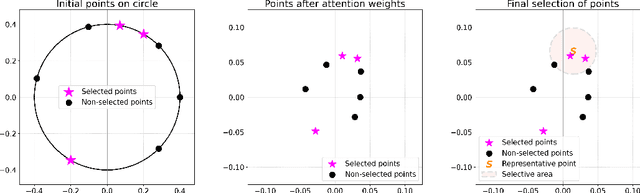
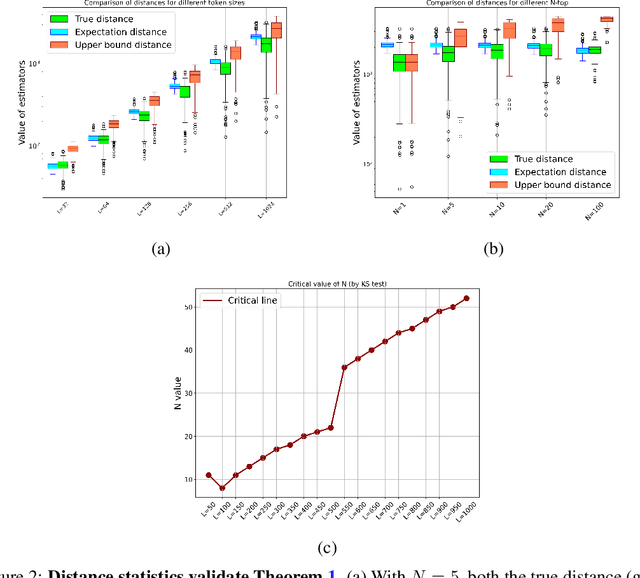
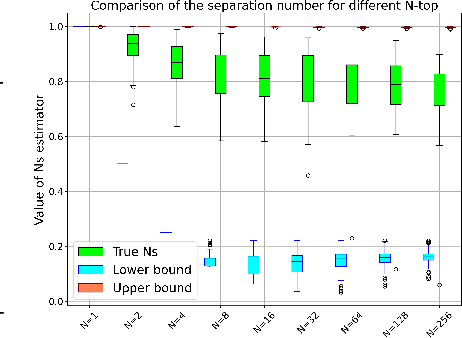
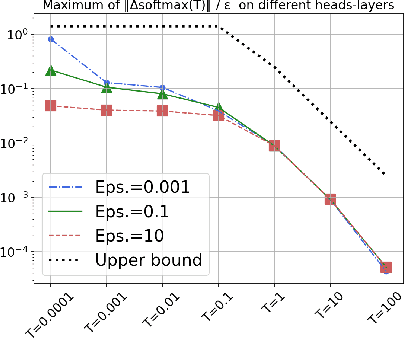
This paper investigates the limitations of the normalization in attention mechanisms. We begin with a theoretical framework that enables the identification of the model's selective ability and the geometric separation involved in token selection. Our analysis includes explicit bounds on distances and separation criteria for token vectors under softmax scaling. Through experiments with pre-trained GPT-2 model, we empirically validate our theoretical results and analyze key behaviors of the attention mechanism. Notably, we demonstrate that as the number of selected tokens increases, the model's ability to distinguish informative tokens declines, often converging toward a uniform selection pattern. We also show that gradient sensitivity under softmax normalization presents challenges during training, especially at low temperature settings. These findings advance current understanding of softmax-based attention mechanism and motivate the need for more robust normalization and selection strategies in future attention architectures.