 Add to Chrome
 Add to Firefox
 Add to Edge
Revisiting Action Factorization for Complex Action Spaces
Jun 25, 2026
Many real-world control problems involve hybrid discrete-continuous action spaces. For example, steering and signaling in autonomous driving, and aiming and firing in robotics or video-games. Despite real-world hybrid factorization and reinforcement learning framework support for complex action spaces (e.g., Gymnasium, PettingZoo, TorchRL, SeedRL, Mujoco, etc), the default environments within those frameworks often implement uniform action space configurations (LunarLander, Walker2D, Cheetah, SMAC, SUMO, Ant, Atari). Landmark hybrid-action benchmarks (RoboCup 2D HFO, SC2LE, Platform, CARLA, etc) are mostly heavyweight or archival implementations originating from papers which test one or a small number of competing factorization methods on one kind of control. This article provides a cross-sectional study of factorization methods [independent networks, shared encoder, VDN, QPLEX, Joint, Auto-Regressive] on each of three families of algorithms [PPO, SAC, DQN] across three action spaces [discretized, hybrid, continuous] over four lightweight environments [Platform, hybrid-LunarLander, Hybrid-Shoot, CoopPush]. Accounting for some invalid pairings such as joint-continuous, we are left with 220 configurations to analyze each method. We provide two new C++ parallel gymnasium and petting-zoo compliant environments [CoopPush, Hybrid-Shoot] to isolate particular challenges such as state-dependent inter-action dependence. Finally, we introduce VDN-PPO and PPO-MIX which use a branching critic to assign credit to multi-headed PPO. These variants out-perform all other tested PPO factorizations. Our results suggest that branching dueling architectures balance compute and performance most effectively, with Auto-Regressive actions reaching the highest performance overall and native continuous SAC outperforming discrete and hybrid algorithms, albiet both at increased computational cost.

Bayesian Ridge Regression Based Model to Predict Fault Location in HVdc Network
Feb 26, 2022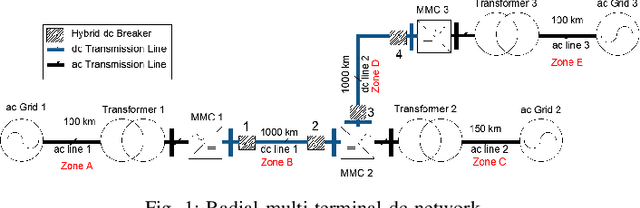
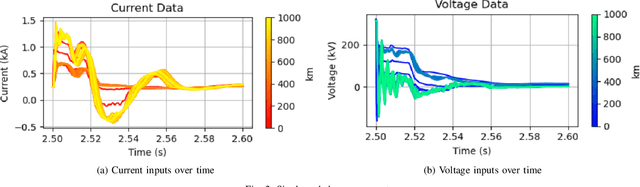
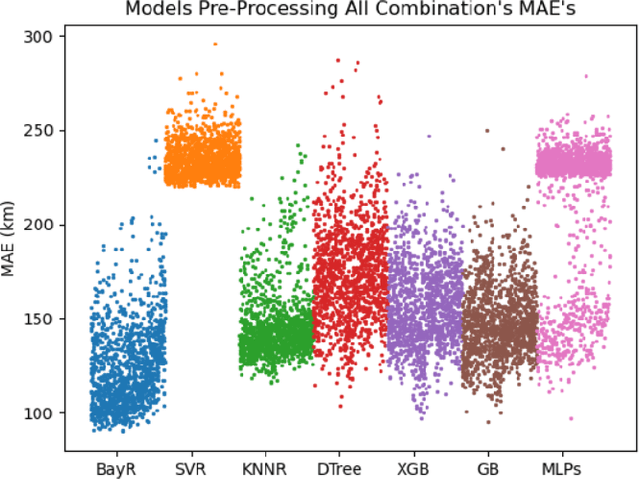
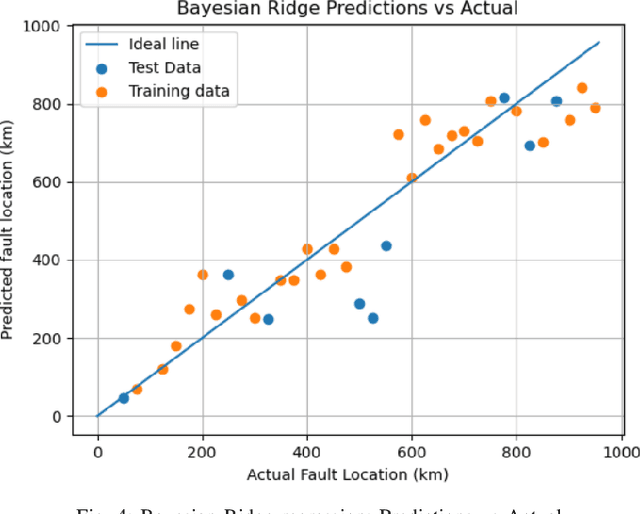
This paper discusses a method for accurately estimating the fault location in multi-terminal High Voltage direct current (HVdc) transmission network using single ended current and voltage measurements. The post-fault voltage and current signatures are a function of multiple factors and thus accurately locating faults on a multi-terminal network is challenging. We discuss a novel data-driven Bayes Regression based method for accurately predicting fault locations. The sensitivity of the proposed algorithm to measurement noise, fault location, resistance and current limiting inductance are performed on a radial three-terminal MTdc network. The test system is designed in Power System Computer Aided Design (PSCAD)/Electromagnetic Transients including dc (EMTdc).
Fault location in High Voltage Multi-terminal dc Networks Using Ensemble Learning
Jan 20, 2022

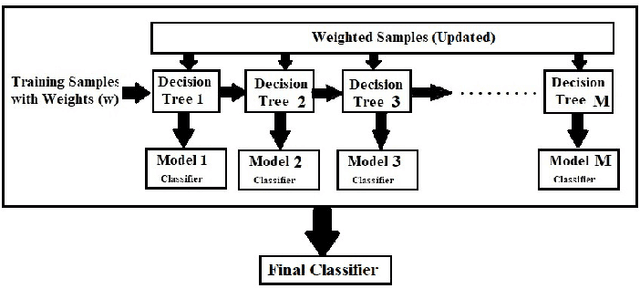
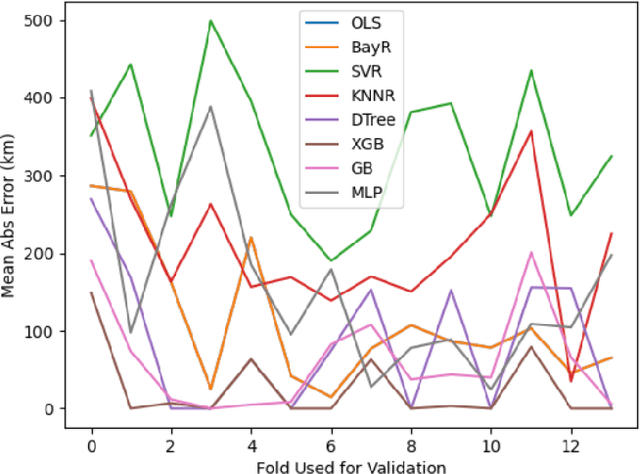
Precise location of faults for large distance power transmission networks is essential for faster repair and restoration process. High Voltage direct current (HVdc) networks using modular multi-level converter (MMC) technology has found its prominence for interconnected multi-terminal networks. This allows for large distance bulk power transmission at lower costs. However, they cope with the challenge of dc faults. Fast and efficient methods to isolate the network under dc faults have been widely studied and investigated. After successful isolation, it is essential to precisely locate the fault. The post-fault voltage and current signatures are a function of multiple factors and thus accurately locating faults on a multi-terminal network is challenging. In this paper, we discuss a novel data-driven ensemble learning based approach for accurate fault location. Here we utilize the eXtreme Gradient Boosting (XGB) method for accurate fault location. The sensitivity of the proposed algorithm to measurement noise, fault location, resistance and current limiting inductance are performed on a radial three-terminal MTdc network designed in Power System Computer Aided Design (PSCAD)/Electromagnetic Transients including dc (EMTdc).