 Add to Chrome
 Add to Firefox
 Add to Edge
ASEHybrid: When Geometry Matters Beyond Homophily in Graph Neural Networks
Jan 26, 2026
Standard message-passing graph neural networks (GNNs) often struggle on graphs with low homophily, yet homophily alone does not explain this behavior, as graphs with similar homophily levels can exhibit markedly different performance and some heterophilous graphs remain easy for vanilla GCNs. Recent work suggests that label informativeness (LI), the mutual information between labels of adjacent nodes, provides a more faithful characterization of when graph structure is useful. In this work, we develop a unified theoretical framework that connects curvature-guided rewiring and positional geometry through the lens of label informativeness, and instantiate it in a practical geometry-aware architecture, ASEHybrid. Our analysis provides a necessary-and-sufficient characterization of when geometry-aware GNNs can improve over feature-only baselines: such gains are possible if and only if graph structure carries label-relevant information beyond node features. Theoretically, we relate adjusted homophily and label informativeness to the spectral behavior of label signals under Laplacian smoothing, show that degree-based Forman curvature does not increase expressivity beyond the one-dimensional Weisfeiler--Lehman test but instead reshapes information flow, and establish convergence and Lipschitz stability guarantees for a curvature-guided rewiring process. Empirically, we instantiate ASEHybrid using Forman curvature and Laplacian positional encodings and conduct controlled ablations on Chameleon, Squirrel, Texas, Tolokers, and Minesweeper, observing gains precisely on label-informative heterophilous benchmarks where graph structure provides label-relevant information beyond node features, and no meaningful improvement in high-baseline regimes.

MDToC: Metacognitive Dynamic Tree of Concepts for Boosting Mathematical Problem-Solving of Large Language Models
Dec 21, 2025Despite advances in mathematical reasoning capabilities, Large Language Models (LLMs) still struggle with calculation verification when using established prompting techniques. We present MDToC (Metacognitive Dynamic Tree of Concepts), a three-phase approach that constructs a concept tree, develops accuracy-verified calculations for each concept, and employs majority voting to evaluate competing solutions. Evaluations across CHAMP, MATH, and Game-of-24 benchmarks demonstrate our MDToC's effectiveness, with GPT-4-Turbo achieving 58.1\% on CHAMP, 86.6\% on MATH, and 85\% on Game-of-24 - outperforming GoT by 5\%, 5.4\%, and 4\% on all these tasks, respectively, without hand-engineered hints. MDToC consistently surpasses existing prompting methods across all backbone models, yielding improvements of up to 7.6\% over ToT and 6.2\% over GoT, establishing metacognitive calculation verification as a promising direction for enhanced mathematical reasoning.
Floorplan2Guide: LLM-Guided Floorplan Parsing for BLV Indoor Navigation
Dec 13, 2025Indoor navigation remains a critical challenge for people with visual impairments. The current solutions mainly rely on infrastructure-based systems, which limit their ability to navigate safely in dynamic environments. We propose a novel navigation approach that utilizes a foundation model to transform floor plans into navigable knowledge graphs and generate human-readable navigation instructions. Floorplan2Guide integrates a large language model (LLM) to extract spatial information from architectural layouts, reducing the manual preprocessing required by earlier floorplan parsing methods. Experimental results indicate that few-shot learning improves navigation accuracy in comparison to zero-shot learning on simulated and real-world evaluations. Claude 3.7 Sonnet achieves the highest accuracy among the evaluated models, with 92.31%, 76.92%, and 61.54% on the short, medium, and long routes, respectively, under 5-shot prompting of the MP-1 floor plan. The success rate of graph-based spatial structure is 15.4% higher than that of direct visual reasoning among all models, which confirms that graphical representation and in-context learning enhance navigation performance and make our solution more precise for indoor navigation of Blind and Low Vision (BLV) users.
Hierarchical Learning for Maze Navigation: Emergence of Mental Representations via Second-Order Learning
Sep 17, 2025Mental representation, characterized by structured internal models mirroring external environments, is fundamental to advanced cognition but remains challenging to investigate empirically. Existing theory hypothesizes that second-order learning -- learning mechanisms that adapt first-order learning (i.e., learning about the task/domain) -- promotes the emergence of such environment-cognition isomorphism. In this paper, we empirically validate this hypothesis by proposing a hierarchical architecture comprising a Graph Convolutional Network (GCN) as a first-order learner and an MLP controller as a second-order learner. The GCN directly maps node-level features to predictions of optimal navigation paths, while the MLP dynamically adapts the GCN's parameters when confronting structurally novel maze environments. We demonstrate that second-order learning is particularly effective when the cognitive system develops an internal mental map structurally isomorphic to the environment. Quantitative and qualitative results highlight significant performance improvements and robust generalization on unseen maze tasks, providing empirical support for the pivotal role of structured mental representations in maximizing the effectiveness of second-order learning.
One Model, Two Minds: A Context-Gated Graph Learner that Recreates Human Biases
Sep 10, 2025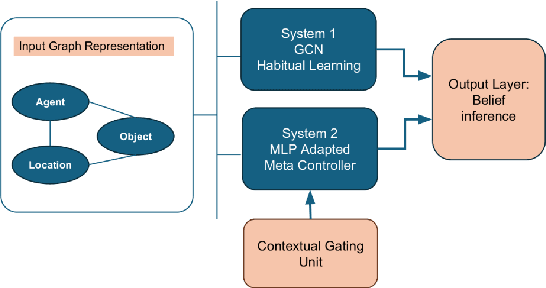
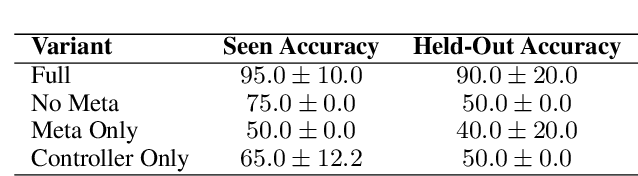
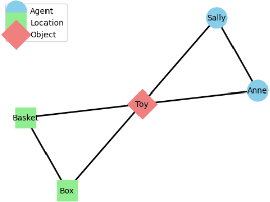

We introduce a novel Theory of Mind (ToM) framework inspired by dual-process theories from cognitive science, integrating a fast, habitual graph-based reasoning system (System 1), implemented via graph convolutional networks (GCNs), and a slower, context-sensitive meta-adaptive learning system (System 2), driven by meta-learning techniques. Our model dynamically balances intuitive and deliberative reasoning through a learned context gate mechanism. We validate our architecture on canonical false-belief tasks and systematically explore its capacity to replicate hallmark cognitive biases associated with dual-process theory, including anchoring, cognitive-load fatigue, framing effects, and priming effects. Experimental results demonstrate that our dual-process approach closely mirrors human adaptive behavior, achieves robust generalization to unseen contexts, and elucidates cognitive mechanisms underlying reasoning biases. This work bridges artificial intelligence and cognitive theory, paving the way for AI systems exhibiting nuanced, human-like social cognition and adaptive decision-making capabilities.
Skin-SOAP: A Weakly Supervised Framework for Generating Structured SOAP Notes
Aug 07, 2025Skin carcinoma is the most prevalent form of cancer globally, accounting for over $8 billion in annual healthcare expenditures. Early diagnosis, accurate and timely treatment are critical to improving patient survival rates. In clinical settings, physicians document patient visits using detailed SOAP (Subjective, Objective, Assessment, and Plan) notes. However, manually generating these notes is labor-intensive and contributes to clinician burnout. In this work, we propose skin-SOAP, a weakly supervised multimodal framework to generate clinically structured SOAP notes from limited inputs, including lesion images and sparse clinical text. Our approach reduces reliance on manual annotations, enabling scalable, clinically grounded documentation while alleviating clinician burden and reducing the need for large annotated data. Our method achieves performance comparable to GPT-4o, Claude, and DeepSeek Janus Pro across key clinical relevance metrics. To evaluate this clinical relevance, we introduce two novel metrics MedConceptEval and Clinical Coherence Score (CCS) which assess semantic alignment with expert medical concepts and input features, respectively.
Towards Scalable SOAP Note Generation: A Weakly Supervised Multimodal Framework
Jun 12, 2025Skin carcinoma is the most prevalent form of cancer globally, accounting for over $8 billion in annual healthcare expenditures. In clinical settings, physicians document patient visits using detailed SOAP (Subjective, Objective, Assessment, and Plan) notes. However, manually generating these notes is labor-intensive and contributes to clinician burnout. In this work, we propose a weakly supervised multimodal framework to generate clinically structured SOAP notes from limited inputs, including lesion images and sparse clinical text. Our approach reduces reliance on manual annotations, enabling scalable, clinically grounded documentation while alleviating clinician burden and reducing the need for large annotated data. Our method achieves performance comparable to GPT-4o, Claude, and DeepSeek Janus Pro across key clinical relevance metrics. To evaluate clinical quality, we introduce two novel metrics MedConceptEval and Clinical Coherence Score (CCS) which assess semantic alignment with expert medical concepts and input features, respectively.
DeBUGCN -- Detecting Backdoors in CNNs Using Graph Convolutional Networks
Feb 25, 2025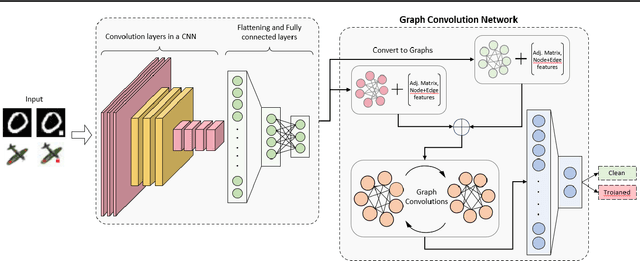
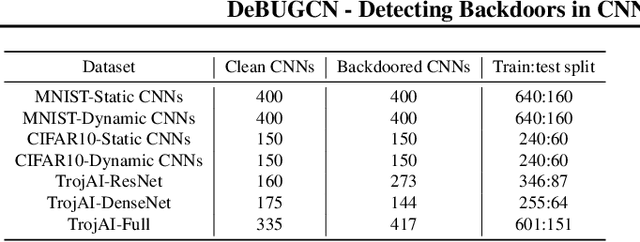
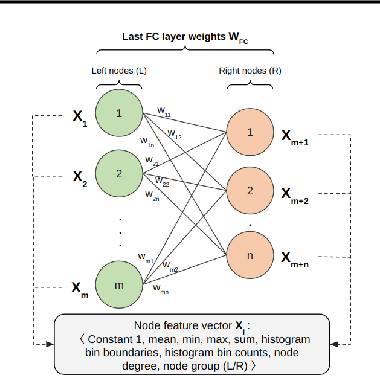
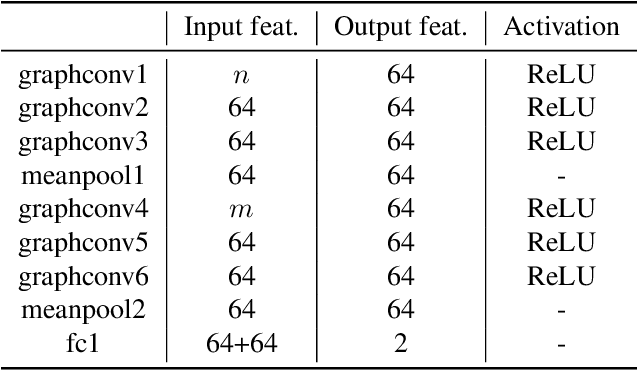
Deep neural networks (DNNs) are becoming commonplace in critical applications, making their susceptibility to backdoor (trojan) attacks a significant problem. In this paper, we introduce a novel backdoor attack detection pipeline, detecting attacked models using graph convolution networks (DeBUGCN). To the best of our knowledge, ours is the first use of GCNs for trojan detection. We use the static weights of a DNN to create a graph structure of its layers. A GCN is then used as a binary classifier on these graphs, yielding a trojan or clean determination for the DNN. To demonstrate the efficacy of our pipeline, we train hundreds of clean and trojaned CNN models on the MNIST handwritten digits and CIFAR-10 image datasets, and show the DNN classification results using DeBUGCN. For a true In-the-Wild use case, our pipeline is evaluated on the TrojAI dataset which consists of various CNN architectures, thus showing the robustness and model-agnostic behaviour of DeBUGCN. Furthermore, on comparing our results on several datasets with state-of-the-art trojan detection algorithms, DeBUGCN is faster and more accurate.
MedGrad E-CLIP: Enhancing Trust and Transparency in AI-Driven Skin Lesion Diagnosis
Jan 12, 2025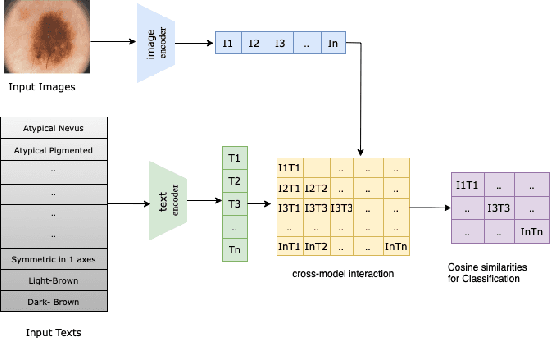
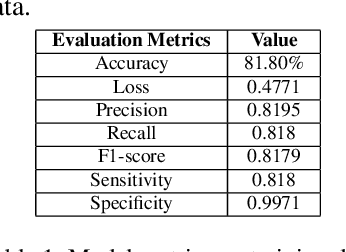
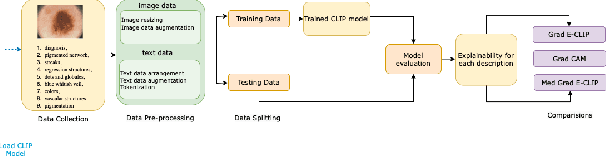
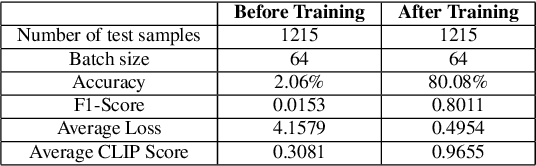
As deep learning models gain attraction in medical data, ensuring transparent and trustworthy decision-making is essential. In skin cancer diagnosis, while advancements in lesion detection and classification have improved accuracy, the black-box nature of these methods poses challenges in understanding their decision processes, leading to trust issues among physicians. This study leverages the CLIP (Contrastive Language-Image Pretraining) model, trained on different skin lesion datasets, to capture meaningful relationships between visual features and diagnostic criteria terms. To further enhance transparency, we propose a method called MedGrad E-CLIP, which builds on gradient-based E-CLIP by incorporating a weighted entropy mechanism designed for complex medical imaging like skin lesions. This approach highlights critical image regions linked to specific diagnostic descriptions. The developed integrated pipeline not only classifies skin lesions by matching corresponding descriptions but also adds an essential layer of explainability developed especially for medical data. By visually explaining how different features in an image relates to diagnostic criteria, this approach demonstrates the potential of advanced vision-language models in medical image analysis, ultimately improving transparency, robustness, and trust in AI-driven diagnostic systems.
A Walsh Hadamard Derived Linear Vector Symbolic Architecture
Oct 30, 2024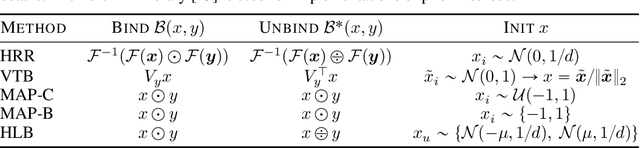
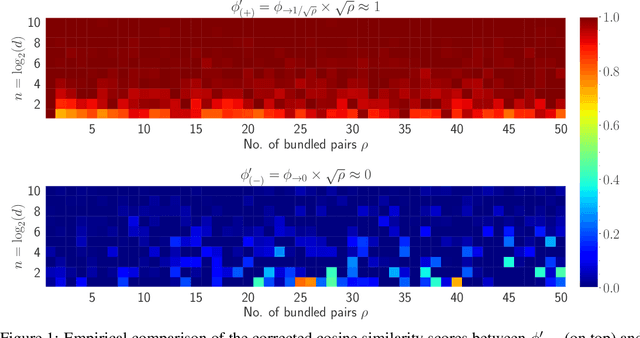
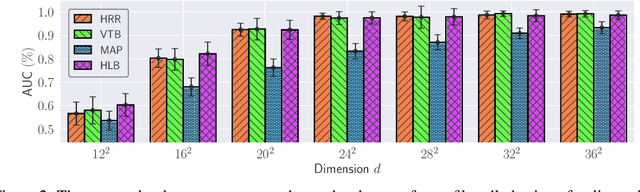
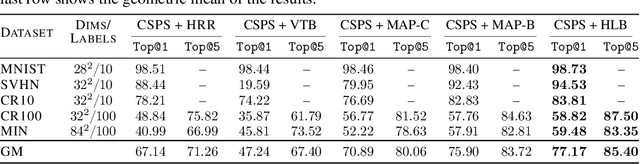
Vector Symbolic Architectures (VSAs) are one approach to developing Neuro-symbolic AI, where two vectors in $\mathbb{R}^d$ are `bound' together to produce a new vector in the same space. VSAs support the commutativity and associativity of this binding operation, along with an inverse operation, allowing one to construct symbolic-style manipulations over real-valued vectors. Most VSAs were developed before deep learning and automatic differentiation became popular and instead focused on efficacy in hand-designed systems. In this work, we introduce the Hadamard-derived linear Binding (HLB), which is designed to have favorable computational efficiency, and efficacy in classic VSA tasks, and perform well in differentiable systems. Code is available at https://github.com/FutureComputing4AI/Hadamard-derived-Linear-Binding