 Add to Chrome
 Add to Firefox
 Add to Edge
From Overload to Insights: How AI Agents Can Support Scientists in Analyzing Complex Data
Jul 18, 2026
Scientists at European XFEL conduct experiments that generate very large and complex datasets. The subsequent data analysis is challenging as scientists must combine their domain expertise with facility- and software-specific knowledge scattered across documentation, tools, and support channels. To address this problem, we designed and evaluated an agentic AI system tailored to the scientists' needs and integrated with the high-performance computing environment of European XFEL. Using a design science research approach, we conducted a rapid literature review, a systematic evaluation of 16 AI tools, multiple interviews, a focus group, and a user study with experts at European XFEL to develop and evaluate two prototypes. Our study identifies key knowledge challenges in scientific data analysis, derives requirements for an AI agent that supports knowledge retrieval and source code generation, and proposes design recommendations for a specialized system adaptable to the evolving AI tool landscape. These findings provide guidance for developing maintainable AI support in highly specialized scientific environments.

Proof methods for robust low-rank matrix recovery
Jun 08, 2021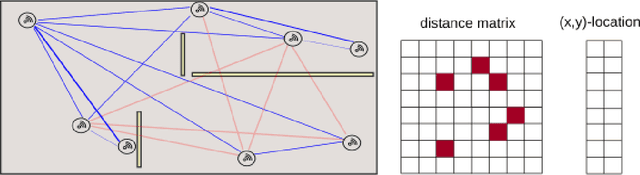
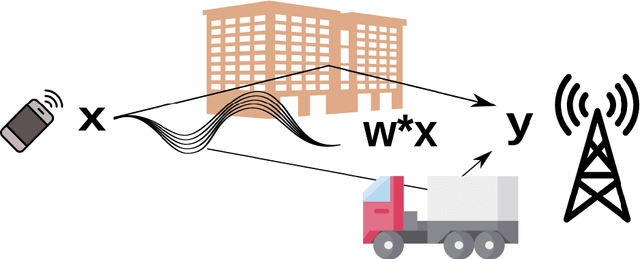
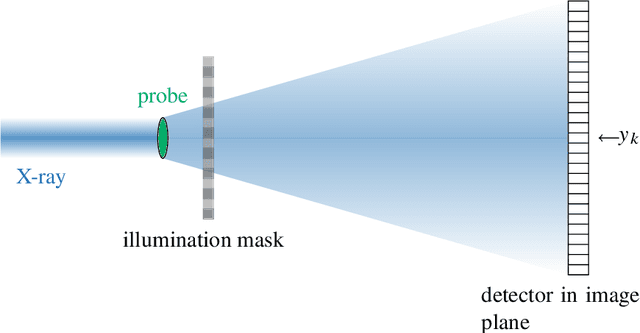
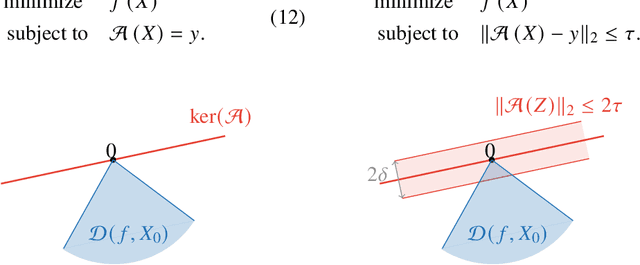
Low-rank matrix recovery problems arise naturally as mathematical formulations of various inverse problems, such as matrix completion, blind deconvolution, and phase retrieval. Over the last two decades, a number of works have rigorously analyzed the reconstruction performance for such scenarios, giving rise to a rather general understanding of the potential and the limitations of low-rank matrix models in sensing problems. In this article, we compare the two main proof techniques that have been paving the way to a rigorous analysis, discuss their potential and limitations, and survey their successful applications. On the one hand, we review approaches based on descent cone analysis, showing that they often lead to strong guarantees even in the presence of adversarial noise, but face limitations when it comes to structured observations. On the other hand, we discuss techniques using approximate dual certificates and the golfing scheme, which are often better suited to deal with practical measurement structures, but sometimes lead to weaker guarantees. Lastly, we review recent progress towards analyzing descent cones also for structured scenarios -- exploiting the idea of splitting the cones into multiple parts that are analyzed via different techniques.