 Add to Chrome
 Add to Firefox
 Add to Edge
LLM-powered Real-time Patent Citation Recommendation for Financial Technologies
Jan 23, 2026
Rapid financial innovation has been accompanied by a sharp increase in patenting activity, making timely and comprehensive prior-art discovery more difficult. This problem is especially evident in financial technologies, where innovations develop quickly, patent collections grow continuously, and citation recommendation systems must be updated as new applications arrive. Existing patent retrieval and citation recommendation methods typically rely on static indexes or periodic retraining, which limits their ability to operate effectively in such dynamic settings. In this study, we propose a real-time patent citation recommendation framework designed for large and fast-changing financial patent corpora. Using a dataset of 428,843 financial patents granted by the China National Intellectual Property Administration (CNIPA) between 2000 and 2024, we build a three-stage recommendation pipeline. The pipeline uses large language model (LLM) embeddings to represent the semantic content of patent abstracts, applies efficient approximate nearest-neighbor search to construct a manageable candidate set, and ranks candidates by semantic similarity to produce top-k citation recommendations. In addition to improving recommendation accuracy, the proposed framework directly addresses the dynamic nature of patent systems. By using an incremental indexing strategy based on hierarchical navigable small-world (HNSW) graphs, newly issued patents can be added without rebuilding the entire index. A rolling day-by-day update experiment shows that incremental updating improves recall while substantially reducing computational cost compared with rebuild-based indexing. The proposed method also consistently outperforms traditional text-based baselines and alternative nearest-neighbor retrieval approaches.

A Comparison of DeepSeek and Other LLMs
Feb 06, 2025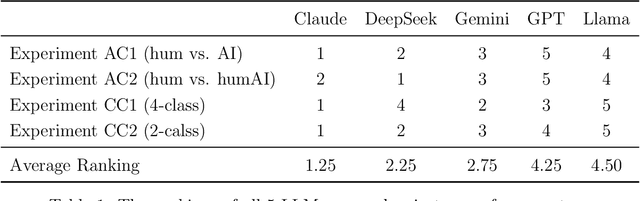
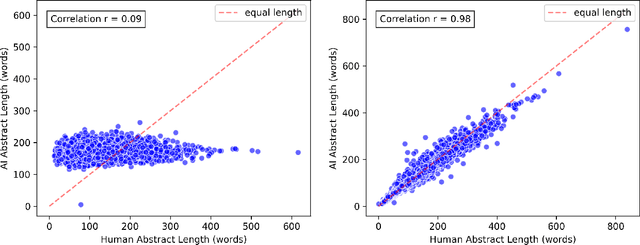
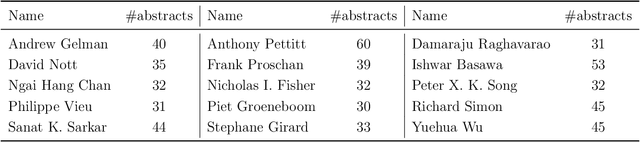
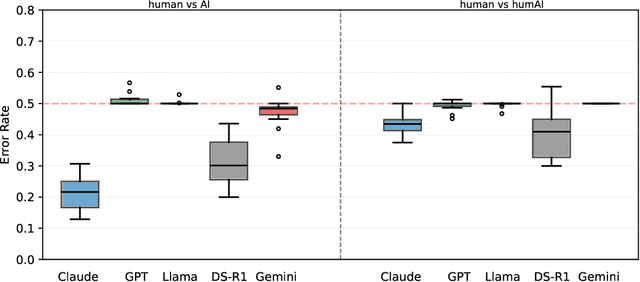
Recently, DeepSeek has been the focus of attention in and beyond the AI community. An interesting problem is how DeepSeek compares to other large language models (LLMs). There are many tasks an LLM can do, and in this paper, we use the task of predicting an outcome using a short text for comparison. We consider two settings, an authorship classification setting and a citation classification setting. In the first one, the goal is to determine whether a short text is written by human or AI. In the second one, the goal is to classify a citation to one of four types using the textual content. For each experiment, we compare DeepSeek with $4$ popular LLMs: Claude, Gemini, GPT, and Llama. We find that, in terms of classification accuracy, DeepSeek outperforms Gemini, GPT, and Llama in most cases, but underperforms Claude. We also find that DeepSeek is comparably slower than others but with a low cost to use, while Claude is much more expensive than all the others. Finally, we find that in terms of similarity, the output of DeepSeek is most similar to those of Gemini and Claude (and among all $5$ LLMs, Claude and Gemini have the most similar outputs). In this paper, we also present a fully-labeled dataset collected by ourselves, and propose a recipe where we can use the LLMs and a recent data set, MADStat, to generate new data sets. The datasets in our paper can be used as benchmarks for future study on LLMs.