 Add to Chrome
 Add to Firefox
 Add to Edge
Code-Centric Detection of Vulnerability-Fixing Commits: A Unified Benchmark and Empirical Study
May 13, 2026
Automated detection of vulnerability-fixing commits (VFCs) is critical for timely security patch deployment, as advisory databases lag patch releases by a median of 25 days and many fixes never receive advisories. We present a comprehensive evaluation of code language model based VFC detection through a unified framework consolidating over 20 fragmented datasets spanning more than 180000 commits. Across over 180 experiments with fine-tuned models from 125 M to 14 B parameters, we find no evidence that models acquire transferable security-relevant code understanding from code changes alone. When commit messages are available, they dominate model attention, and when removed, an attribution analysis shows that enriching diffs with additional intra-procedural semantic context does not shift model attention toward the code changes. Group-stratified evaluation exposes approximately 17% performance drops compared to random splits, while temporal splits on aggregated datasets prove unreliable due to compositional shift in the underlying project distributions. At a false positive rate of 0.5% all fine-tuned code-only models miss over 93% of vulnerabilities. Larger and more diverse training data or generative approaches show preliminary improvements but do not resolve the underlying limitations. To support future research on code-centric VFC detection, we release our unified framework and evaluation suite.

TrEEStealer: Stealing Decision Trees via Enclave Side Channels
Apr 20, 2026Today, machine learning is widely applied in sensitive, security-related, and financially lucrative applications. Model extraction attacks undermine current business models where a model owner sells model access, e.g., via MLaaS APIs. Additionally, stolen models can enable powerful white-box attacks, facilitating privacy attacks on sensitive training data, and model evasion. In this paper, we focus on Decision Trees (DT), which are widely deployed in practice. Existing black-box extraction attacks for DTs are either query-intensive, make strong assumptions about the DT structure, or rely on rich API information. To limit attacks to the black-box setting, CPU vendors introduced Trusted Execution Environments (TEE) that use hardware-mechanisms to isolate workloads from external parties, e.g., MLaaS providers. We introduce TrEEStealer, a high-fidelity extraction attack for stealing TEE-protected DTs. TrEEStealer exploits TEE-specific side-channels to steal DTs efficiently and without strong assumptions about the API output or DT structure. The extraction efficacy stems from a novel algorithm that maximizes the information derived from each query by coupling Control-Flow Information (CFI) with passive information tracking. We use two primitives to acquire CFI: for AMD SEV, we follow previous work using the SEV-Step framework and performance counters. For Intel SGX, we reproduce prior findings on current Xeon 6 CPUs and construct a new primitive to efficiently extract the branch history of inference runs through the Branch-History-Register. We found corresponding vulnerabilities in three popular libraries: OpenCV, mlpack, and emlearn. We show that TrEEStealer achieves superior efficiency and extraction fidelity compared to prior attacks. Our work establishes a new state-of-the-art for DT extraction and confirms that TEEs fail to protect against control-flow leakage.
Beyond Accuracy: Characterizing Code Comprehension Capabilities in (Large) Language Models
Jan 19, 2026Large Language Models (LLMs) are increasingly integrated into software engineering workflows, yet current benchmarks provide only coarse performance summaries that obscure the diverse capabilities and limitations of these models. This paper investigates whether LLMs' code-comprehension performance aligns with traditional human-centric software metrics or instead reflects distinct, non-human regularities. We introduce a diagnostic framework that reframes code understanding as a binary input-output consistency task, enabling the evaluation of classification and generative models. Using a large-scale dataset, we correlate model performance with traditional, human-centric complexity metrics, such as lexical size, control-flow complexity, and abstract syntax tree structure. Our analyses reveal minimal correlation between human-defined metrics and LLM success (AUROC 0.63), while shadow models achieve substantially higher predictive performance (AUROC 0.86), capturing complex, partially predictable patterns beyond traditional software measures. These findings suggest that LLM comprehension reflects model-specific regularities only partially accessible through either human-designed or learned features, emphasizing the need for benchmark methodologies that move beyond aggregate accuracy and toward instance-level diagnostics, while acknowledging fundamental limits in predicting correct outcomes.
Prompt Pirates Need a Map: Stealing Seeds helps Stealing Prompts
Sep 11, 2025Diffusion models have significantly advanced text-to-image generation, enabling the creation of highly realistic images conditioned on textual prompts and seeds. Given the considerable intellectual and economic value embedded in such prompts, prompt theft poses a critical security and privacy concern. In this paper, we investigate prompt-stealing attacks targeting diffusion models. We reveal that numerical optimization-based prompt recovery methods are fundamentally limited as they do not account for the initial random noise used during image generation. We identify and exploit a noise-generation vulnerability (CWE-339), prevalent in major image-generation frameworks, originating from PyTorch's restriction of seed values to a range of $2^{32}$ when generating the initial random noise on CPUs. Through a large-scale empirical analysis conducted on images shared via the popular platform CivitAI, we demonstrate that approximately 95% of these images' seed values can be effectively brute-forced in 140 minutes per seed using our seed-recovery tool, SeedSnitch. Leveraging the recovered seed, we propose PromptPirate, a genetic algorithm-based optimization method explicitly designed for prompt stealing. PromptPirate surpasses state-of-the-art methods, i.e., PromptStealer, P2HP, and CLIP-Interrogator, achieving an 8-11% improvement in LPIPS similarity. Furthermore, we introduce straightforward and effective countermeasures that render seed stealing, and thus optimization-based prompt stealing, ineffective. We have disclosed our findings responsibly and initiated coordinated mitigation efforts with the developers to address this critical vulnerability.
AutoStub: Genetic Programming-Based Stub Creation for Symbolic Execution
Sep 10, 2025Symbolic execution is a powerful technique for software testing, but suffers from limitations when encountering external functions, such as native methods or third-party libraries. Existing solutions often require additional context, expensive SMT solvers, or manual intervention to approximate these functions through symbolic stubs. In this work, we propose a novel approach to automatically generate symbolic stubs for external functions during symbolic execution that leverages Genetic Programming. When the symbolic executor encounters an external function, AutoStub generates training data by executing the function on randomly generated inputs and collecting the outputs. Genetic Programming then derives expressions that approximate the behavior of the function, serving as symbolic stubs. These automatically generated stubs allow the symbolic executor to continue the analysis without manual intervention, enabling the exploration of program paths that were previously intractable. We demonstrate that AutoStub can automatically approximate external functions with over 90% accuracy for 55% of the functions evaluated, and can infer language-specific behaviors that reveal edge cases crucial for software testing.
* 2025 HUMIES finalist
Non-omniscient backdoor injection with a single poison sample: Proving the one-poison hypothesis for linear regression and linear classification
Aug 07, 2025Backdoor injection attacks are a threat to machine learning models that are trained on large data collected from untrusted sources; these attacks enable attackers to inject malicious behavior into the model that can be triggered by specially crafted inputs. Prior work has established bounds on the success of backdoor attacks and their impact on the benign learning task, however, an open question is what amount of poison data is needed for a successful backdoor attack. Typical attacks either use few samples, but need much information about the data points or need to poison many data points. In this paper, we formulate the one-poison hypothesis: An adversary with one poison sample and limited background knowledge can inject a backdoor with zero backdooring-error and without significantly impacting the benign learning task performance. Moreover, we prove the one-poison hypothesis for linear regression and linear classification. For adversaries that utilize a direction that is unused by the benign data distribution for the poison sample, we show that the resulting model is functionally equivalent to a model where the poison was excluded from training. We build on prior work on statistical backdoor learning to show that in all other cases, the impact on the benign learning task is still limited. We also validate our theoretical results experimentally with realistic benchmark data sets.
Trace Gadgets: Minimizing Code Context for Machine Learning-Based Vulnerability Prediction
Apr 18, 2025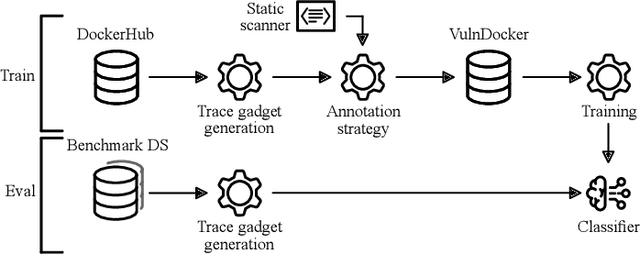


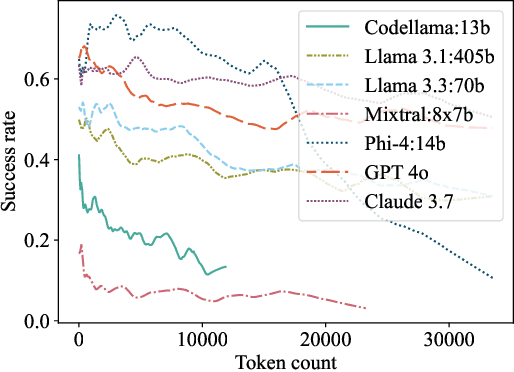
As the number of web applications and API endpoints exposed to the Internet continues to grow, so does the number of exploitable vulnerabilities. Manually identifying such vulnerabilities is tedious. Meanwhile, static security scanners tend to produce many false positives. While machine learning-based approaches are promising, they typically perform well only in scenarios where training and test data are closely related. A key challenge for ML-based vulnerability detection is providing suitable and concise code context, as excessively long contexts negatively affect the code comprehension capabilities of machine learning models, particularly smaller ones. This work introduces Trace Gadgets, a novel code representation that minimizes code context by removing non-related code. Trace Gadgets precisely capture the statements that cover the path to the vulnerability. As input for ML models, Trace Gadgets provide a minimal but complete context, thereby improving the detection performance. Moreover, we collect a large-scale dataset generated from real-world applications with manually curated labels to further improve the performance of ML-based vulnerability detectors. Our results show that state-of-the-art machine learning models perform best when using Trace Gadgets compared to previous code representations, surpassing the detection capabilities of industry-standard static scanners such as GitHub's CodeQL by at least 4% on a fully unseen dataset. By applying our framework to real-world applications, we identify and report previously unknown vulnerabilities in widely deployed software.
OCEAN: Open-World Contrastive Authorship Identification
Dec 06, 2024In an era where cyberattacks increasingly target the software supply chain, the ability to accurately attribute code authorship in binary files is critical to improving cybersecurity measures. We propose OCEAN, a contrastive learning-based system for function-level authorship attribution. OCEAN is the first framework to explore code authorship attribution on compiled binaries in an open-world and extreme scenario, where two code samples from unknown authors are compared to determine if they are developed by the same author. To evaluate OCEAN, we introduce new realistic datasets: CONAN, to improve the performance of authorship attribution systems in real-world use cases, and SNOOPY, to increase the robustness of the evaluation of such systems. We use CONAN to train our model and evaluate on SNOOPY, a fully unseen dataset, resulting in an AUROC score of 0.86 even when using high compiler optimizations. We further show that CONAN improves performance by 7% compared to the previously used Google Code Jam dataset. Additionally, OCEAN outperforms previous methods in their settings, achieving a 10% improvement over state-of-the-art SCS-Gan in scenarios analyzing source code. Furthermore, OCEAN can detect code injections from an unknown author in a software update, underscoring its value for securing software supply chains.
Dynamic Frequency-Based Fingerprinting Attacks against Modern Sandbox Environments
Apr 17, 2024The cloud computing landscape has evolved significantly in recent years, embracing various sandboxes to meet the diverse demands of modern cloud applications. These sandboxes encompass container-based technologies like Docker and gVisor, microVM-based solutions like Firecracker, and security-centric sandboxes relying on Trusted Execution Environments (TEEs) such as Intel SGX and AMD SEV. However, the practice of placing multiple tenants on shared physical hardware raises security and privacy concerns, most notably side-channel attacks. In this paper, we investigate the possibility of fingerprinting containers through CPU frequency reporting sensors in Intel and AMD CPUs. One key enabler of our attack is that the current CPU frequency information can be accessed by user-space attackers. We demonstrate that Docker images exhibit a unique frequency signature, enabling the distinction of different containers with up to 84.5% accuracy even when multiple containers are running simultaneously in different cores. Additionally, we assess the effectiveness of our attack when performed against several sandboxes deployed in cloud environments, including Google's gVisor, AWS' Firecracker, and TEE-based platforms like Gramine (utilizing Intel SGX) and AMD SEV. Our empirical results show that these attacks can also be carried out successfully against all of these sandboxes in less than 40 seconds, with an accuracy of over 70% in all cases. Finally, we propose a noise injection-based countermeasure to mitigate the proposed attack on cloud environments.
DASH: Accelerating Distributed Private Machine Learning Inference with Arithmetic Garbled Circuits
Feb 13, 2023The adoption of machine learning solutions is rapidly increasing across all parts of society. Cloud service providers such as Amazon Web Services, Microsoft Azure and the Google Cloud Platform aggressively expand their Machine-Learning-as-a-Service offerings. While the widespread adoption of machine learning has huge potential for both research and industry, the large-scale evaluation of possibly sensitive data on untrusted platforms bears inherent data security and privacy risks. Since computation time is expensive, performance is a critical factor for machine learning. However, prevailing security measures proposed in the past years come with a significant performance overhead. We investigate the current state of protected distributed machine learning systems, focusing on deep convolutional neural networks. The most common and best-performing mixed MPC approaches are based on homomorphic encryption, secret sharing, and garbled circuits. They commonly suffer from communication overheads that grow linearly in the depth of the neural network. We present Dash, a fast and distributed private machine learning inference scheme. Dash is based purely on arithmetic garbled circuits. It requires only a single communication round per inference step, regardless of the depth of the neural network, and a very small constant communication volume. Dash thus significantly reduces performance requirements and scales better than previous approaches. In addition, we introduce the concept of LabelTensors. This allows us to efficiently use GPUs while using garbled circuits, which further reduces the runtime. Dash offers security against a malicious attacker and is up to 140 times faster than previous arithmetic garbling schemes.