 Add to Chrome
 Add to Firefox
 Add to Edge
An `Inverse' Experimental Framework to Estimate Market Efficiency
Apr 20, 2026
Digital marketplaces processing billions of dollars annually represent critical infrastructure in sociotechnical ecosystems, yet their performance optimization lacks principled measurement frameworks that can inform algorithmic governance decisions regarding market efficiency and fairness from complex market data. By looking at orderbook data from double auction markets alone, because bids and asks do not represent true maximum willingnesses to buy and true minimum willingnesses to sell, there is little an economist can say about the market's actual performance in terms of allocative efficiency. We turn to experimental data to address this issue, `inverting' the standard induced value approach of double auction experiments. Our aim is to predict key market features relevant to market efficiency, particularly allocative efficiency, using orderbook data only -- specifically bids, asks and price realizations, but not the induced reservation values -- as early as possible. Since there is no established model of strategically optimal behavior in these markets, and because orderbook data is highly unstructured, non-stationary and non-linear, we propose quantile-based normalization techniques that help us build general predictive models. We develop and train several models, including linear regressions and gradient boosting trees, leveraging quantile-based input from the underlying supply-demand model. Our models can predict allocative efficiency with reasonable accuracy from the earliest bids and asks, and these predictions improve with additional realized price data. The performance of the prediction techniques varies by target and market type. Our framework holds significant potential for application to real-world market data, offering valuable insights into market efficiency and performance, even prior to any trade realizations.

Near-optimal control of dynamical systems with neural ordinary differential equations
Jun 22, 2022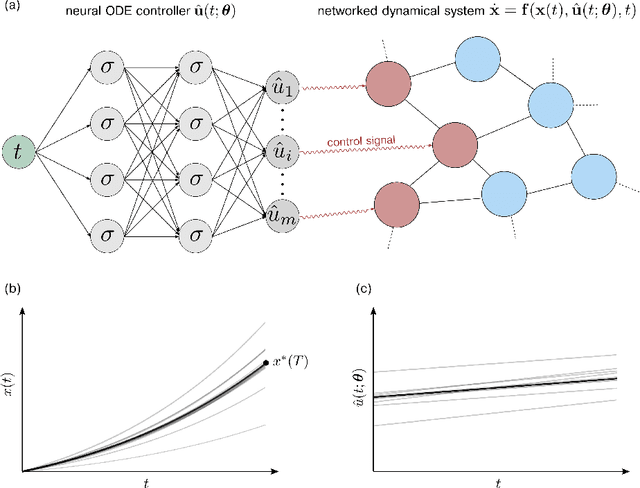

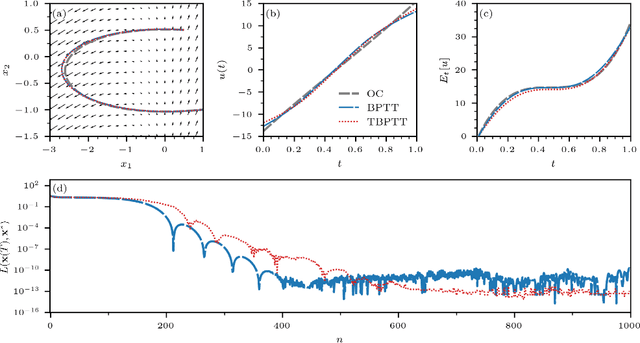
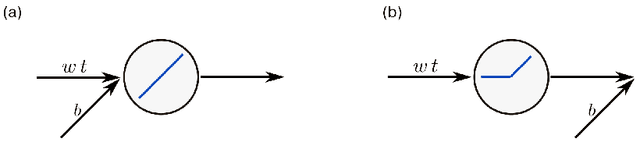
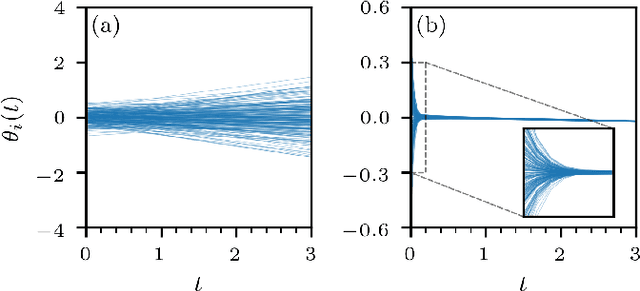
Optimal control problems naturally arise in many scientific applications where one wishes to steer a dynamical system from a certain initial state $\mathbf{x}_0$ to a desired target state $\mathbf{x}^*$ in finite time $T$. Recent advances in deep learning and neural network-based optimization have contributed to the development of methods that can help solve control problems involving high-dimensional dynamical systems. In particular, the framework of neural ordinary differential equations (neural ODEs) provides an efficient means to iteratively approximate continuous time control functions associated with analytically intractable and computationally demanding control tasks. Although neural ODE controllers have shown great potential in solving complex control problems, the understanding of the effects of hyperparameters such as network structure and optimizers on learning performance is still very limited. Our work aims at addressing some of these knowledge gaps to conduct efficient hyperparameter optimization. To this end, we first analyze how truncated and non-truncated backpropagation through time affect runtime performance and the ability of neural networks to learn optimal control functions. Using analytical and numerical methods, we then study the role of parameter initializations, optimizers, and neural-network architecture. Finally, we connect our results to the ability of neural ODE controllers to implicitly regularize control energy.
Solving Inventory Management Problems with Inventory-dynamics-informed Neural Networks
Feb 05, 2022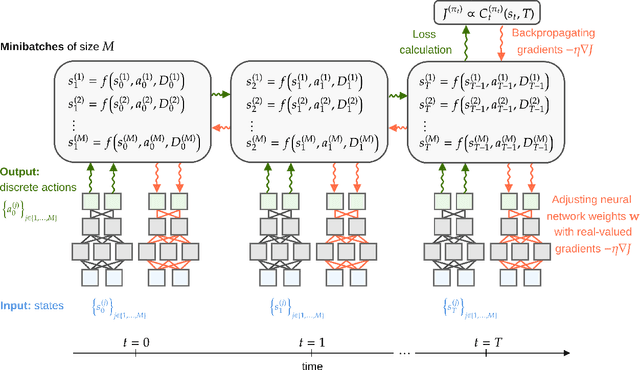
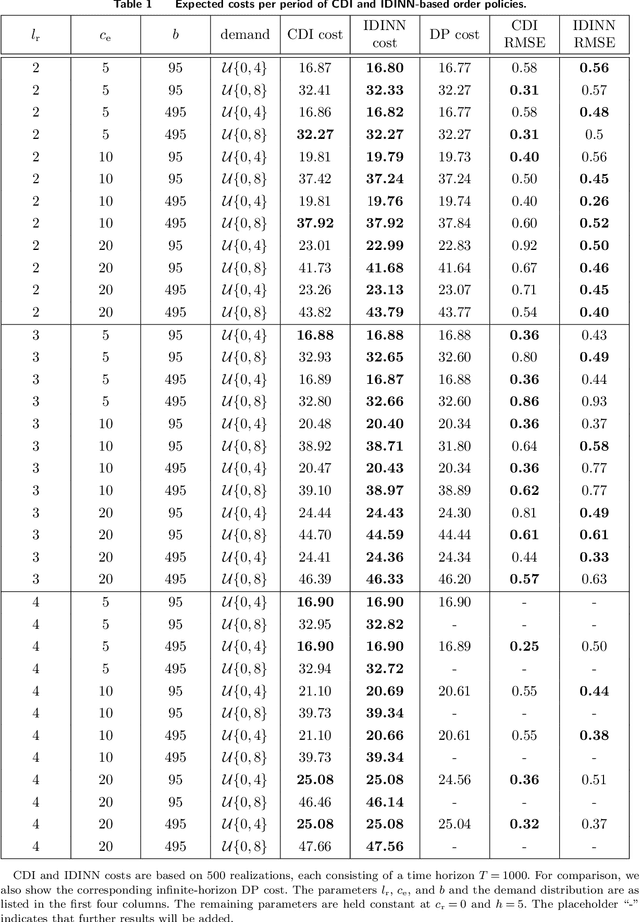

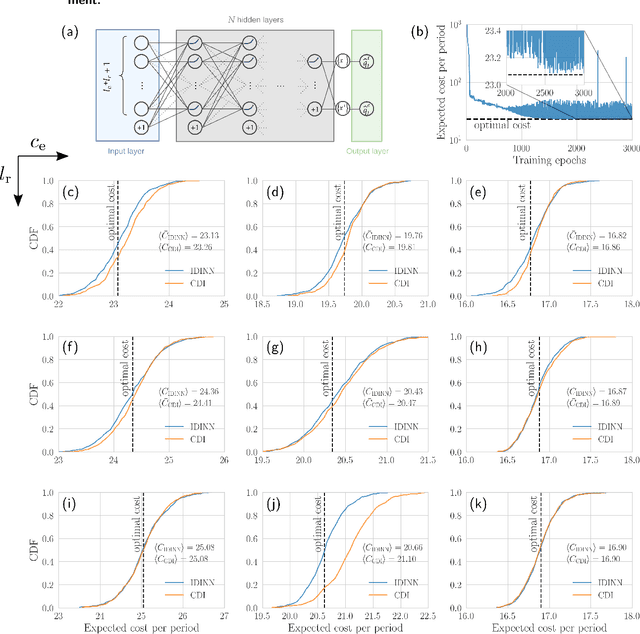
A key challenge in inventory management is to identify policies that optimally replenish inventory from multiple suppliers. To solve such optimization problems, inventory managers need to decide what quantities to order from each supplier, given the on-hand inventory and outstanding orders, so that the expected backlogging, holding, and sourcing costs are jointly minimized. Inventory management problems have been studied extensively for over 60 years, and yet even basic dual sourcing problems, in which orders from an expensive supplier arrive faster than orders from a regular supplier, remain intractable in their general form. In this work, we approach dual sourcing from a neural-network-based optimization lens. By incorporating inventory dynamics into the design of neural networks, we are able to learn near-optimal policies of commonly used instances within a few minutes of CPU time on a regular personal computer. To demonstrate the versatility of inventory-dynamics-informed neural networks, we show that they are able to control inventory dynamics with empirical demand distributions that are challenging to tackle effectively using alternative, state-of-the-art approaches.
Multi-Objective Optimization for Value-Sensitive and Sustainable Basket Recommendations
Nov 10, 2021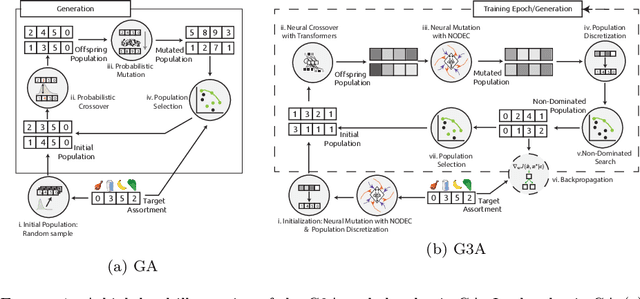
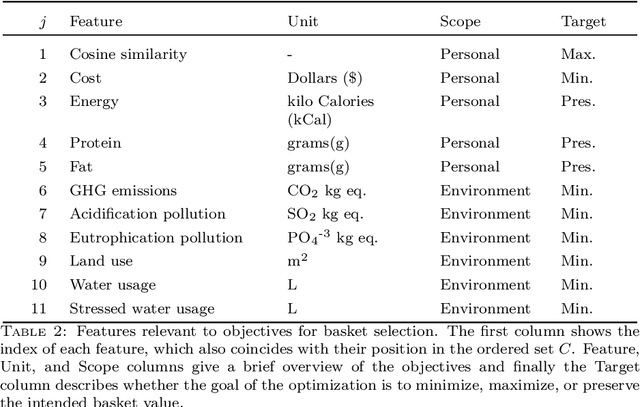
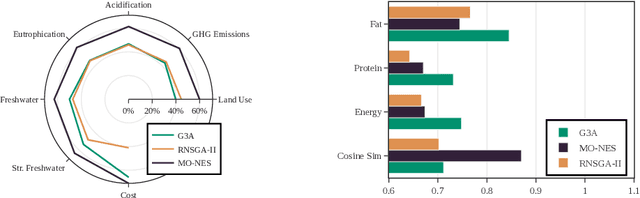
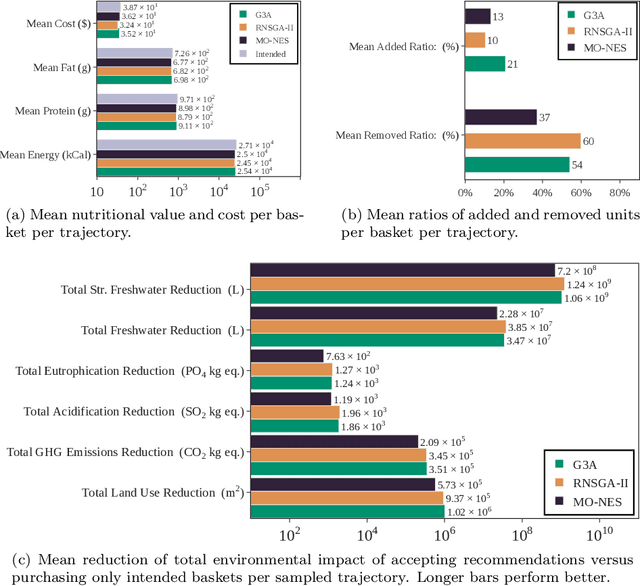
Sustainable consumption aims to minimize the environmental and societal impact of the use of services and products. Over-consumption of services and products leads to potential natural resource exhaustion and societal inequalities, as access to goods and services becomes more challenging. In everyday life, a person can simply achieve more sustainable purchases by drastically changing their lifestyle choices and potentially going against their personal values or wishes. Conversely, achieving sustainable consumption while accounting for personal values is a more complex task, as potential trade-offs arise when trying to satisfy environmental and personal goals. This article focuses on value-sensitive design of recommender systems, which enable consumers to improve the sustainability of their purchases while respecting their personal values. Value-sensitive recommendations for sustainable consumption are formalized as a multi-objective optimization problem, where each objective represents different sustainability goals and personal values. Novel and existing multi-objective algorithms calculate solutions to this problem. The solutions are proposed as personalized sustainable basket recommendations to consumers. These recommendations are evaluated on a synthetic dataset, which comprises three established real-world datasets from relevant scientific and organizational reports. The synthetic dataset contains quantitative data on product prices, nutritional values and environmental impact metrics, such as greenhouse gas emissions and water footprint. The recommended baskets are highly similar to consumer purchased baskets and aligned with both sustainability goals and personal values relevant to health, expenditure and taste. Even when consumers would accept only a fraction of recommendations, a considerable reduction of environmental impact is observed.
Implicit energy regularization of neural ordinary-differential-equation control
Mar 11, 2021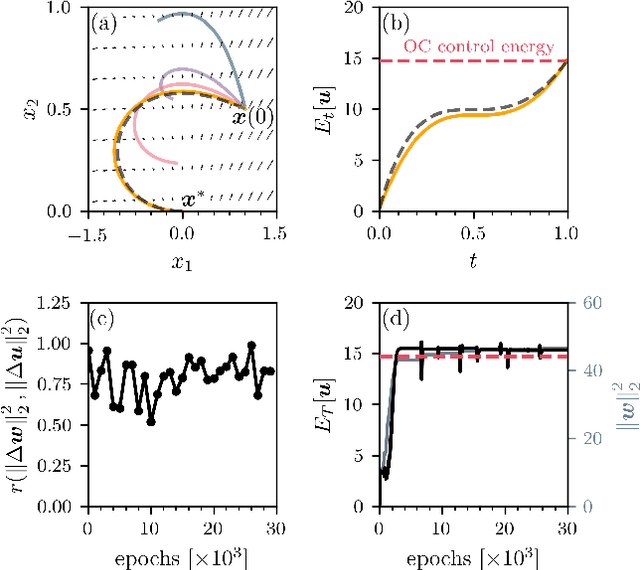
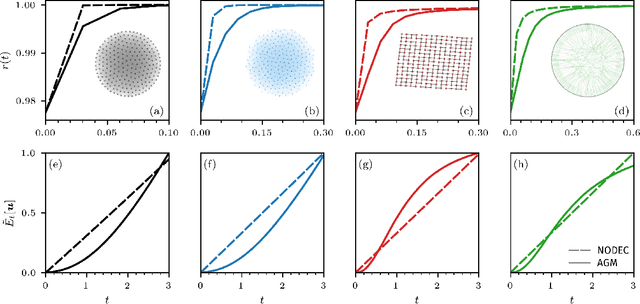
Although optimal control problems of dynamical systems can be formulated within the framework of variational calculus, their solution for complex systems is often analytically and computationally intractable. In this Letter we present a versatile neural ordinary-differential-equation control (NODEC) framework with implicit energy regularization and use it to obtain neural-network-generated control signals that can steer dynamical systems towards a desired target state within a predefined amount of time. We demonstrate the ability of NODEC to learn control signals that closely resemble those found by corresponding optimal control frameworks in terms of control energy and deviation from the desired target state. Our results suggest that NODEC is capable to solve a wide range of control and optimization problems, including those that are analytically intractable.
NNC: Neural-Network Control of Dynamical Systems on Graphs
Jul 17, 2020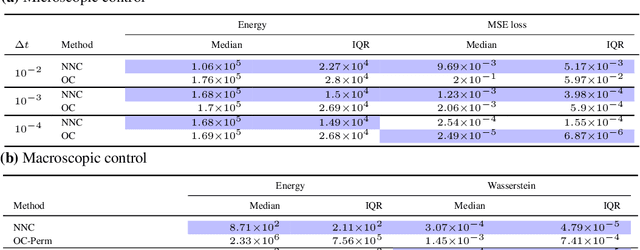
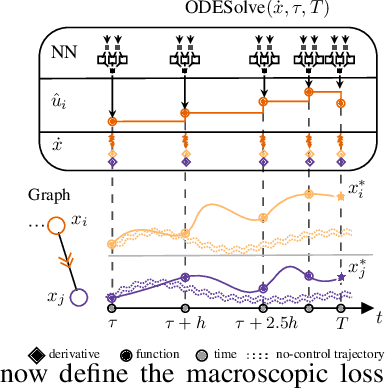
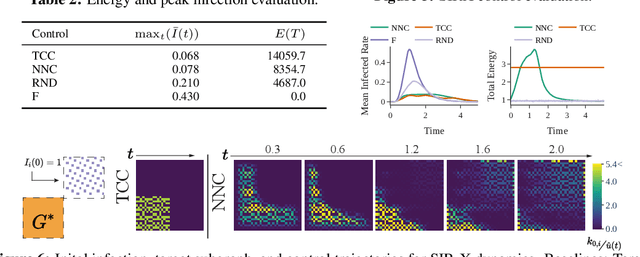
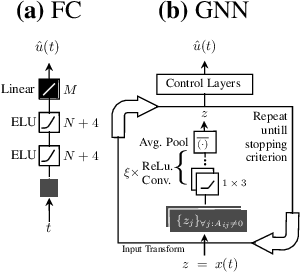
We study the ability of neural networks to steer or control trajectories of dynamical systems on graphs. In particular, we introduce a neural-network control (NNC) framework, which represents dynamical systems by neural ordinary different equations (neural ODEs), and find that NNC can learn control signals that drive networked dynamical systems into desired target states. To identify the influence of different target states on the NNC performance, we study two types of control: (i) microscopic control and (ii) macroscopic control. Microscopic control minimizes the L2 norm between the current and target state and macroscopic control minimizes the corresponding Wasserstein distance. We find that the proposed NNC framework produces low-energy control signals that are highly correlated with those of optimal control. Our results are robust for a wide range of graph structures and (non-)linear dynamical systems.
How Value-Sensitive Design Can Empower Sustainable Consumption
May 14, 2020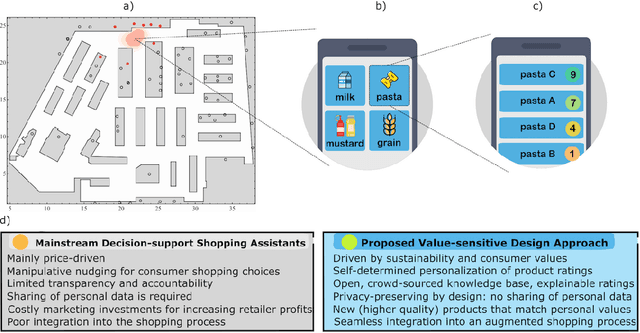
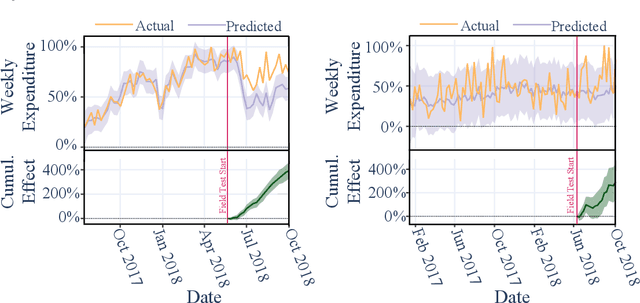
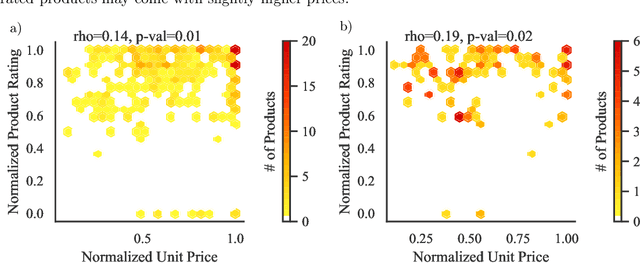
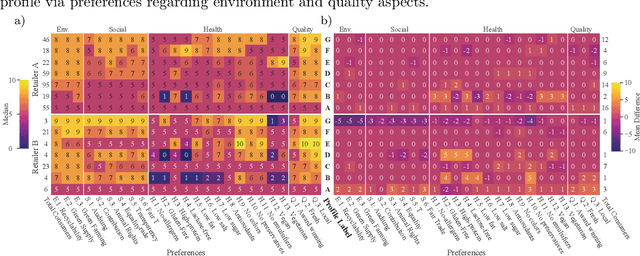
In a so-called overpopulated world, sustainable consumption is of existential importance. The expanding spectrum of product choices and their production complexity challenge consumers to make informed and value-sensitive decisions. Recent approaches based on (personalized) psychological manipulation are often intransparent, potentially privacy-invasive and inconsistent with informational self-determination. In contrast, responsible consumption based on informed choices currently requires reasoning to an extent that tends to overwhelm human cognitive capacity. As a result, a collective shift towards sustainable consumption remains a grand challenge. Here we demonstrate a novel personal shopping assistant that empowers a value-sensitive design and leverages sustainability awareness, using experts' knowledge and "wisdom of the crowd" for transparent product information and explainable products ratings. Real-world field experiments in two supermarkets confirm higher sustainability awareness and a bottom-up behavioral shift towards more sustainable consumption. These results encourage novel business models for retailers and producers, ethically aligned with consumer values and higher sustainability.