 Add to Chrome
 Add to Firefox
 Add to Edge
Self++: Co-Determined Agency for Human--AI Symbiosis in Extended Reality
Mar 30, 2026
Self++ is a design blueprint for human-AI symbiosis in extended reality (XR) that preserves human authorship while still benefiting from increasingly capable AI agents. Because XR can shape both perceptual evidence and action, apparently 'helpful' assistance can drift into over-reliance, covert persuasion, and blurred responsibility. Self++ grounds interaction in two complementary theories: Self-Determination Theory (autonomy, competence, relatedness) and the Free Energy Principle (predictive stability under uncertainty). It operationalises these foundations through co-determination, treating the human and the AI as a coupled system that must keep intent and limits legible, tune support over time, and preserve the user's right to endorse, contest, and override. These requirements are summarised as the co-determination principles (T.A.N.): Transparency, Adaptivity, and Negotiability. Self++ organises augmentation into three concurrently activatable overlays spanning sensorimotor competence support (Self: competence overlay), deliberative autonomy support (Self+: autonomy overlay), and social and long-horizon relatedness and purpose support (Self++: relatedness and purpose overlay). Across the overlays, it specifies nine role patterns (Tutor, Skill Builder, Coach; Choice Architect, Advisor, Agentic Worker; Contextual Interpreter, Social Facilitator, Purpose Amplifier) that can be implemented as interaction patterns, not personas. The contribution is a role-based map for designing and evaluating XR-AI systems that grow capability without replacing judgment, enabling symbiotic agency in work, learning, and social life and resilient human development.

Large Language Models for Automatic Detection of Sensitive Topics
Sep 02, 2024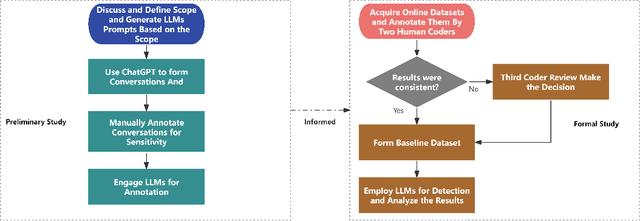
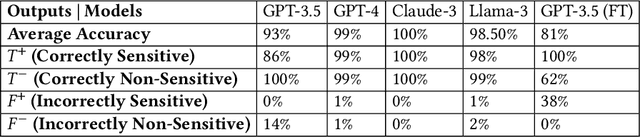
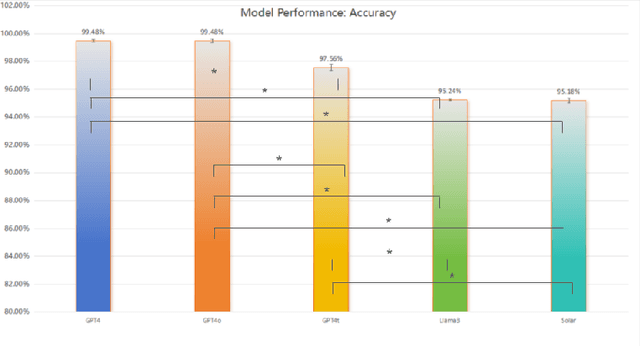
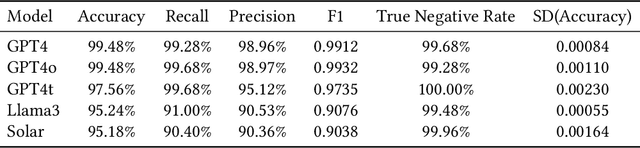
Sensitive information detection is crucial in content moderation to maintain safe online communities. Assisting in this traditionally manual process could relieve human moderators from overwhelming and tedious tasks, allowing them to focus solely on flagged content that may pose potential risks. Rapidly advancing large language models (LLMs) are known for their capability to understand and process natural language and so present a potential solution to support this process. This study explores the capabilities of five LLMs for detecting sensitive messages in the mental well-being domain within two online datasets and assesses their performance in terms of accuracy, precision, recall, F1 scores, and consistency. Our findings indicate that LLMs have the potential to be integrated into the moderation workflow as a convenient and precise detection tool. The best-performing model, GPT-4o, achieved an average accuracy of 99.5\% and an F1-score of 0.99. We discuss the advantages and potential challenges of using LLMs in the moderation workflow and suggest that future research should address the ethical considerations of utilising this technology.