 Add to Chrome
 Add to Firefox
 Add to Edge
sebis at ArchEHR-QA 2026: How Much Can You Do Locally? Evaluating Grounded EHR QA on a Single Notebook
Mar 14, 2026
Clinical question answering over electronic health records (EHRs) can help clinicians and patients access relevant medical information more efficiently. However, many recent approaches rely on large cloud-based models, which are difficult to deploy in clinical environments due to privacy constraints and computational requirements. In this work, we investigate how far grounded EHR question answering can be pushed when restricted to a single notebook. We participate in all four subtasks of the ArchEHR-QA 2026 shared task and evaluate several approaches designed to run on commodity hardware. All experiments are conducted locally without external APIs or cloud infrastructure. Our results show that such systems can achieve competitive performance on the shared task leaderboards. In particular, our submissions perform above average in two subtasks, and we observe that smaller models can approach the performance of much larger systems when properly configured. These findings suggest that privacy-preserving EHR QA systems running fully locally are feasible with current models and commodity hardware. The source code is available at https://github.com/ibrahimey/ArchEHR-QA-2026.

Towards Automating Text Annotation: A Case Study on Semantic Proximity Annotation using GPT-4
Jul 04, 2024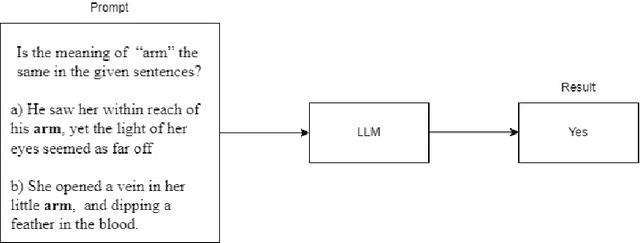


This paper explores using GPT-3.5 and GPT-4 to automate the data annotation process with automatic prompting techniques. The main aim of this paper is to reuse human annotation guidelines along with some annotated data to design automatic prompts for LLMs, focusing on the semantic proximity annotation task. Automatic prompts are compared to customized prompts. We further implement the prompting strategies into an open-source text annotation tool, enabling easy online use via the OpenAI API. Our study reveals the crucial role of accurate prompt design and suggests that prompting GPT-4 with human-like instructions is not straightforwardly possible for the semantic proximity task. We show that small modifications to the human guidelines already improve the performance, suggesting possible ways for future research.