 Add to Chrome
 Add to Firefox
 Add to Edge
Automatic Ordinary Differential Equations Discovery For Biological Systems Using Large Language Model Powered Agentic System
Jul 15, 2026
Automatic scientific discovery has long been a goal of computational scholars - a machine that can discover nature's secrets on its own, moving computational systems beyond data-fitting tools toward the generation and refinement of mechanistic models of the universe. Recent advances in symbolic regression (SR) and large-language-model (LLM)-based agents suggest that such systems can recover equations from data, incorporate domain priors, and automate parts of the research workflow. However, most existing approaches either focus on narrow equation-discovery benchmarks or broad end-to-end automation pipelines, while biological systems remain comparatively underexplored. Here, we introduce the MEDA system, an LLM- and SR-powered agentic framework for discovering ordinary-differential-equation (ODE) models of biological and biologically inspired dynamical systems. MEDA retrieves background knowledge, defines admissible variables, generates mechanistic constraints, proposes candidate ODEs, and fits and evaluates them. We evaluate it across canonical model retrieval, reasoning-based extrapolation to unseen variants, and open-ended discovery, with and without experimental data. Across these settings, MEDA recovered the correct state variables, achieved strong structural recovery in retrieval and extrapolation tasks, and produced biologically plausible discovery-oriented models. Ablation and robustness analyses show that knowledge-guided formalization and mechanistic constraints are load-bearing components, whereas numerical fitting alone can preserve trajectory-compatible but biologically incorrect equations.

Playful AI in Professional Email: A Field Experiment on Tone and Recipient Engagement
Jul 13, 2026Large language models (LLMs) are rapidly reshaping workplace communication, yet whether AI-assisted writing changes how recipients actually behave, and through what channel, remains unknown. Here, in a randomized crossover field experiment, 121 employees across six companies sent work emails under three conditions over three weeks: unaided writing, GPT-5 rewriting in a playful tone, and GPT-5 rewriting in a professional tone. Across 16,880 emails, playful editing increased emotional positivity (B=+0.068, p<0.001), and professional editing decreased it (B=-0.041, p<0.001), yet neither condition directly altered open rates, reply rates, or response times. Instead, within-sender positivity strongly predicted both opening (OR=2.05) and replying (OR=3.32, p<0.001), a significant indirect pathway through which AI editing shaped behavior, in the absence of any direct effect. These findings suggest that AI-assisted communication shapes workplace engagement not through its use, but through the emotional tone of the language it produces.
A Stochastic Epidemiological Model of Latent Tuberculosis in a Radiation Exposed Mars Colony
Jun 24, 2026Plans to establish a sustained human presence on Mars have moved from speculative ambition toward concrete engineering programmes, making the biological consequences of settlement an increasingly practical question. A Mars colony would place a small, closed population in an environment combining chronic radiation, altered immunity, constrained medical autonomy, and engineered indoor air. Latent infections are especially important because clinically silent carriers may become sources of transmissible disease when host control deteriorates. In this study, we develop a stochastic host-radiation-pathogen-habitat model of latent tuberculosis reactivation in a Mars colony. The model links galactic cosmic radiation to immune competence, immune competence to latent-tuberculosis reactivation, and reactivation to airborne transmission in a closed habitat. We also formulate countermeasure allocation as a partially observable sequential decision problem in which isolation and medication are selected by fixed baselines or by a proximal policy optimization policy trained on an agent-based simulator. Our simulations show that active tuberculosis can emerge endogenously despite no initial infectious cases, and that risk is most sensitive to latent reservoir size, radiation-immune coupling and reactivation sensitivity. Adaptive control reduced infectious burden and mortality while limiting unnecessary intervention. This framework supports mission-specific stress testing of screening, monitoring, shielding and treatment strategies before launch.
Disturbance-Aware Aerial Robotics for Ethical Wildlife Monitoring
Jun 06, 2026Reliable wildlife monitoring is essential for ecology and conservation, yet many existing methods, such as tagging, capture, and close-range observation, can alter the very behaviors they aim to measure. Aerial robots offer a scalable alternative, which has shown promising performance in multiple studies. Nonetheless, existing approaches typically lack behavioral awareness, rely on fixed heuristics, or require real-world training data that are costly, impractical, and ethically difficult to obtain. As a result, there remains no general framework for adaptive drone-based monitoring that can both preserve ecological validity and scale across species, behaviors, and robotic platforms. In this study, we introduce a disturbance-aware reinforcement-learning-based framework for heterogeneous aerial robotic fleets that enables autonomous wildlife tracking while explicitly minimizing behavioral disruption. We couple a zoologically grounded simulation environment with fitted animal movement models derived from real trajectory statistics, and train control policies using a reward formulation that captures the trade-off between observation quality and disturbance risk. Across three species (pigeon, jackal, and spur-winged lapwing) with distinct ecologies and motion patterns and four increasingly strategic behavior models common in nature, the learned policies consistently surpassed currently used rule-based baselines and generalized across monitoring tasks, animal dynamics, and drone types. These results establish disturbance-aware learning as a viable foundation for non-invasive autonomous wildlife observation, opening a path towards scalable, ethically responsible, and scientifically reliable robotic monitoring in ecology and conservation.
Data Enrichment for Symbolic Regression Using Diffusion Models
May 31, 2026Symbolic regression (SR) offers a route to scientific discovery by converting observations into interpretable governing equations. However, despite its promise, its reliability degrades sharply when spatiotemporal measurements are sparse, noisy, or physically incomplete, as commonly occurring in practice. Data enrichment (DE) has been shown to be able to mitigate this limitation, yet additional samples can mislead equation discovery unless they preserve the physical structure of the target system. Such implication of DE requires narrow domain expertise as well as technical fluidity, highly limiting its practical usefulness. In this study, we introduce a physics-guided latent diffusion framework for DE for down the line SR models. The proposed framework combines a variational autoencoder, a conditional latent diffusion model, and a physics-informed residual corrector to complete sparse observations with synthetic fields constrained by governing relations. We evaluate the approach on heat conduction, incompressible Navier-Stokes flow, and a moving single-mass Newtonian gravitational potential, using GPLearn, DEAP, and PySR as downstream SR backends. Our results reveal that physics-corrected enrichment consistently improves recovery in sparse regimes across physical dynamics and SR models. These results show that generative enrichment can strengthen equation discovery without additional domain expertise.
Profiling Privacy Preservation Against Gradient Inversion Attacks in Tabular Federated Learning
May 31, 2026Federated learning (FL) enables multiple data holders to train machine learning models collaboratively without centralizing raw data, making it useful in privacy sensitive domains such as healthcare and institutional data sharing. FL keeps data local to clients while communicating only model updates, such as gradients or model deltas. Nevertheless, these updates can expose private client data through gradient inversion attacks (GIAs). We study this risk for tabular FL under an honest-but-curious server threat model across FL protocols, client batch sizes, training stages, attacker assumptions, model architectures, and binary classification, multiclass classification, and regression tasks. We use MIMIC-IV and complementary benchmark datasets. Our evaluation distinguishes numerical and categorical recovery, baseline recoverability, feature level recovery, and exact match rate (EMR). We evaluate FedSGD gradients and FedAvg model deltas with an exposure aligned protocol, comparing attacked models after matched client data exposure rather than matched communication rounds. We compare multilayer perceptron (MLP), ResNet, and FT-Transformer models, and isolate architecture effects through an MLP grid over width, depth, activation, normalization, and dropout. The results show that small client batches and updates representing few distinct records are most vulnerable. Larger local batches and stronger aggregation reduce reconstruction but do not eliminate leakage. FT-Transformer is consistently harder to invert than one-hot baselines, while reconstructability also varies substantially within the MLP family. These findings identify architecture as a practical privacy variable in tabular FL. We also show that aggregate reconstruction accuracy can overstate complete record recovery in sparse data, making EMR and baseline comparisons essential.
Quality-preserving Model for Electronics Production Quality Tests Reduction
Apr 07, 2026Manufacturing test flows in high-volume electronics production are typically fixed during product development and executed unchanged on every unit, even as failure patterns and process conditions evolve. This protects quality, but it also imposes unnecessary test cost, while existing data-driven methods mostly optimize static test subsets and neither adapt online to changing defect distributions nor explicitly control escape risk. In this study, we present an adaptive test-selection framework that combines offline minimum-cost diagnostic subset construction using greedy set cover with an online Thompson-sampling multi-armed bandit that switches between full and reduced test plans using a rolling process-stability signal. We evaluate the framework on two printed circuit board assembly stages-Functional Circuit Test and End-of-Line test-covering 28,000 board runs. Offline analysis identified zero-escape reduced plans that cut test time by 18.78% in Functional Circuit Test and 91.57\% in End-of-Line testing. Under temporal validation with real concept drift, static reduction produced 110 escaped defects in Functional Circuit Test and 8 in End-of-Line, whereas the adaptive policy reduced escapes to zero by reverting to fuller coverage when instability emerged in practice. These results show that online learning can preserve manufacturing quality while reducing test burden, offering a practical route to adaptive test planning across production domains, and offering both economic and logistics improvement for companies.
Chronic Stress, Immune Suppression, and Cancer Occurrence: Unveiling the Connection using Survey Data and Predictive Models
Sep 26, 2025Chronic stress was implicated in cancer occurrence, but a direct causal connection has not been consistently established. Machine learning and causal modeling offer opportunities to explore complex causal interactions between psychological chronic stress and cancer occurrences. We developed predictive models employing variables from stress indicators, cancer history, and demographic data from self-reported surveys, unveiling the direct and immune suppression mitigated connection between chronic stress and cancer occurrence. The models were corroborated by traditional statistical methods. Our findings indicated significant causal correlations between stress frequency, stress level and perceived health impact, and cancer incidence. Although stress alone showed limited predictive power, integrating socio-demographic and familial cancer history data significantly enhanced model accuracy. These results highlight the multidimensional nature of cancer risk, with stress emerging as a notable factor alongside genetic predisposition. These findings strengthen the case for addressing chronic stress as a modifiable cancer risk factor, supporting its integration into personalized prevention strategies and public health interventions to reduce cancer incidence.
Accelerating Reinforcement Learning Algorithms Convergence using Pre-trained Large Language Models as Tutors With Advice Reusing
Sep 10, 2025


Reinforcement Learning (RL) algorithms often require long training to become useful, especially in complex environments with sparse rewards. While techniques like reward shaping and curriculum learning exist to accelerate training, these are often extremely specific and require the developer's professionalism and dedicated expertise in the problem's domain. Tackling this challenge, in this study, we explore the effectiveness of pre-trained Large Language Models (LLMs) as tutors in a student-teacher architecture with RL algorithms, hypothesizing that LLM-generated guidance allows for faster convergence. In particular, we explore the effectiveness of reusing the LLM's advice on the RL's convergence dynamics. Through an extensive empirical examination, which included 54 configurations, varying the RL algorithm (DQN, PPO, A2C), LLM tutor (Llama, Vicuna, DeepSeek), and environment (Blackjack, Snake, Connect Four), our results demonstrate that LLM tutoring significantly accelerates RL convergence while maintaining comparable optimal performance. Furthermore, the advice reuse mechanism shows a further improvement in training duration but also results in less stable convergence dynamics. Our findings suggest that LLM tutoring generally improves convergence, and its effectiveness is sensitive to the specific task, RL algorithm, and LLM model combination.
Interpretable Transformation and Analysis of Timelines through Learning via Surprisability
Mar 06, 2025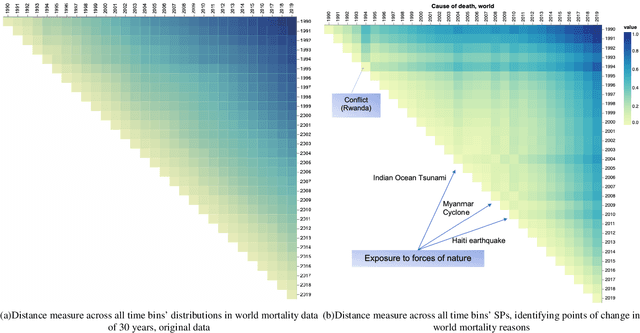
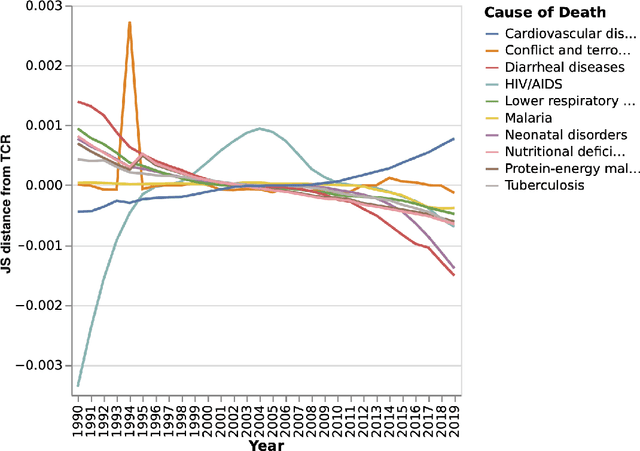
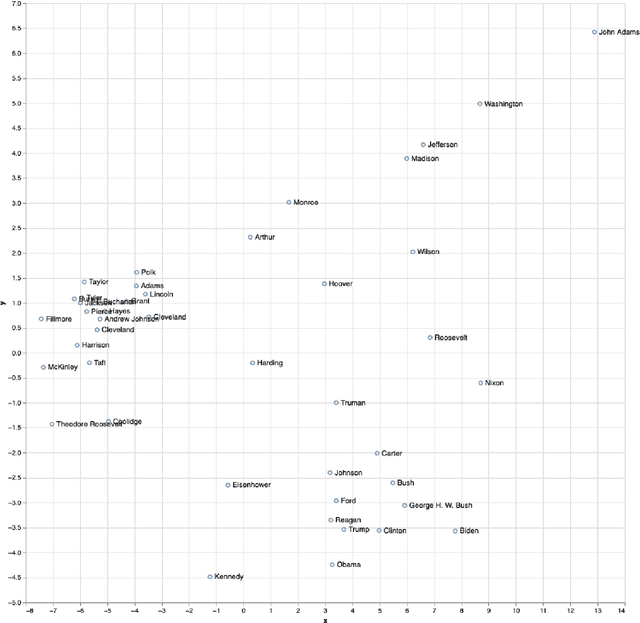
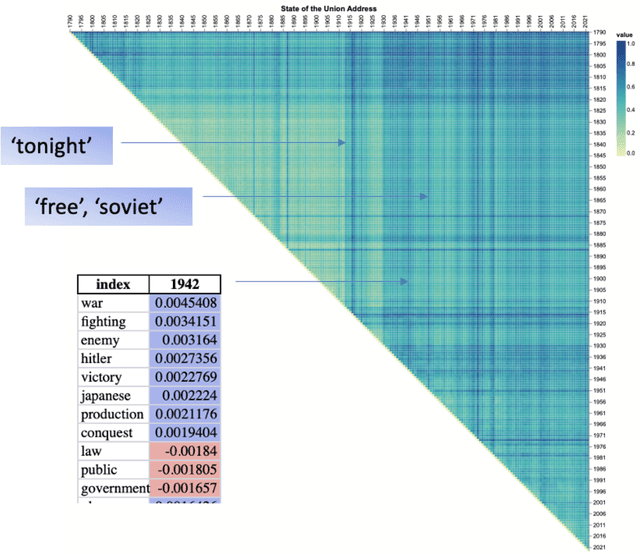
The analysis of high-dimensional timeline data and the identification of outliers and anomalies is critical across diverse domains, including sensor readings, biological and medical data, historical records, and global statistics. However, conventional analysis techniques often struggle with challenges such as high dimensionality, complex distributions, and sparsity. These limitations hinder the ability to extract meaningful insights from complex temporal datasets, making it difficult to identify trending features, outliers, and anomalies effectively. Inspired by surprisability -- a cognitive science concept describing how humans instinctively focus on unexpected deviations - we propose Learning via Surprisability (LvS), a novel approach for transforming high-dimensional timeline data. LvS quantifies and prioritizes anomalies in time-series data by formalizing deviations from expected behavior. LvS bridges cognitive theories of attention with computational methods, enabling the detection of anomalies and shifts in a way that preserves critical context, offering a new lens for interpreting complex datasets. We demonstrate the usefulness of LvS on three high-dimensional timeline use cases: a time series of sensor data, a global dataset of mortality causes over multiple years, and a textual corpus containing over two centuries of State of the Union Addresses by U.S. presidents. Our results show that the LvS transformation enables efficient and interpretable identification of outliers, anomalies, and the most variable features along the timeline.