 Add to Chrome
 Add to Firefox
 Add to Edge
Intensity-based Segmentation of Tissue Images Using a U-Net with a Pretrained ResNet-34 Encoder: Application to Mueller Microscopy
Feb 10, 2026
Manual annotation of the images of thin tissue sections remains a time-consuming step in Mueller microscopy and limits its scalability. We present a novel automated approach using only the total intensity M11 element of the Mueller matrix as an input to a U-Net architecture with a pretrained ResNet-34 encoder. The network was trained to distinguish four classes in the images of murine uterine cervix sections: background, internal os, cervical tissue, and vaginal wall. With only 70 cervical tissue sections, the model achieved 89.71% pixel accuracy and 80.96% mean tissue Dice coefficient on the held-out test dataset. Transfer learning from ImageNet enables accurate segmentation despite limited size of training dataset typical of specialized biomedical imaging. This intensity-based framework requires minimal preprocessing and is readily extensible to other imaging modalities and tissue types, with publicly available graphical annotation tools for practical deployment.

Isometric Transformations for Image Augmentation in Mueller Matrix Polarimetry
Nov 12, 2024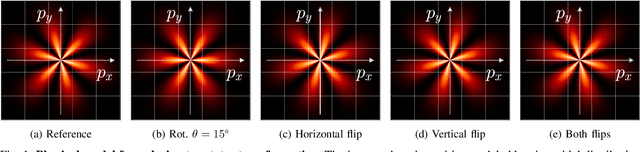
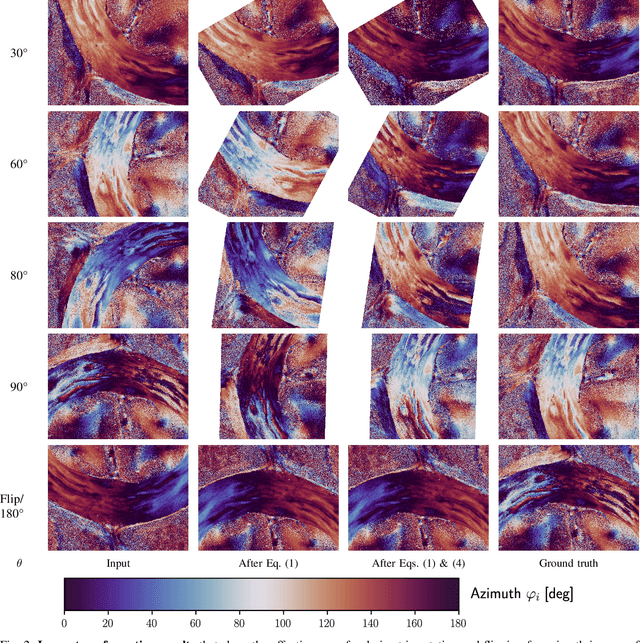
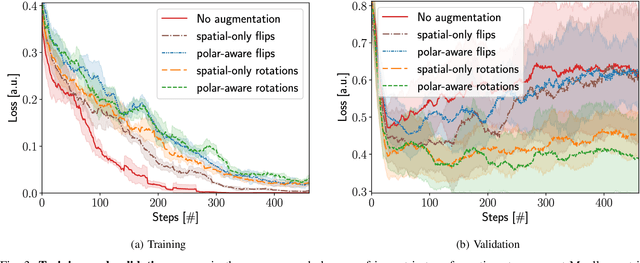
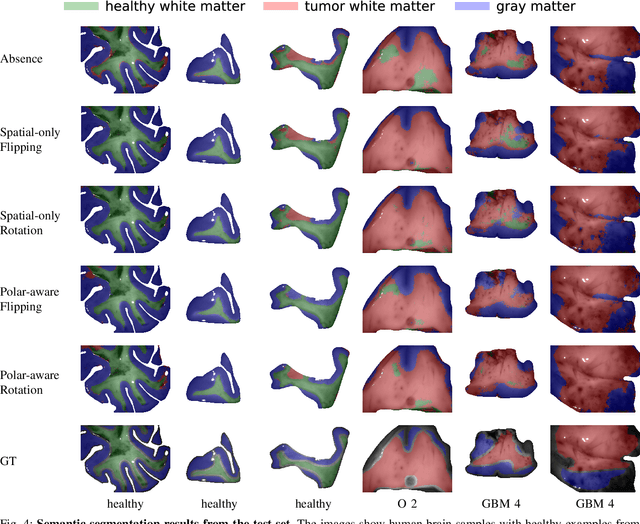
Mueller matrix polarimetry captures essential information about polarized light interactions with a sample, presenting unique challenges for data augmentation in deep learning due to its distinct structure. While augmentations are an effective and affordable way to enhance dataset diversity and reduce overfitting, standard transformations like rotations and flips do not preserve the polarization properties in Mueller matrix images. To this end, we introduce a versatile simulation framework that applies physically consistent rotations and flips to Mueller matrices, tailored to maintain polarization fidelity. Our experimental results across multiple datasets reveal that conventional augmentations can lead to misleading results when applied to polarimetric data, underscoring the necessity of our physics-based approach. In our experiments, we first compare our polarization-specific augmentations against real-world captures to validate their physical consistency. We then apply these augmentations in a semantic segmentation task, achieving substantial improvements in model generalization and performance. This study underscores the necessity of physics-informed data augmentation for polarimetric imaging in deep learning (DL), paving the way for broader adoption and more robust applications across diverse research in the field. In particular, our framework unlocks the potential of DL models for polarimetric datasets with limited sample sizes. Our code implementation is available at github.com/hahnec/polar_augment.
Near-Real-Time Mueller Polarimetric Image Processing for Neurosurgical Intervention
Mar 01, 2024Wide-field imaging Mueller polarimetry is a revolutionary, label-free, and non-invasive modality for computer-aided intervention: in neurosurgery it aims to provide visual feedback of white matter fibre bundle orientation from derived parameters. Conventionally, robust polarimetric parameters are estimated after averaging multiple measurements of intensity for each pair of probing and detected polarised light. Long multi-shot averaging, however, is not compatible with real-time in-vivo imaging, and the current performance of polarimetric data processing hinders the translation to clinical practice. A learning-based denoising framework is tailored for fast, single-shot, noisy acquisitions of polarimetric intensities. Also, performance-optimised image processing tools are devised for the derivation of clinically relevant parameters. The combination recovers accurate polarimetric parameters from fast acquisitions with near-real-time performance, under the assumption of pseudo-Gaussian polarimetric acquisition noise. The denoising framework is trained, validated, and tested on experimental data comprising tumour-free and diseased human brain samples in different conditions. Accuracy and image quality indices showed significant improvements on testing data for a fast single-pass denoising versus the state-of-the-art and high polarimetric image quality standards. The computational time is reported for the end-to-end processing. The end-to-end image processing achieved real-time performance for a localised field of view. The denoised polarimetric intensities produced visibly clear directional patterns of neuronal fibre tracts in line with reference polarimetric image quality standards; directional disruption was kept in case of neoplastic lesions. The presented advances pave the way towards feasible oncological neurosurgical translations of novel, label free, interventional feedback.
Time-efficient filtering of polarimetric data by checking physical realizability of experimental Mueller matrices
Feb 28, 2024Imaging Mueller polarimetry has already proved its potential for metrology, remote sensing and biomedicine. The real-time applications of this modality require both video rate image acquisition and fast data post-processing algorithms. First, one must check the physical realizability of the experimental Mueller matrices in order to filter out non-physical data, i.e. to test the positive semi-definiteness of the 4x4 Hermitian coherency matrix calculated from the elements of the corresponding Mueller matrix pixel-wise. For this purpose, we compared the execution time for the calculations of i) eigenvalues, ii) Cholesky decomposition, iii) Sylvester's criterion, and iv) coefficients of the characteristic polynomial of the Hermitian coherency matrix using two different approaches, all calculated for the experimental Mueller matrix images (600 pixels x 700 pixels) of mouse uterine cervix. The calculations were performed using C++ and Julia programming languages. Our results showed the superiority of the algorithm iv), in particular, the version based on the simplification via Pauli matrices, in terms of execution time for our dataset, over other algorithms. The sequential implementation of the latter algorithm on a single core already satisfies the requirements of real-time polarimetric imaging in various domains. This can be further amplified by the proposed parallelization (for example, we achieve a 5-fold speed up on 6 cores).