 Add to Chrome
 Add to Firefox
 Add to Edge
Adaptive Multi-Scale Correlation Meta-Network for Few-Shot Remote Sensing Image Classification
Jan 18, 2026
Few-shot learning in remote sensing remains challenging due to three factors: the scarcity of labeled data, substantial domain shifts, and the multi-scale nature of geospatial objects. To address these issues, we introduce Adaptive Multi-Scale Correlation Meta-Network (AMC-MetaNet), a lightweight yet powerful framework with three key innovations: (i) correlation-guided feature pyramids for capturing scale-invariant patterns, (ii) an adaptive channel correlation module (ACCM) for learning dynamic cross-scale relationships, and (iii) correlation-guided meta-learning that leverages correlation patterns instead of conventional prototype averaging. Unlike prior approaches that rely on heavy pre-trained models or transformers, AMC-MetaNet is trained from scratch with only $\sim600K$ parameters, offering $20\times$ fewer parameters than ResNet-18 while maintaining high efficiency ($<50$ms per image inference). AMC-MetaNet achieves up to 86.65\% accuracy in 5-way 5-shot classification on various remote sensing datasets, including EuroSAT, NWPU-RESISC45, UC Merced Land Use, and AID. Our results establish AMC-MetaNet as a computationally efficient, scale-aware framework for real-world few-shot remote sensing.

Sketch Recognition using Domain Classification
Nov 12, 2012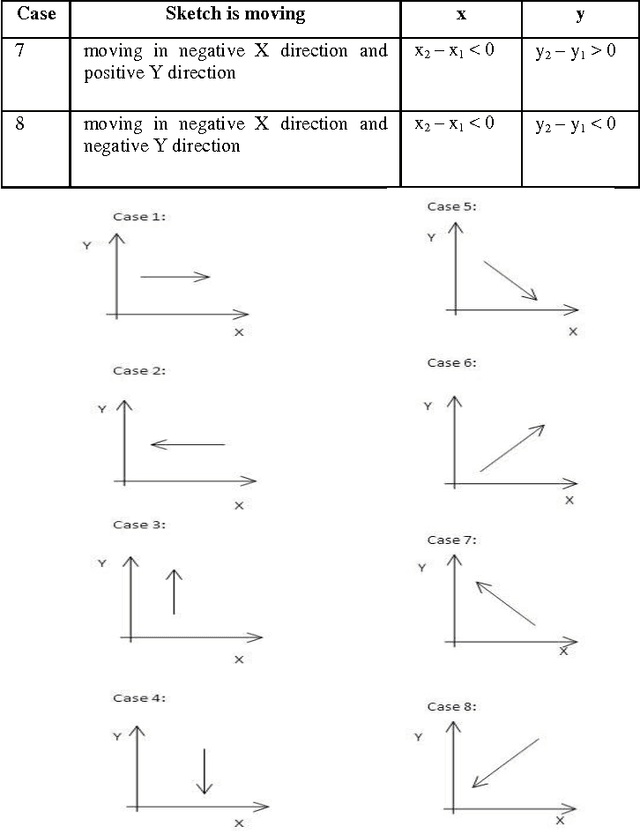
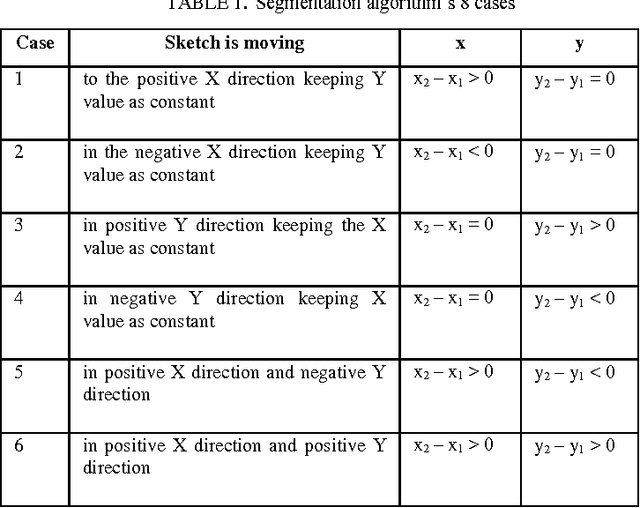
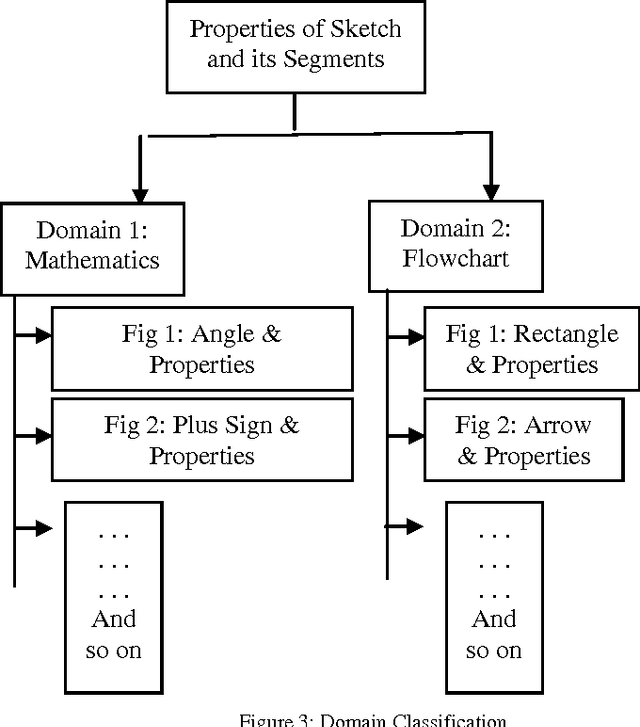
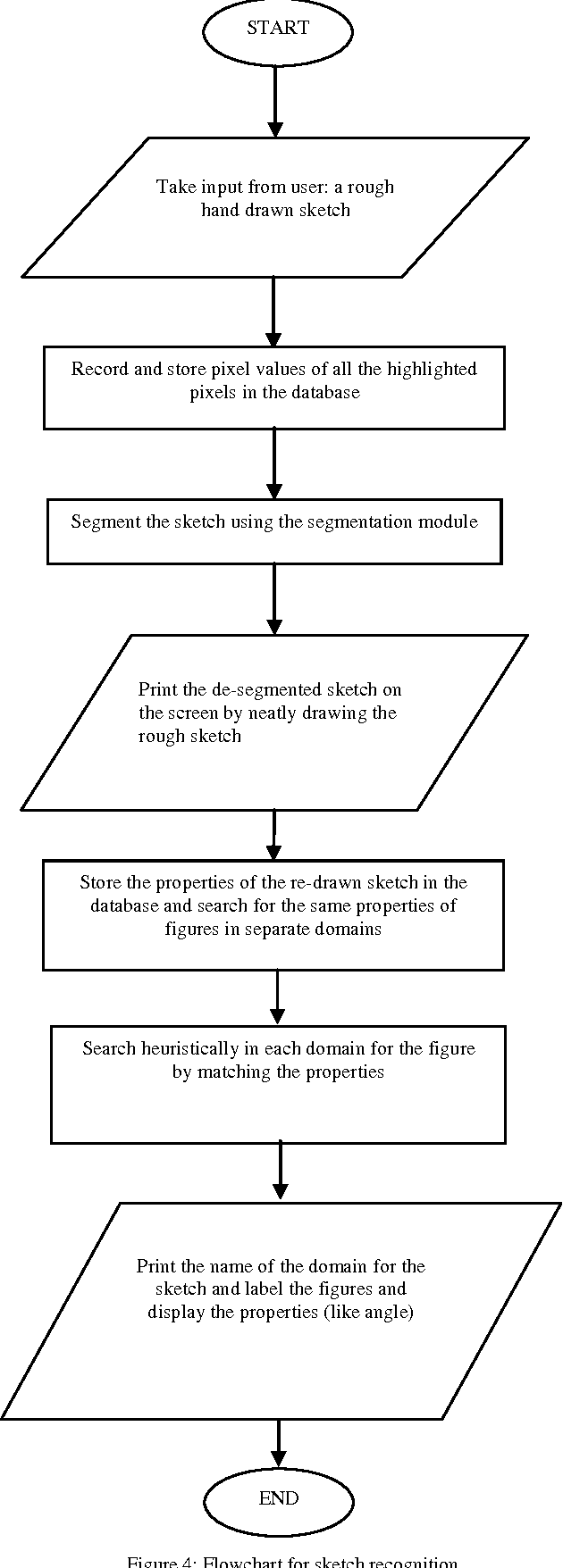
Conceptualizing away the sketch processing details in a user interface will enable general users and domain experts to create more complex sketches. There are many domains for which sketch recognition systems are being developed. But they entail image-processing skill if they are to handle the details of each domain, and also they are lengthy to build. The implemented system goal is to enable user interface designers and domain experts who may not have proficiency in sketch recognition to be able to construct these sketch systems. This sketch recognition system takes in rough sketches from user drawn with the help of mouse as its input. It then recognizes the sketch using segmentation and domain classification, the properties of the user drawn sketch and segments are searched heuristically in the domains and each figures of each domain, and finally it shows its domain, the figure name and properties. It also draws the sketch smoothly. The work is resulted through extensive research and study of many existing image processing and pattern matching algorithms.