 Add to Chrome
 Add to Firefox
 Add to Edge
Hybrid Quantum-Classical Encoding for Accurate Residue-Level pKa Prediction
Mar 09, 2026
Accurate prediction of residue-level pKa values is essential for understanding protein function, stability, and reactivity. While existing resources such as DeepKaDB and CpHMD-derived datasets provide valuable training data, their descriptors remain primarily classical and often struggle to generalize across diverse biochemical environments. We introduce a reproducible hybrid quantum-classical framework that enriches residue-level representations with a Gaussian kernel-based quantum-inspired feature mapping. These quantum-enhanced descriptors are combined with normalized structural features to form a unified hybrid encoding processed by a Deep Quantum Neural Network (DQNN). This architecture captures nonlinear relationships in residue microenvironments that are not accessible to classical models. Benchmarking across multiple curated descriptor sets demonstrates that the DQNN achieves improved cross-context generalization relative to classical baselines. External evaluation on the PKAD-R experimental benchmark and an A$β$40 case study further highlights the robustness and transferability of the quantum-inspired representation. By integrating quantum-inspired feature transformations with classical biochemical descriptors, this work establishes a scalable and experimentally transferable approach for residue-level pKa prediction and broader applications in protein electrostatics.

Quantum-Augmented AI/ML for O-RAN: Hierarchical Threat Detection with Synergistic Intelligence and Interpretability (Technical Report)
Dec 12, 2025Open Radio Access Networks (O-RAN) enhance modularity and telemetry granularity but also widen the cybersecurity attack surface across disaggregated control, user and management planes. We propose a hierarchical defense framework with three coordinated layers-anomaly detection, intrusion confirmation, and multiattack classification-each aligned with O-RAN's telemetry stack. Our approach integrates hybrid quantum computing and machine learning, leveraging amplitude- and entanglement-based feature encodings with deep and ensemble classifiers. We conduct extensive benchmarking across synthetic and real-world telemetry, evaluating encoding depth, architectural variants, and diagnostic fidelity. The framework consistently achieves near-perfect accuracy, high recall, and strong class separability. Multi-faceted evaluation across decision boundaries, probabilistic margins, and latent space geometry confirms its interpretability, robustness, and readiness for slice-aware diagnostics and scalable deployment in near-RT and non-RT RIC domains.
Dynamic Power Flow Analysis and Fault Characteristics: A Graph Attention Neural Network
Mar 19, 2025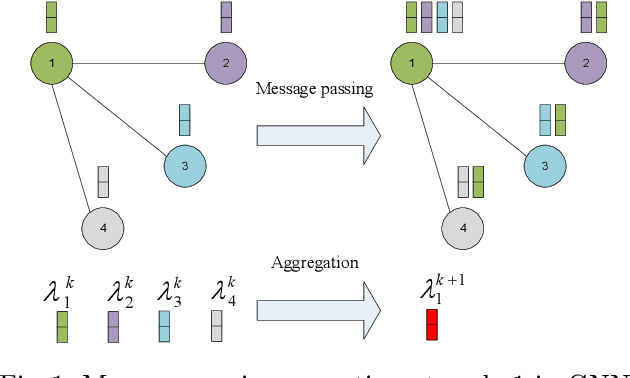
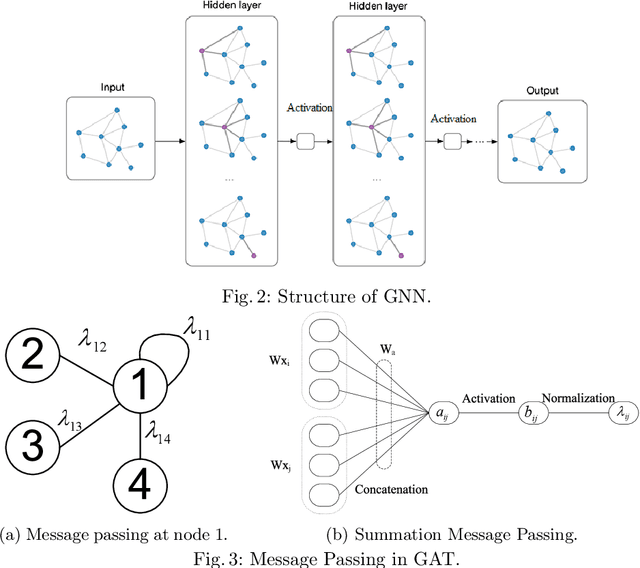
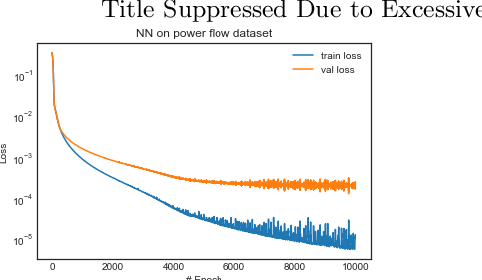
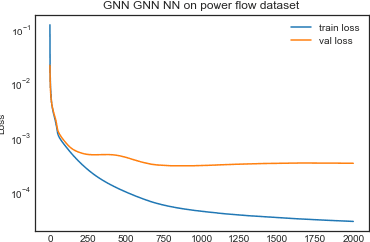
We propose the joint graph attention neural network (GAT), clustering with adaptive neighbors (CAN) and probabilistic graphical model for dynamic power flow analysis and fault characteristics. In fact, computational efficiency is the main focus to enhance, whilst we ensure the performance accuracy at the accepted level. Note that Machine Learning (ML) based schemes have a requirement of sufficient labeled data during training, which is not easily satisfied in practical applications. Also, there are unknown data due to new arrived measurements or incompatible smart devices in complex smart grid systems. These problems would be resolved by our proposed GAT based framework, which models the label dependency between the network data and learns object representations such that it could achieve the semi-supervised fault diagnosis. To create the joint label dependency, we develop the graph construction from the raw acquired signals by using CAN. Next, we develop the probabilistic graphical model of Markov random field for graph representation, which supports for the GAT based framework. We then evaluate the proposed framework in the use-case application in smart grid and make a fair comparison to the existing methods.