 Add to Chrome
 Add to Firefox
 Add to Edge
MedFabric and EtHER: A Data-Centric Framework for Word-Level Fabrication Generation and Detection in Medical LLMs
May 05, 2026
Large Language Models exhibit strong reasoning and semantic understanding capabilities but often hallucinate in domains that require expert knowledge, among which fabrications, the generation of factually incorrect yet fluent statements, pose the greatest risk in medical contexts. Existing medical hallucination datasets inadequately capture fabrication phenomena due to limited fabrication coverage, stylistic disparities between human and LLM-authored texts, and distributional drift during hallucinated sample synthesis. To address this, we propose a data-centric pipeline to generate realistic and word-level fabrications that preserve syntactic and stylistic fidelity while introducing subtle factual deviations, resulting in MedFabric. Building upon this dataset, we introduce ETHER, a modular word-level fabrication detector integrating Text2Table Decomposition, Word Masking and Filling and Hybrid Sentence Pair Evaluation to enhance factual alignment. Empirical results demonstrate that MedFabric outperforms state-of-the-art detectors by over 15% on word-level fabrication benchmarks while maintaining consistent performance across structural similarities, offering a comprehensive framework for reliable and domain-specific factuality detection.

Leveraging LLMs for Dialogue Quality Measurement
Jun 25, 2024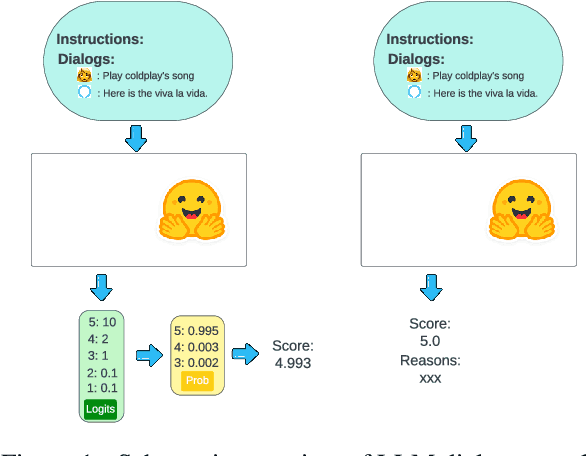

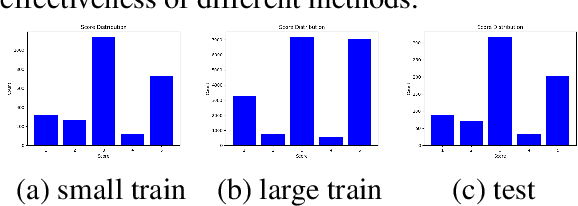
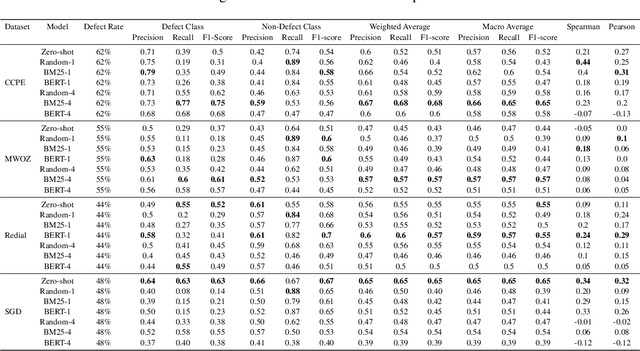
In task-oriented conversational AI evaluation, unsupervised methods poorly correlate with human judgments, and supervised approaches lack generalization. Recent advances in large language models (LLMs) show robust zeroshot and few-shot capabilities across NLP tasks. This paper explores using LLMs for automated dialogue quality evaluation, experimenting with various configurations on public and proprietary datasets. Manipulating factors such as model size, in-context examples, and selection techniques, we examine "chain-of-thought" (CoT) reasoning and label extraction procedures. Our results show that (1) larger models yield more accurate dialogue labels; (2) algorithmic selection of in-context examples outperforms random selection; (3) CoT reasoning where an LLM is asked to provide justifications before outputting final labels improves performance; and (4) fine-tuned LLMs outperform out-of-the-box ones. Our results indicate that LLMs that are suitably fine-tuned and have sufficient reasoning capabilities can be leveraged for automated dialogue evaluation.