 Add to Chrome
 Add to Firefox
 Add to Edge
Survey of Various Fuzzy and Uncertain Decision-Making Methods
Mar 16, 2026
Decision-making in real applications is often affected by vagueness, incomplete information, heterogeneous data, and conflicting expert opinions. This survey reviews uncertainty-aware multi-criteria decision-making (MCDM) and organizes the field into a concise, task-oriented taxonomy. We summarize problem-level settings (discrete, group/consensus, dynamic, multi-stage, multi-level, multiagent, and multi-scenario), weight elicitation (subjective and objective schemes under fuzzy/linguistic inputs), and inter-criteria structure and causality modelling. For solution procedures, we contrast compensatory scoring methods, distance-to-reference and compromise approaches, and non-compensatory outranking frameworks for ranking or sorting. We also outline rule/evidence-based and sequential decision models that produce interpretable rules or policies. The survey highlights typical inputs, core computational steps, and primary outputs, and provides guidance on choosing methods according to robustness, interpretability, and data availability. It concludes with open directions on explainable uncertainty integration, stability, and scalability in large-scale and dynamic decision environments.

A Dynamic Survey of Fuzzy, Intuitionistic Fuzzy, Neutrosophic, Plithogenic, and Extensional Sets
Mar 12, 2026Real-world phenomena often exhibit vagueness, partial truth, and incomplete information. To model such uncertainty in a mathematically rigorous way, many generalized set-theoretic frameworks have been introduced, including Fuzzy Sets [1], Intuitionistic Fuzzy Sets [2], Neutrosophic Sets [3,4], Vague Sets [5], Hesitant Fuzzy Sets [6], Picture Fuzzy Sets [7], Quadripartitioned Neutrosophic Sets [8], Penta-Partitioned Neutrosophic Sets [9], Plithogenic Sets [10], HyperFuzzy Sets [11], and HyperNeutrosophic Sets [12]. Within these frameworks, a wide range of notions has been proposed and studied, particularly in the settings of fuzzy, intuitionistic fuzzy, neutrosophic, and plithogenic set theories. This extensive literature underscores both the significance of these theories and the breadth of their application areas. As a result, many ideas, constructions, and structural patterns recur across these four major families of uncertainty-oriented models. In this book, we provide a comprehensive, large-scale survey of Fuzzy, Intuitionistic Fuzzy, Neutrosophic, and Plithogenic Sets. Our goal is to give readers a systematic overview of existing developments and, through a unified exposition, to stimulate new insights, further conceptual extensions, and additional applications across a wide range of disciplines.
* Book. Peer-reviewed. Publisher: Neutrosophic Science International Association (NSIA). ISBN: 978-1-59973-842-0
A Dynamic Survey of Soft Set Theory and Its Extensions
Feb 24, 2026Soft set theory provides a direct framework for parameterized decision modeling by assigning to each attribute (parameter) a subset of a given universe, thereby representing uncertainty in a structured way [1, 2]. Over the past decades, the theory has expanded into numerous variants-including hypersoft sets, superhypersoft sets, TreeSoft sets, bipolar soft sets, and dynamic soft sets-and has been connected to diverse areas such as topology and matroid theory. In this book, we present a survey-style overview of soft sets and their major extensions, highlighting core definitions, representative constructions, and key directions of current development.
Superhypergraph Neural Networks and Plithogenic Graph Neural Networks: Theoretical Foundations
Dec 02, 2024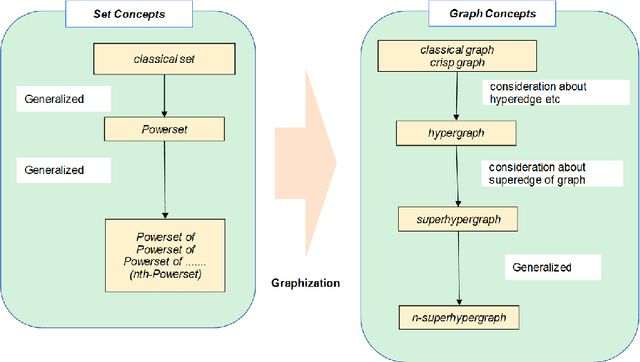

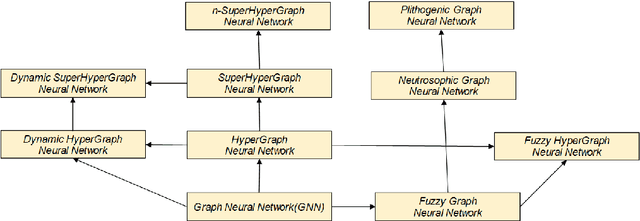
Hypergraphs extend traditional graphs by allowing edges to connect multiple nodes, while superhypergraphs further generalize this concept to represent even more complex relationships. Neural networks, inspired by biological systems, are widely used for tasks such as pattern recognition, data classification, and prediction. Graph Neural Networks (GNNs), a well-established framework, have recently been extended to Hypergraph Neural Networks (HGNNs), with their properties and applications being actively studied. The Plithogenic Graph framework enhances graph representations by integrating multi-valued attributes, as well as membership and contradiction functions, enabling the detailed modeling of complex relationships. In the context of handling uncertainty, concepts such as Fuzzy Graphs and Neutrosophic Graphs have gained prominence. It is well established that Plithogenic Graphs serve as a generalization of both Fuzzy Graphs and Neutrosophic Graphs. Furthermore, the Fuzzy Graph Neural Network has been proposed and is an active area of research. This paper establishes the theoretical foundation for the development of SuperHyperGraph Neural Networks (SHGNNs) and Plithogenic Graph Neural Networks, expanding the applicability of neural networks to these advanced graph structures. While mathematical generalizations and proofs are presented, future computational experiments are anticipated.
Advancing Uncertain Combinatorics through Graphization, Hyperization, and Uncertainization: Fuzzy, Neutrosophic, Soft, Rough, and Beyond
Nov 24, 2024To better handle real-world uncertainty, concepts such as fuzzy sets, neutrosophic sets, rough sets, and soft sets have been introduced. For example, neutrosophic sets, which simultaneously represent truth, indeterminacy, and falsehood, have proven to be valuable tools for modeling uncertainty in complex systems. These set concepts are increasingly studied in graphized forms, and generalized graph concepts now encompass well-known structures such as hypergraphs and superhypergraphs. Furthermore, hyperconcepts and superhyperconcepts are being actively researched in areas beyond graph theory. Combinatorics, uncertain sets (including fuzzy sets, neutrosophic sets, rough sets, soft sets, and plithogenic sets), uncertain graphs, and hyper and superhyper concepts are active areas of research with significant mathematical and practical implications. Recognizing their importance, this paper explores new graph and set concepts, as well as hyper and superhyper concepts, as detailed in the "Results" section of "The Structure of the Paper." Additionally, this work aims to consolidate recent findings, providing a survey-like resource to inform and engage readers. For instance, we extend several graph concepts by introducing Neutrosophic Oversets, Neutrosophic Undersets, Neutrosophic Offsets, and the Nonstandard Real Set. This paper defines a variety of concepts with the goal of inspiring new ideas and serving as a valuable resource for researchers in their academic pursuits.