 Add to Chrome
 Add to Firefox
 Add to Edge
Mitigating the Impact of Electrode Shift on Classification Performance in Electromyography-Based Motion Prediction Using Sliding-Window Normalization
Apr 04, 2025
Electromyography (EMG) signals are used in many applications, including prosthetic hands, assistive suits, and rehabilitation. Recent advances in motion estimation have improved performance, yet challenges remain in cross-subject generalization, electrode shift, and daily variations. When electrode shift occurs, both transfer learning and adversarial domain adaptation improve classification performance by reducing the performance gap to -1\% (eight-class scenario). However, additional data are needed for re-training in transfer learning or for training in adversarial domain adaptation. To address this issue, we investigated a sliding-window normalization (SWN) technique in a real-time prediction scenario. This method combines z-score normalization with a sliding-window approach to reduce the decline in classification performance caused by electrode shift. We validated the effectiveness of SWN using experimental data from a target trajectory tracking task involving the right arm. For three motions classification (rest, flexion, and extension of the elbow) obtained from EMG signals, our offline analysis showed that SWN reduced the differential classification accuracy to -1.0\%, representing a 6.6\% improvement compared to the case without normalization (-7.6\%). Furthermore, when SWN was combined with a strategy that uses a mixture of multiple electrode positions, classification accuracy improved by an additional 2.4\% over the baseline. These results suggest that SWN can effectively reduce the performance degradation caused by electrode shift, thereby enhancing the practicality of EMG-based motion estimation systems.

Sliding-Window Normalization to Improve the Performance of Machine-Learning Models for Real-Time Motion Prediction Using Electromyography
May 19, 2022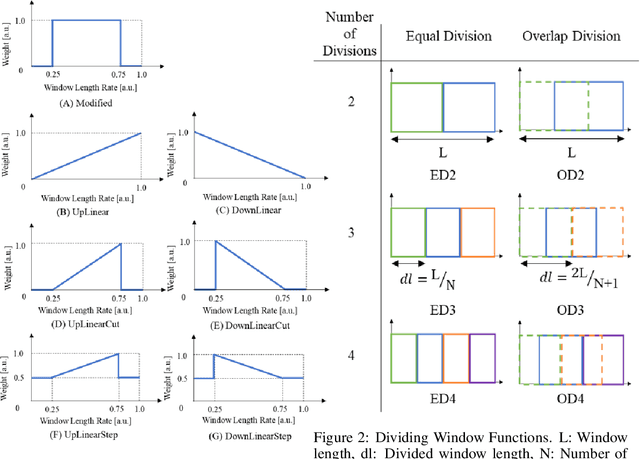
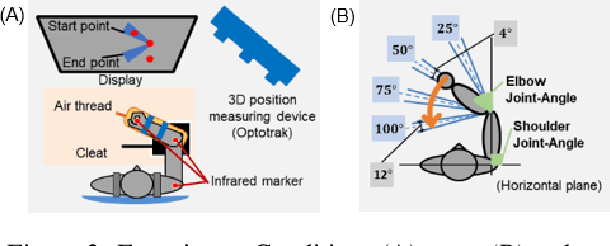
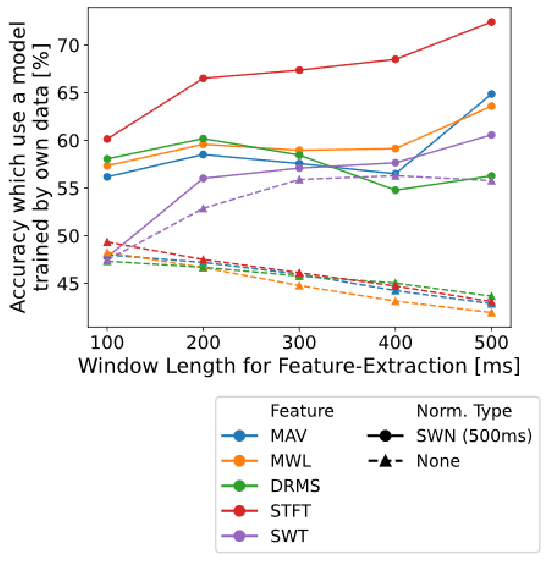
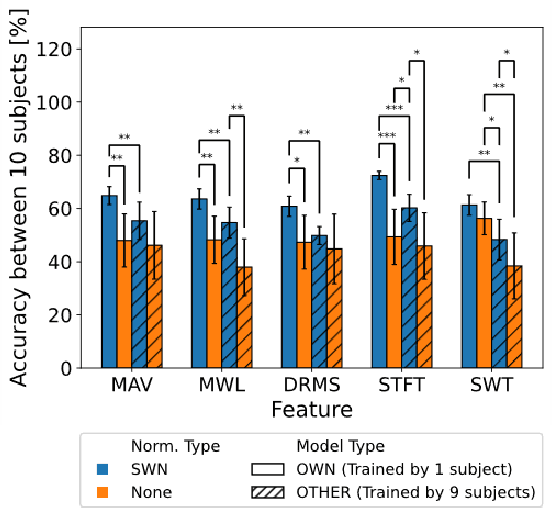
Many researchers have used machine learning models to control artificial hands, walking aids, assistance suits, etc., using the biological signal of electromyography (EMG). The use of such devices requires high classification accuracy of machine learning models. One method for improving the classification performance of machine learning models is normalization, such as z-score. However, normalization is not used in most EMG-based motion prediction studies, because of the need for calibration and fluctuation of reference value for calibration (cannot re-use). Therefore, in this study, we proposed a normalization method that combines sliding-window analysis and z-score normalization, that can be implemented in real-time processing without need for calibration. The effectiveness of this normalization method was confirmed by conducting a single-joint movement experiment of the elbow and predicting its rest, flexion, and extension movements from the EMG signal. The proposed normalization method achieved a mean accuracy of 64.6%, an improvement of 15.0% compared to the non-normalization case (mean of 49.8%). Furthermore, to improve practical applications, recent research has focused on reducing the user data required for model learning and improving classification performance in models learned from other people's data. Therefore, we investigated the classification performance of the model learned from other's data. Results showed a mean accuracy of 56.5% when the proposed method was applied, an improvement of 11.1% compared to the non-normalization case (mean of 44.1%). These two results showed the effectiveness of the simple and easy-to-implement method, and that the classification performance of the machine learning model could be improved.