 Add to Chrome
 Add to Firefox
 Add to Edge
The aftermath of compounds: Investigating Compounds and their Semantic Representations
Oct 31, 2025
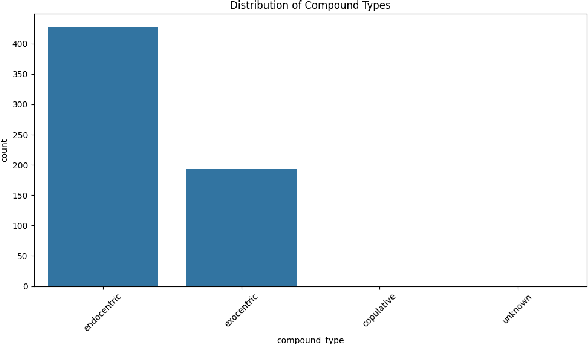
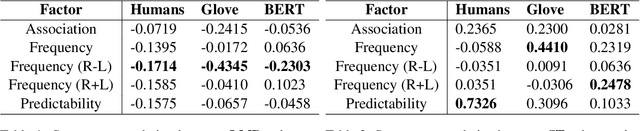
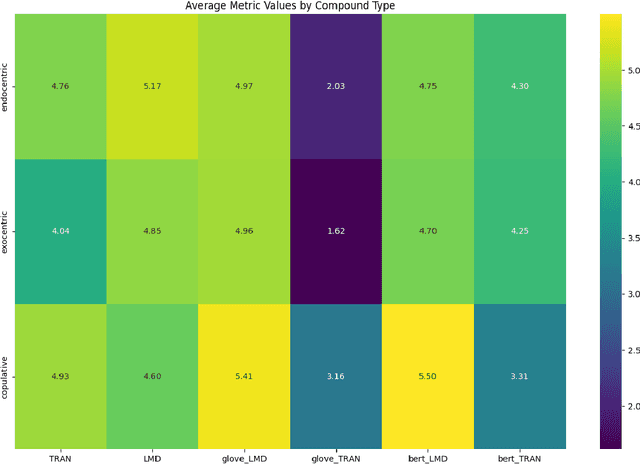
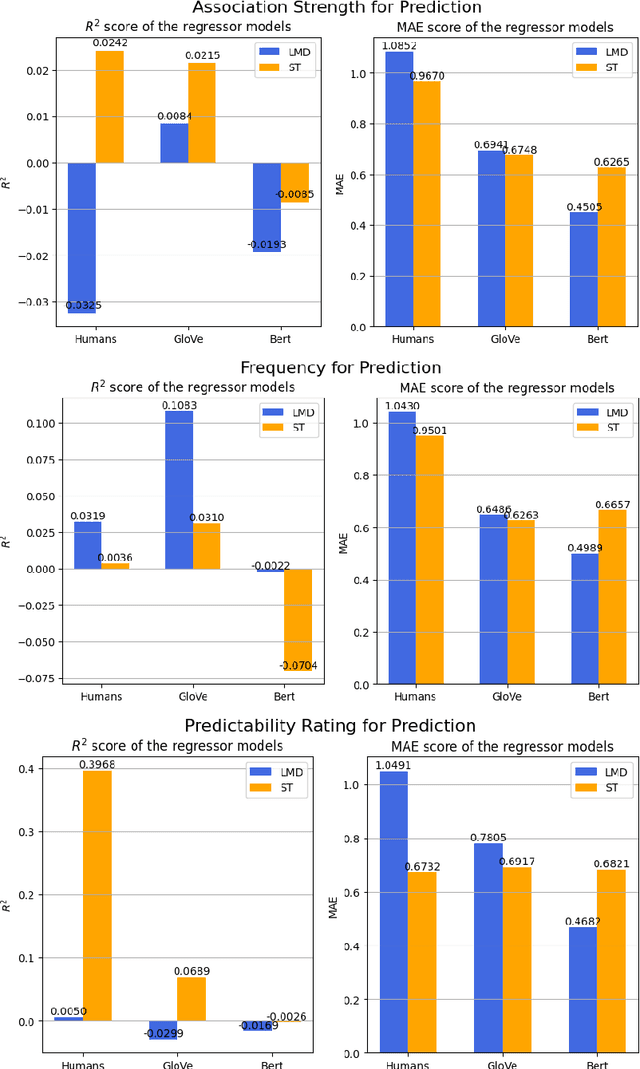
This study investigates how well computational embeddings align with human semantic judgments in the processing of English compound words. We compare static word vectors (GloVe) and contextualized embeddings (BERT) against human ratings of lexeme meaning dominance (LMD) and semantic transparency (ST) drawn from a psycholinguistic dataset. Using measures of association strength (Edinburgh Associative Thesaurus), frequency (BNC), and predictability (LaDEC), we compute embedding-derived LMD and ST metrics and assess their relationships with human judgments via Spearmans correlation and regression analyses. Our results show that BERT embeddings better capture compositional semantics than GloVe, and that predictability ratings are strong predictors of semantic transparency in both human and model data. These findings advance computational psycholinguistics by clarifying the factors that drive compound word processing and offering insights into embedding-based semantic modeling.

SceneGraMMi: Scene Graph-boosted Hybrid-fusion for Multi-Modal Misinformation Veracity Prediction
Oct 20, 2024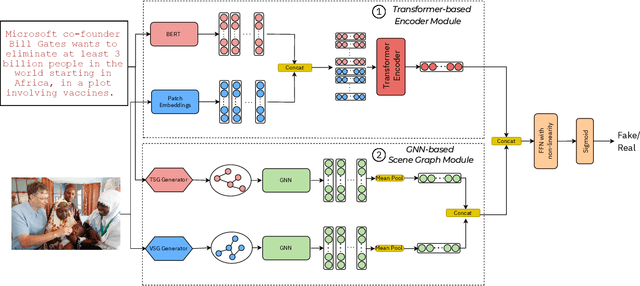
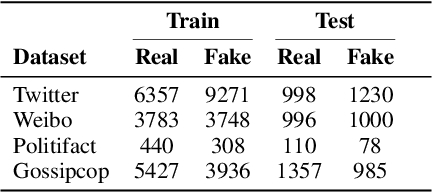
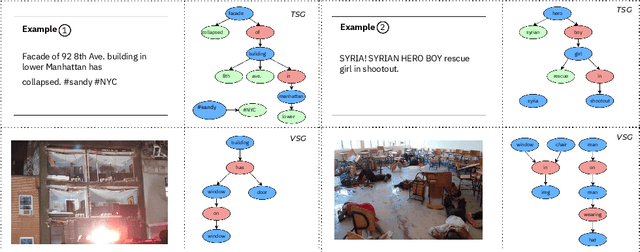
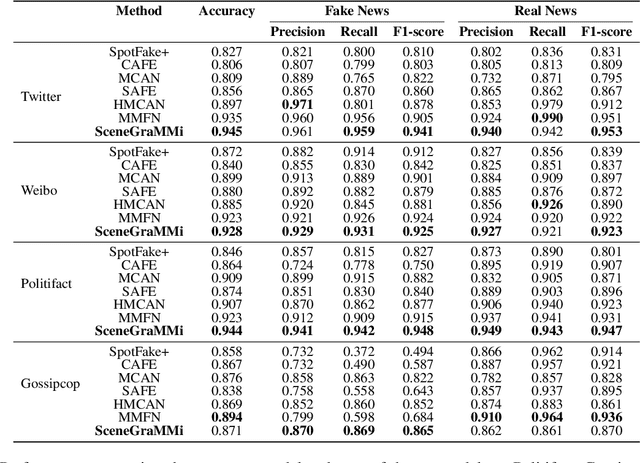
Misinformation undermines individual knowledge and affects broader societal narratives. Despite growing interest in the research community in multi-modal misinformation detection, existing methods exhibit limitations in capturing semantic cues, key regions, and cross-modal similarities within multi-modal datasets. We propose SceneGraMMi, a Scene Graph-boosted Hybrid-fusion approach for Multi-modal Misinformation veracity prediction, which integrates scene graphs across different modalities to improve detection performance. Experimental results across four benchmark datasets show that SceneGraMMi consistently outperforms state-of-the-art methods. In a comprehensive ablation study, we highlight the contribution of each component, while Shapley values are employed to examine the explainability of the model's decision-making process.