 Add to Chrome
 Add to Firefox
 Add to Edge
HistoFID- Calibrating Frechet-distance evaluation across pathology foundation models
Jul 22, 2026
The Frechet Inception Distance (FID) compares two image sets by fitting a Gaussian to the features of a fixed network and measuring the distance between the two Gaussians. In digital pathology the Inception network is routinely replaced by a histology foundation model, on the assumption that a domain encoder gives a more meaningful score. We show that this choice changes the result. For one fixed pair of tile sets, the raw Frechet distance varies about thirty-fold across six common encoders, and the ordering does not follow embedding dimension, so a raw score cannot be read without naming the encoder. Using a held-out in-house cohort (about 500,000 H&E and immunohistochemistry tiles from 2,119 slides) and a public TCGA BRCA cohort (100 slides), we benchmark Inception-v3, Phikon-v2, CONCH, UNI2-h, Virchow2 and Prov-GigaPath across within-cohort baselines, cross-cohort drift, controlled perturbations, compression, stain normalization, and two generative models. Expressing each distance as a ratio to the encoder's own within-cohort floor restores comparability, cutting the across-encoder coefficient of variation by about 89% within cohort and 58% across cohorts. The encoders separate into a sensitive group (CONCH, Phikon-v2, Inception-v3) and an invariant group (UNI2-h, Virchow2, Prov-GigaPath), and this split decides which generative model is judged more realistic, so the encoder can change the conclusion of a generative evaluation. At the slide level, an attention-pooling encoder registers per-slide composition that a pooled patch distance cannot see, raising the distance about 320-fold on matched cohorts. Using the same protocol we evaluate TuroCompress, a proprietary pathology codec, which reaches the highest reconstruction fidelity at the smallest file size among codecs tested. We release the normalization protocol, the per-encoder perturbation panel, and the feature extracts.

IMPROVE: Improving Medical Plausibility without Reliance on HumanValidation -- An Enhanced Prototype-Guided Diffusion Framework
Nov 26, 2024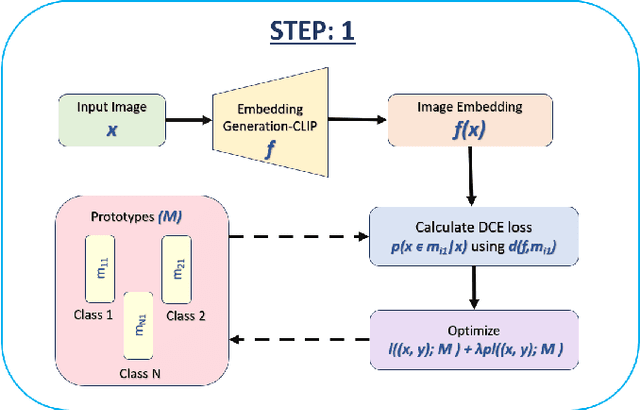

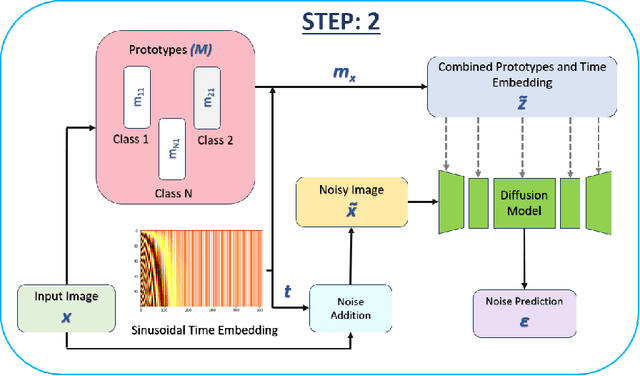
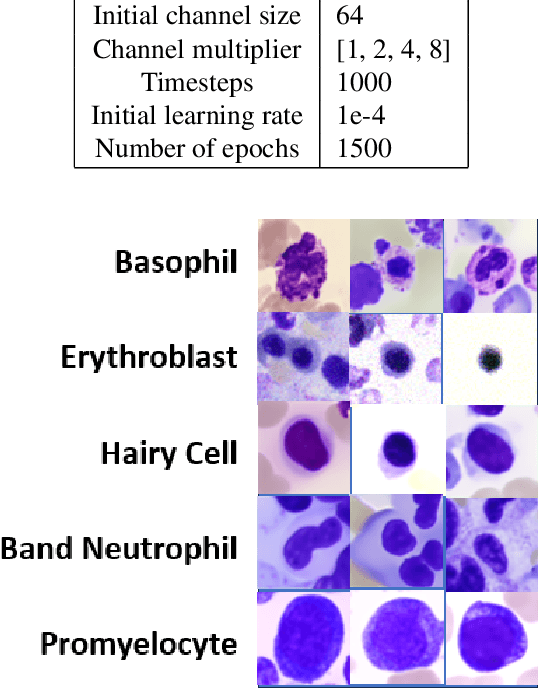
Generative models have proven to be very effective in generating synthetic medical images and find applications in downstream tasks such as enhancing rare disease datasets, long-tailed dataset augmentation, and scaling machine learning algorithms. For medical applications, the synthetically generated medical images by such models are still reasonable in quality when evaluated based on traditional metrics such as FID score, precision, and recall. However, these metrics fail to capture the medical/biological plausibility of the generated images. Human expert feedback has been used to get biological plausibility which demonstrates that these generated images have very low plausibility. Recently, the research community has further integrated this human feedback through Reinforcement Learning from Human Feedback(RLHF), which generates more medically plausible images. However, incorporating human feedback is a costly and slow process. In this work, we propose a novel approach to improve the medical plausibility of generated images without the need for human feedback. We introduce IMPROVE:Improving Medical Plausibility without Reliance on Human Validation - An Enhanced Prototype-Guided Diffusion Framework, a prototype-guided diffusion process for medical image generation and show that it substantially enhances the biological plausibility of the generated medical images without the need for any human feedback. We perform experiments on Bone Marrow and HAM10000 datasets and show that medical accuracy can be substantially increased without human feedback.