 Add to Chrome
 Add to Firefox
 Add to Edge
Variational Latent Entropy Estimation Disentanglement: Controlled Attribute Leakage for Face Recognition
Apr 13, 2026
Face recognition embeddings encode identity, but they also encode other factors such as gender and ethnicity. Depending on how these factors are used by a downstream system, separating them from the information needed for verification is important for both privacy and fairness. We propose Variational Latent Entropy Estimation Disentanglement (VLEED), a post-hoc method that transforms pretrained embeddings with a variational autoencoder and encourages a distilled representation where the categorical variable of interest is separated from identity-relevant information. VLEED uses a mutual information-based objective realised through the estimation of the entropy of the categorical attribute in the latent space, and provides stable training with fine-grained control over information removal. We evaluate our method on IJB-C, RFW, and VGGFace2 for gender and ethnicity disentanglement, and compare it to various state-of-the-art methods. We report verification utility, predictability of the disentangled variable under linear and nonlinear classifiers, and group disparity metrics based on false match rates. Our results show that VLEED offers a wide range of privacy-utility tradeoffs over existing methods and can also reduce recognition bias across demographic groups.

\textit{sweet} -- An Open Source Modular Platform for Contactless Hand Vascular Biometric Experiments
Apr 14, 2024
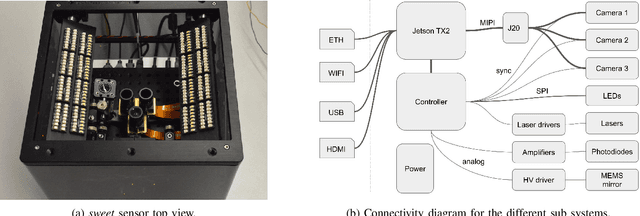


Current finger-vein or palm-vein recognition systems usually require direct contact of the subject with the apparatus. This can be problematic in environments where hygiene is of primary importance. In this work we present a contactless vascular biometrics sensor platform named \sweet which can be used for hand vascular biometrics studies (wrist-, palm- and finger-vein) and surface features such as palmprint. It supports several acquisition modalities such as multi-spectral Near-Infrared (NIR), RGB-color, Stereo Vision (SV) and Photometric Stereo (PS). Using this platform we collect a dataset consisting of the fingers, palm and wrist vascular data of 120 subjects and develop a powerful 3D pipeline for the pre-processing of this data. We then present biometric experimental results, focusing on Finger-Vein Recognition (FVR). Finally, we discuss fusion of multiple modalities, such palm-vein combined with palm-print biometrics. The acquisition software, parts of the hardware design, the new FV dataset, as well as source-code for our experiments are publicly available for research purposes.