 Add to Chrome
 Add to Firefox
 Add to Edge
From Signals to Causes: A Causal Signal Processing Framework for Robust and Interpretable Clinical Risk Prediction
Feb 27, 2026
Learning-based signal processing systems increasingly support high-stakes medical decisions using heterogeneous biomedical signals, including medical images, physiological time series, and clinical records. Despite strong predictive performance, many models rely on statistical correlations that are unstable across acquisition settings, patient populations, and institutional practices, limiting robustness, interpretability, and clinical trust. We advocate a causal signal processing perspective in which biomedical signals are treated as effects of latent generative mechanisms rather than as isolated predictive inputs. Using clinical risk prediction as a motivating example, we show how disease-related factors generate observable biomarkers, while acquisition processes act as confounders influencing signal appearance. In clinical disease risk prediction from chest CT scans and patient risk factors, correlational models may fail under scanner changes, whereas causal abstractions remain invariant. Building on this view, we propose a unifying conceptual framework integrating causal modeling with learning-based signal processing and neuro-symbolic reasoning. Statistical models extract multimodal representations that are mapped to interpretable causal abstractions and combined with symbolic knowledge encoding clinical risk factors and guidelines. This structure enables clinically grounded explanations, counterfactual reasoning about hypothetical interventions, and improved robustness to distribution shifts arising from changes in acquisition conditions or screening policies. Rather than introducing a specific algorithm, this article presents schematic causal structures and a comparative analysis of correlation-based, causal, and neuro-symbolic approaches to guide the design of robust and interpretable medical decision-support systems.

MAB Optimizer for Estimating Math Question Difficulty via Inverse CV without NLP
Aug 26, 2025
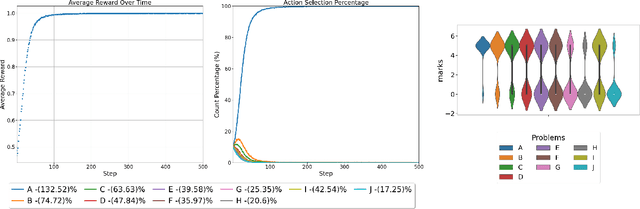
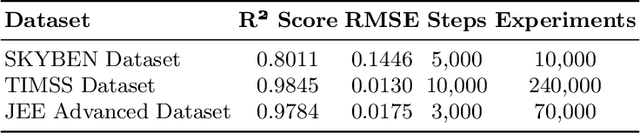
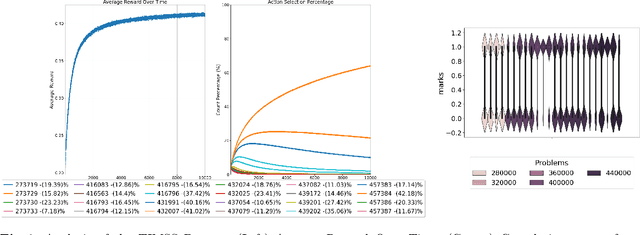
The evolution of technology and education is driving the emergence of Intelligent & Autonomous Tutoring Systems (IATS), where objective and domain-agnostic methods for determining question difficulty are essential. Traditional human labeling is subjective, and existing NLP-based approaches fail in symbolic domains like algebra. This study introduces the Approach of Passive Measures among Educands (APME), a reinforcement learning-based Multi-Armed Bandit (MAB) framework that estimates difficulty solely from solver performance data -- marks obtained and time taken -- without requiring linguistic features or expert labels. By leveraging the inverse coefficient of variation as a risk-adjusted metric, the model provides an explainable and scalable mechanism for adaptive assessment. Empirical validation was conducted on three heterogeneous datasets. Across these diverse contexts, the model achieved an average R2 of 0.9213 and an average RMSE of 0.0584, confirming its robustness, accuracy, and adaptability to different educational levels and assessment formats. Compared with baseline approaches-such as regression-based, NLP-driven, and IRT models-the proposed framework consistently outperformed alternatives, particularly in purely symbolic domains. The findings highlight that (i) item heterogeneity strongly influences perceived difficulty, and (ii) variance in solver outcomes is as critical as mean performance for adaptive allocation. Pedagogically, the model aligns with Vygotskys Zone of Proximal Development by identifying tasks that balance challenge and attainability, supporting motivation while minimizing disengagement. This domain-agnostic, self-supervised approach advances difficulty tagging in IATS and can be extended beyond algebra wherever solver interaction data is available