 Add to Chrome
 Add to Firefox
 Add to Edge
TRACE-BN: Transferring Bangla-English Tutoring Behavior to a Sub-1B Offline Language Model
Aug 15, 2026
Bangla-English tutoring requires more than producing a correct translation: learners also need explanations of grammar differences, awareness of their likely errors, and targeted practice. We present TRACE-BN, a curriculum-guided dataset of structured tutoring traces for Bangla-speaking learners of English at the CEFR A1-A2 level. Each trace combines word-level glosses, literal and natural translations, Bangla grammar explanations, a plausible learner error, and a targeted practice question with its answer. The traces are generated by Gemini 3.5 Flash Lite as the teacher model from NCTB Classes 9-10 English curriculum units, then filtered for structural validity, script integrity, and semantic duplication. We transfer the resulting structured tutoring behavior to Qwen3-0.6B using LoRA with 4-bit quantization for resource-constrained offline deployment. On held-out inputs, schema validity increases from 85.4% to 95.8%, while, against teacher-model references, chrF++ improves from 15.28 to 34.77 and BLEU from 4.52 to 21.03. Field-level evaluation by two independent judges shows improvements across translation, grammar explanation, learner-error diagnosis, and practice alignment, while a human audit supports the quality of the supervision data. The results show that curriculum-guided structured supervision can transfer multi-component tutoring behavior to a sub-1B model under these resource constraints. The dataset, model checkpoints, and code are publicly available at https://huggingface.co/datasets/RaiyanKhaan/Trace-BN

Where Does Retrieval Fail? Evaluating RAG Architectures for Agricultural Advisory
Aug 14, 2026Retrieval quality in RAG systems is commonly reported as a single aggregate score, which can hide large differences across query types and language conditions. We study this problem in Bengali agricultural advisory, where farmer queries are often colloquial while official advisory documents use formal scientific terminology. We construct a test collection of 1,000 queries and 2,882 knowledge nodes extracted from 284 official Bangladeshi agricultural publications, and use it to evaluate five retrieval architectures and six embedding models under three controlled language conditions. The results show that no single retrieval method is consistently best. For native Bengali queries, BM25 is the strongest single retriever (R@10 = 0.506) while Hybrid RRF reaches the highest overall R@10 of 0.539. However, dense retrieval performance varies sharply by query type: R@10 is 0.093 on colloquial farmer queries and 0.970 on formal safety queries. Across language conditions, BM25 R@10 drops from 0.506 on Bengali queries to 0.004 when English queries are matched against the Bengali corpus, while dense retrieval falls only from 0.464 to 0.425. We also find that embedding task configuration and passage length can each change reported R@10 by a factor of seven, independent of architecture. These results show why low-resource RAG evaluation should report performance by language condition and query type rather than relying on aggregate scores alone. The dataset and evaluation scripts are available at https://huggingface.co/datasets/RaiyanKhaan/AgriTrust-RAG.
QuanTiMedAI: Quantum-Enhanced Time-Series Model guided by Agentic AI for Cardiac Arrest Mortality Prediction
Aug 06, 2026Cardiac arrest remains one of the most lethal conditions encountered in intensive care units. Despite the growing availability of electronic health record data, existing mortality prediction studies in this population largely depend on static summaries derived from early admission. Such approaches ignore the temporal progression of physiological deterioration and recovery that unfolds throughout a patient's ICU stay. To address this limitation, we introduce QuanTiMedAI, a quantum-agentic framework developed for cardiac arrest mortality prediction using agentic AI guided quantum enhancement time series model. The proposed system combines an agentic large language model (LLM) for clinically informed feature discovery with a compact quantum recurrent network for temporality aware mortality prediction. Our findings demonstrate that agentic LLM-guided feature selection consistently outperforms conventional feature selection approaches, and the proposed quantum architecture achieves competitive predictive performance through nonlinear feature enhancement while keeping the number of parameters very low. Through extensive experimentation on a MIMIC-IV cohort of cardiac arrest patients, QuanTiMedAI's quantum-enhanced architecture attains an AUROC of 0.852 using only 605 parameters, an improvement of approximately 2.9\% over a current state-of-the-art baseline for this task. A structured ablation study systematically validates the contribution of each architectural design choice. These results show that quantum-enhanced sequential modeling can exceed classical recurrent networks while using substantially fewer parameters.
FrameHopper: Selective Processing of Video Frames in Detection-driven Real-Time Video Analytics
Mar 22, 2022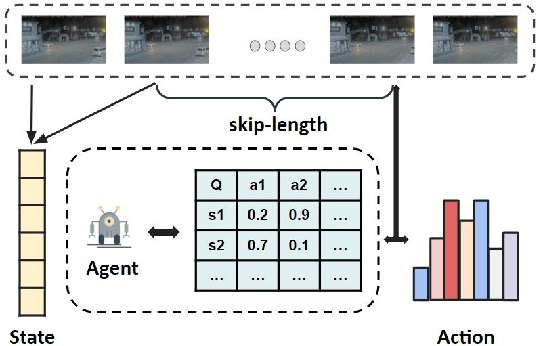
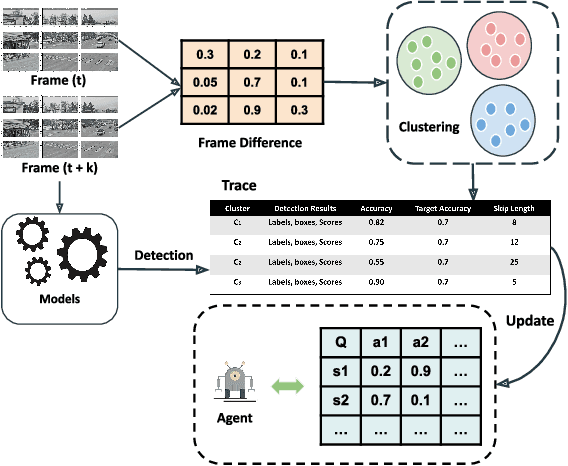
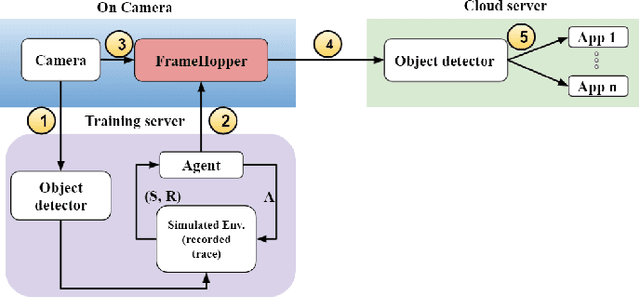
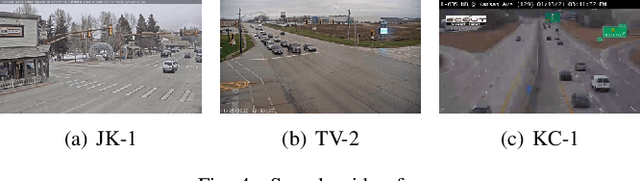
Detection-driven real-time video analytics require continuous detection of objects contained in the video frames using deep learning models like YOLOV3, EfficientDet. However, running these detectors on each and every frame in resource-constrained edge devices is computationally intensive. By taking the temporal correlation between consecutive video frames into account, we note that detection outputs tend to be overlapping in successive frames. Elimination of similar consecutive frames will lead to a negligible drop in performance while offering significant performance benefits by reducing overall computation and communication costs. The key technical questions are, therefore, (a) how to identify which frames to be processed by the object detector, and (b) how many successive frames can be skipped (called skip-length) once a frame is selected to be processed. The overall goal of the process is to keep the error due to skipping frames as small as possible. We introduce a novel error vs processing rate optimization problem with respect to the object detection task that balances between the error rate and the fraction of frames filtering. Subsequently, we propose an off-line Reinforcement Learning (RL)-based algorithm to determine these skip-lengths as a state-action policy of the RL agent from a recorded video and then deploy the agent online for live video streams. To this end, we develop FrameHopper, an edge-cloud collaborative video analytics framework, that runs a lightweight trained RL agent on the camera and passes filtered frames to the server where the object detection model runs for a set of applications. We have tested our approach on a number of live videos captured from real-life scenarios and show that FrameHopper processes only a handful of frames but produces detection results closer to the oracle solution and outperforms recent state-of-the-art solutions in most cases.
EARLIN: Early Out-of-Distribution Detection for Resource-efficient Collaborative Inference
Jun 29, 2021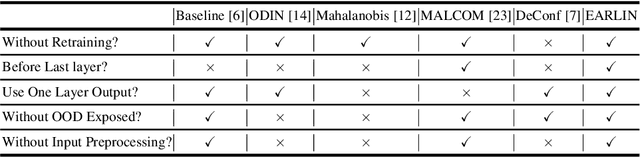
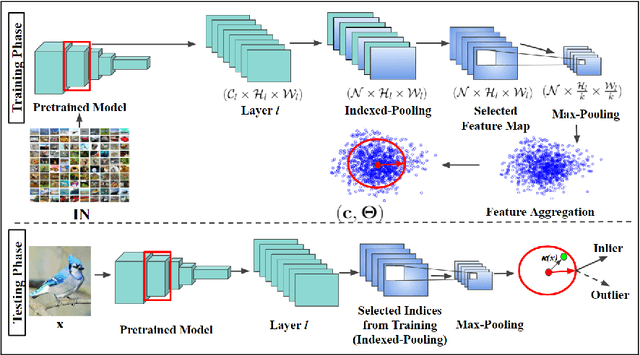
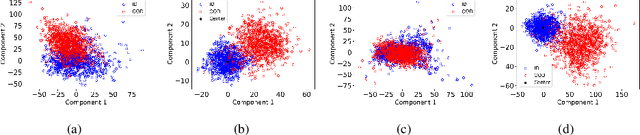
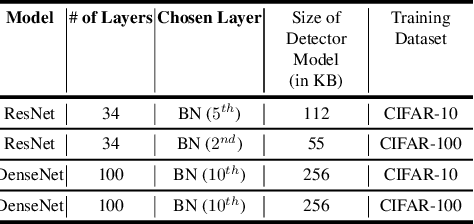
Collaborative inference enables resource-constrained edge devices to make inferences by uploading inputs (e.g., images) to a server (i.e., cloud) where the heavy deep learning models run. While this setup works cost-effectively for successful inferences, it severely underperforms when the model faces input samples on which the model was not trained (known as Out-of-Distribution (OOD) samples). If the edge devices could, at least, detect that an input sample is an OOD, that could potentially save communication and computation resources by not uploading those inputs to the server for inference workload. In this paper, we propose a novel lightweight OOD detection approach that mines important features from the shallow layers of a pretrained CNN model and detects an input sample as ID (In-Distribution) or OOD based on a distance function defined on the reduced feature space. Our technique (a) works on pretrained models without any retraining of those models, and (b) does not expose itself to any OOD dataset (all detection parameters are obtained from the ID training dataset). To this end, we develop EARLIN (EARLy OOD detection for Collaborative INference) that takes a pretrained model and partitions the model at the OOD detection layer and deploys the considerably small OOD part on an edge device and the rest on the cloud. By experimenting using real datasets and a prototype implementation, we show that our technique achieves better results than other approaches in terms of overall accuracy and cost when tested against popular OOD datasets on top of popular deep learning models pretrained on benchmark datasets.
A Lightweight ReLU-Based Feature Fusion for Aerial Scene Classification
Jun 15, 2021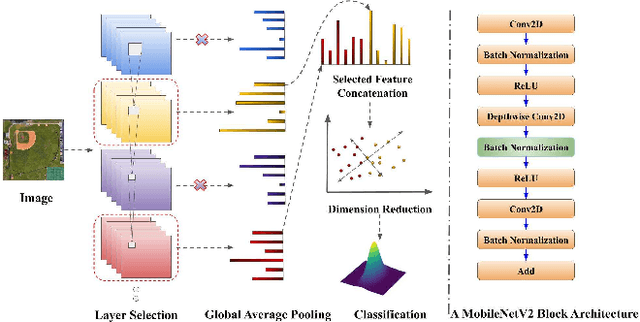
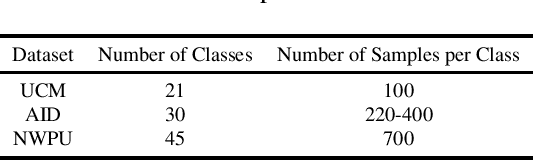
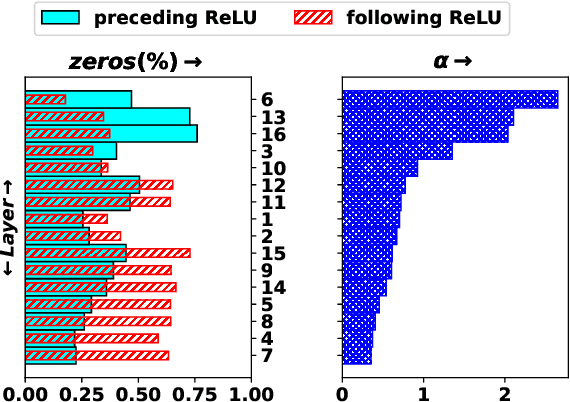
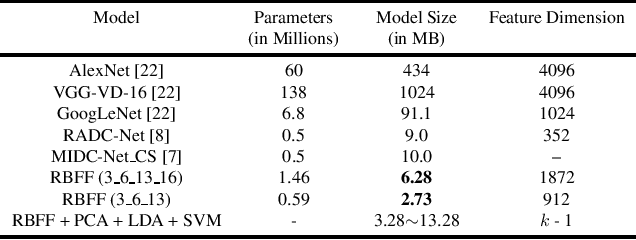
In this paper, we propose a transfer-learning based model construction technique for the aerial scene classification problem. The core of our technique is a layer selection strategy, named ReLU-Based Feature Fusion (RBFF), that extracts feature maps from a pretrained CNN-based single-object image classification model, namely MobileNetV2, and constructs a model for the aerial scene classification task. RBFF stacks features extracted from the batch normalization layer of a few selected blocks of MobileNetV2, where the candidate blocks are selected based on the characteristics of the ReLU activation layers present in those blocks. The feature vector is then compressed into a low-dimensional feature space using dimension reduction algorithms on which we train a low-cost SVM classifier for the classification of the aerial images. We validate our choice of selected features based on the significance of the extracted features with respect to our classification pipeline. RBFF remarkably does not involve any training of the base CNN model except for a few parameters for the classifier, which makes the technique very cost-effective for practical deployments. The constructed model despite being lightweight outperforms several recently proposed models in terms of accuracy for a number of aerial scene datasets.
Neural Network Based Undersampling Techniques
Aug 18, 2019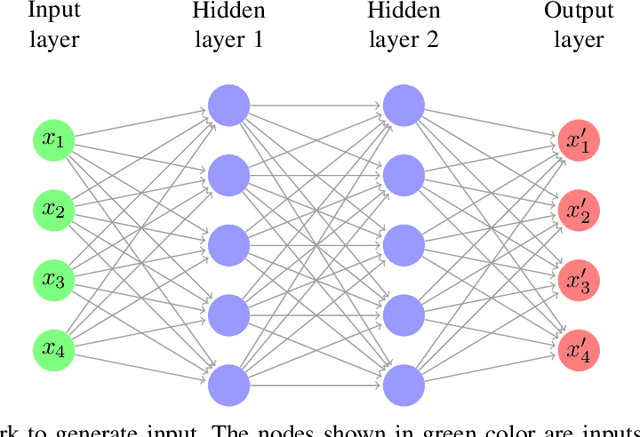
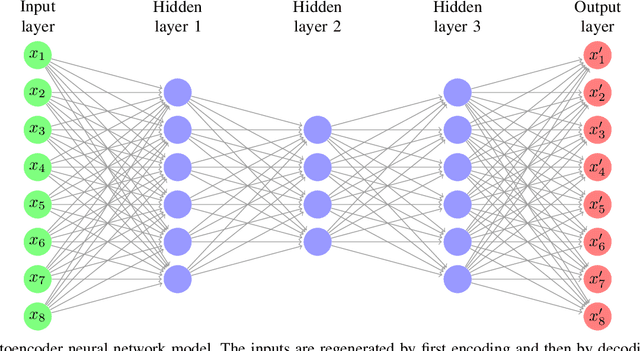
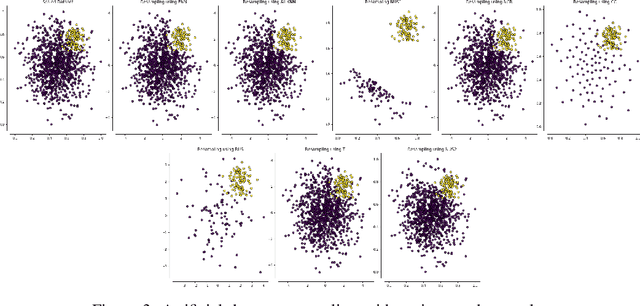
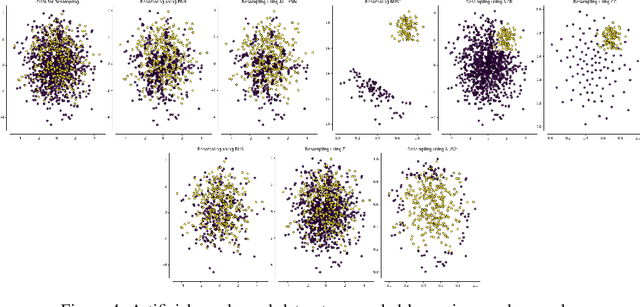
Class imbalance problem is commonly faced while developing machine learning models for real-life issues. Due to this problem, the fitted model tends to be biased towards the majority class data, which leads to lower precision, recall, AUC, F1, G-mean score. Several researches have been done to tackle this problem, most of which employed resampling, i.e. oversampling and undersampling techniques to bring the required balance in the data. In this paper, we propose neural network based algorithms for undersampling. Then we resampled several class imbalanced data using our algorithms and also some other popular resampling techniques. Afterwards we classified these undersampled data using some common classifier. We found out that our resampling approaches outperform most other resampling techniques in terms of both AUC, F1 and G-mean score.