 Add to Chrome
 Add to Firefox
 Add to Edge
A Contextual Analysis of Driver-Facing and Dual-View Video Inputs for Distraction Detection in Naturalistic Driving Environments
Dec 23, 2025
Despite increasing interest in computer vision-based distracted driving detection, most existing models rely exclusively on driver-facing views and overlook crucial environmental context that influences driving behavior. This study investigates whether incorporating road-facing views alongside driver-facing footage improves distraction detection accuracy in naturalistic driving conditions. Using synchronized dual-camera recordings from real-world driving, we benchmark three leading spatiotemporal action recognition architectures: SlowFast-R50, X3D-M, and SlowOnly-R50. Each model is evaluated under two input configurations: driver-only and stacked dual-view. Results show that while contextual inputs can improve detection in certain models, performance gains depend strongly on the underlying architecture. The single-pathway SlowOnly model achieved a 9.8 percent improvement with dual-view inputs, while the dual-pathway SlowFast model experienced a 7.2 percent drop in accuracy due to representational conflicts. These findings suggest that simply adding visual context is not sufficient and may lead to interference unless the architecture is specifically designed to support multi-view integration. This study presents one of the first systematic comparisons of single- and dual-view distraction detection models using naturalistic driving data and underscores the importance of fusion-aware design for future multimodal driver monitoring systems.

Visual Dominance and Emerging Multimodal Approaches in Distracted Driving Detection: A Review of Machine Learning Techniques
May 04, 2025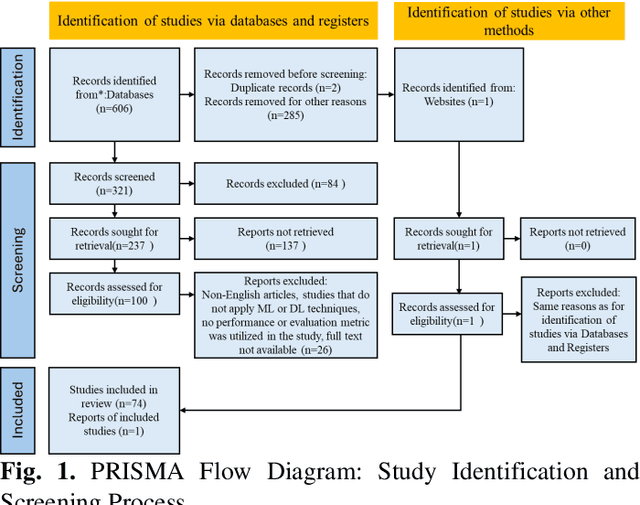
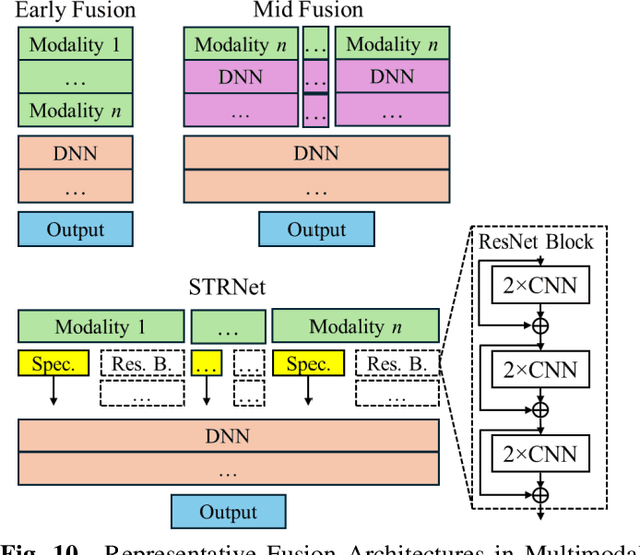
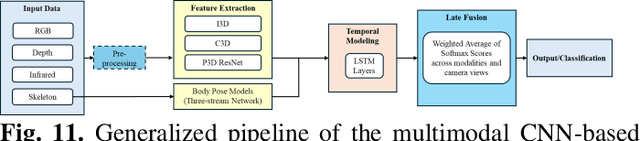
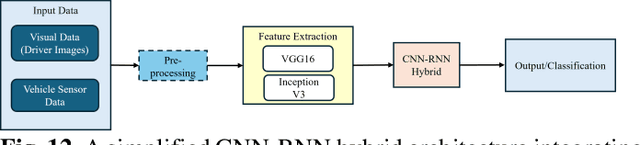
Distracted driving continues to be a significant cause of road traffic injuries and fatalities worldwide, even with advancements in driver monitoring technologies. Recent developments in machine learning (ML) and deep learning (DL) have primarily focused on visual data to detect distraction, often neglecting the complex, multimodal nature of driver behavior. This systematic review assesses 74 peer-reviewed studies from 2019 to 2024 that utilize ML/DL techniques for distracted driving detection across visual, sensor-based, multimodal, and emerging modalities. The review highlights a significant prevalence of visual-only models, particularly convolutional neural networks (CNNs) and temporal architectures, which achieve high accuracy but show limited generalizability in real-world scenarios. Sensor-based and physiological models provide complementary strengths by capturing internal states and vehicle dynamics, while emerging techniques, such as auditory sensing and radio frequency (RF) methods, offer privacy-aware alternatives. Multimodal architecture consistently surpasses unimodal baselines, demonstrating enhanced robustness, context awareness, and scalability by integrating diverse data streams. These findings emphasize the need to move beyond visual-only approaches and adopt multimodal systems that combine visual, physiological, and vehicular cues while keeping in checking the need to balance computational requirements. Future research should focus on developing lightweight, deployable multimodal frameworks, incorporating personalized baselines, and establishing cross-modality benchmarks to ensure real-world reliability in advanced driver assistance systems (ADAS) and road safety interventions.