 Add to Chrome
 Add to Firefox
 Add to Edge
Bridging Reinforcement Learning and Optimal Control via Feasible Action Mapping
Jul 27, 2026
Operating constrained dynamical systems requires controllers to efficiently solve complex tasks while enforcing recursive feasibility and safety constraints. To address these competing requirements, we present Feasible Action for Optimal Control (FAOC), a novel control framework integrating Reinforcement Learning (RL) and Optimal Control (OC). The key contribution is a computationally efficient, optimization-based mapping algorithm that transforms the RL agent's action from a static abstract set into a state-dependent feasible parameter set of the Optimal Control Problem (OCP), guaranteeing strict satisfaction of the dynamical system's constraints. Thus, FAOC effectively combines the predictable safety of OC with the flexibility of RL. In contrast to prior work, the abstract action space of the RL agent does not require expert or heuristic design, and the OCP formulation is not compromised by the inability of RL to guarantee feasibility. We apply our approach to real-time motion planning for robot table tennis, which encapsulates these challenges. Via simulated experiments, we show that FAOC outperforms state-of-the-art baselines in both sample efficiency and closed-loop performance.

Statistical analysis of Wasserstein GANs with applications to time series forecasting
Nov 05, 2020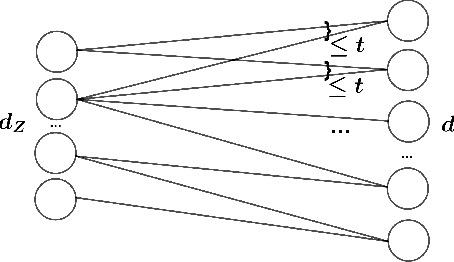
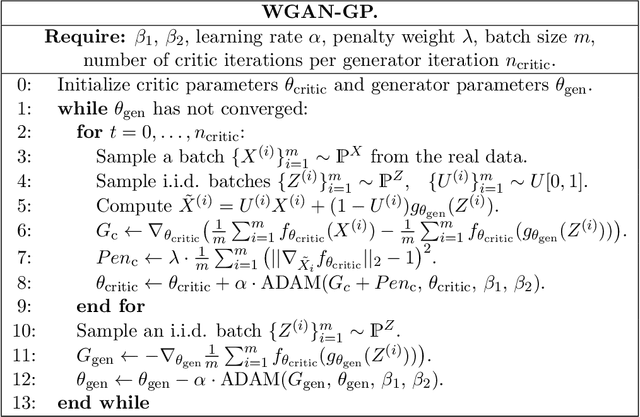
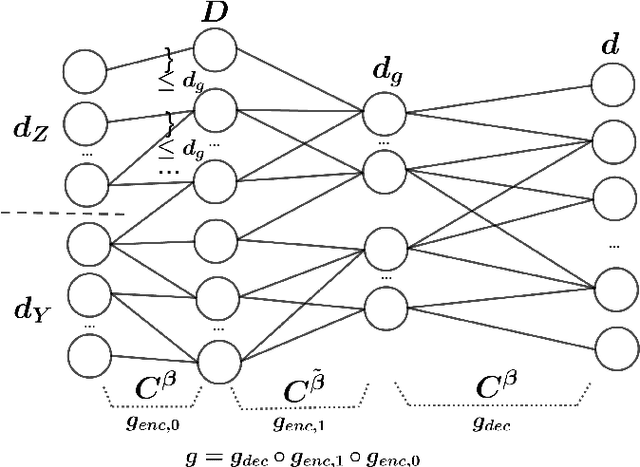
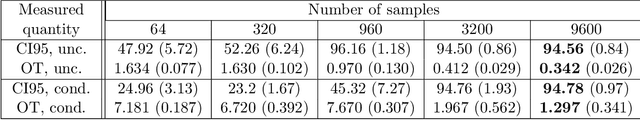
We provide statistical theory for conditional and unconditional Wasserstein generative adversarial networks (WGANs) in the framework of dependent observations. We prove upper bounds for the excess Bayes risk of the WGAN estimators with respect to a modified Wasserstein-type distance. Furthermore, we formalize and derive statements on the weak convergence of the estimators and use them to develop confidence intervals for new observations. The theory is applied to the special case of high-dimensional time series forecasting. We analyze the behavior of the estimators in simulations based on synthetic data and investigate a real data example with temperature data. The dependency of the data is quantified with absolutely regular beta-mixing coefficients.
Forecasting time series with encoder-decoder neural networks
Sep 18, 2020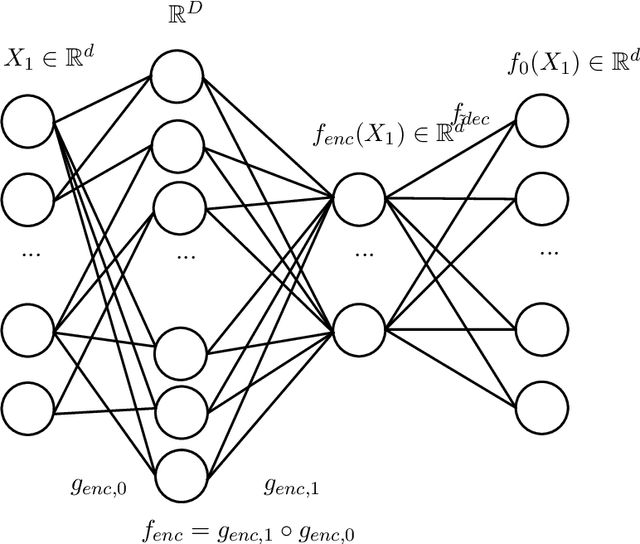
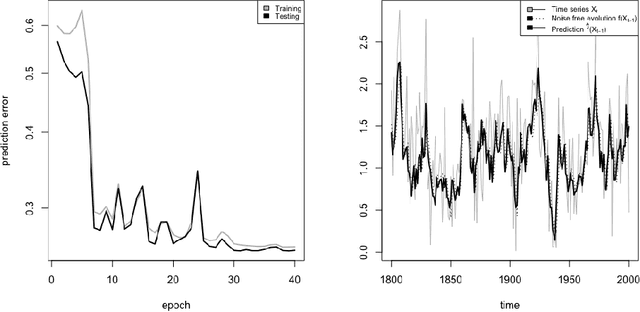
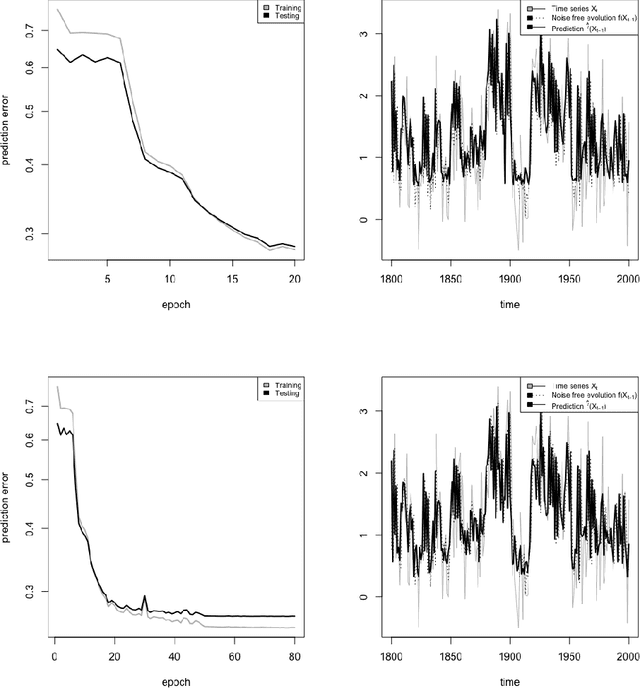
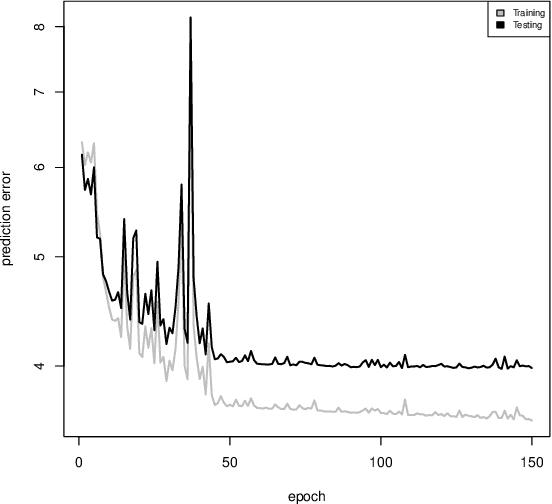
In this paper, we consider high-dimensional stationary processes where a new observation is generated from a compressed version of past observations. The specific evolution is modeled by an encoder-decoder structure. We estimate the evolution with an encoder-decoder neural network and give upper bounds for the expected forecast error under specific structural and sparsity assumptions. The results are shown separately for conditions either on the absolutely regular mixing coefficients or the functional dependence measure of the observed process. In a quantitative simulation we discuss the behavior of the network estimator under different model assumptions. We corroborate our theory by a real data example where we consider forecasting temperature data.