 Add to Chrome
 Add to Firefox
 Add to Edge
Parameter-Efficient Continuous-Variable Photonic Quantum Neural Networks for Edge Quantum AI: Demonstration in Oral Cancer Detection
Jun 26, 2026
Early detection of oral cancer markedly improves clinical outcomes, yet specialized diagnostic tools remain scarce in low-resource settings. Smartphone-based screening is a scalable alternative but needs lightweight models that run within edge-hardware constraints. Hybrid classical-quantum architectures are emerging candidates for parameter-efficient learning, yet most rely on qubit hardware that needs cryogenic operation, unsuitable for edge deployment. Continuous-variable (CV) photonic quantum computing, which operates at room temperature, offers a complementary route. We investigate a hybrid classical-CV quantum classifier for oral cancer detection from smartphone images. The pipeline combines a MobileNetV1 feature extractor, principal component analysis to 16 dimensions, and a parameterized CV-QNN of displacement, interferometric, and Kerr gates on a photonic backend. We propose a simplified $Φ\circ D \circ U_1$ CV-QNN architecture that cuts trainable parameters 40-45% relative to the standard CV-QNN layer of Killoran et al. (2019a), and identify dimensionality-reduction and encoding-restriction strategies that mitigate barren plateaus, raising loss-gradient variance by roughly 58 orders of magnitude. Whether the simplified layer beats the full layer is width-dependent: the full layer holds a small but significant edge at two qumodes, whereas the simplified layer is significantly better at four qumodes using 44% fewer parameters. The strongest model, a four-qumode simplified CV-QNN with only 18 parameters, attains the highest validation AUC of all models, exceeds a 55-parameter classical baseline using 67% fewer parameters, and reaches 100% calibrated test accuracy across all seeds. These results support CV photonic quantum machine learning for parameter-efficient, room-temperature medical image classification and motivate progress toward edge quantum AI.

Quantum computing overview: discrete vs. continuous variable models
Jun 15, 2022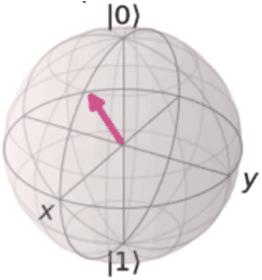
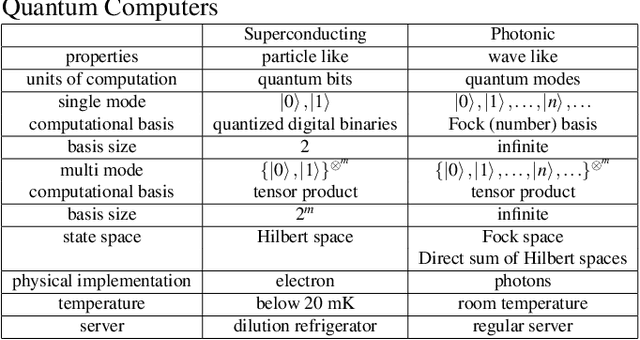
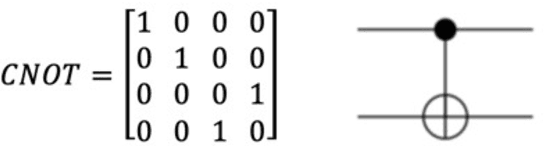

In this Near Intermediate-Scale Quantum era, there are two types of near-term quantum devices available on cloud: superconducting quantum processing units (QPUs) based on the discrete variable model and linear optics (photonics) QPUs based on the continuous variable (CV) model. Quantum computation in the discrete variable model is performed in a finite dimensional quantum state space and the CV model in an infinite dimensional space. In implementing quantum algorithms, the CV model offers more quantum gates that are not available in the discrete variable model. CV-based photonic quantum computers provide additional flexibility of controlling the length of the output vectors of quantum circuits, using different methods of measurement and the notion of cutoff dimension.
Continuous Variable Quantum MNIST Classifiers
Apr 04, 2022
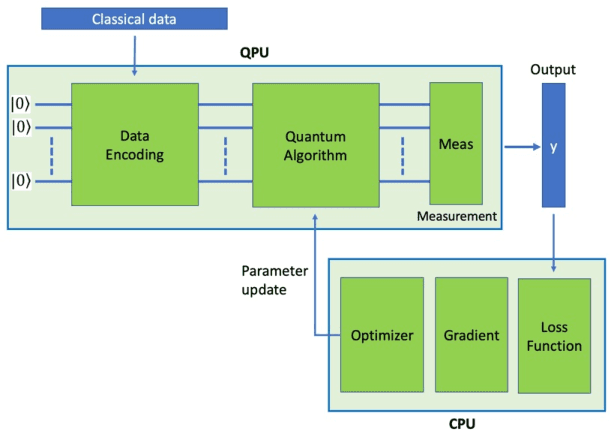
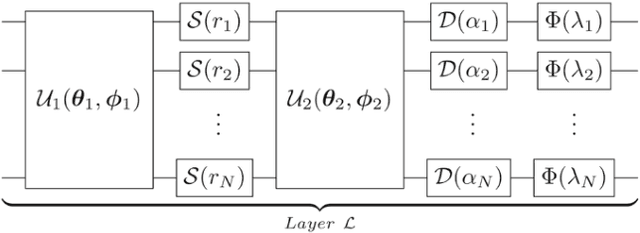
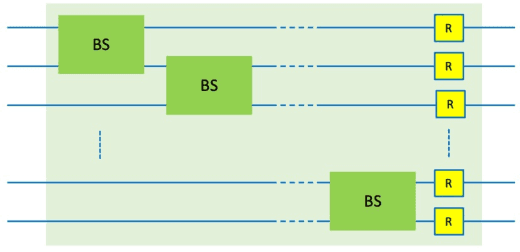
In this paper, classical and continuous variable (CV) quantum neural network hybrid multiclassifiers are presented using the MNIST dataset. The combination of cutoff dimension and probability measurement method in the CV model allows a quantum circuit to produce output vectors of size equal to n raised to the power of n where n represents cutoff dimension and m, the number of qumodes. They are then translated as one-hot encoded labels, padded with an appropriate number of zeros. The total of eight different classifiers are built using 2,3,...,8 qumodes, based on the binary classifier architecture proposed in Continuous variable quantum neural networks. The displacement gate and the Kerr gate in the CV model allow for the bias addition and nonlinear activation components of classical neural networks to quantum. The classifiers are composed of a classical feedforward neural network, a quantum data encoding circuit, and a CV quantum neural network circuit. On a truncated MNIST dataset of 600 samples, a 4 qumode hybrid classifier achieves 100% training accuracy.